An OBC candidate residing in Tripura became eligible to take the examination for recruitment of constables for CAPF, NIA, Secretariat Security Force, and rifleman in Assam Rifles after utilizing the age concession available to candidates from reserved categories. However, despite scoring higher than the selected general category candidate, he was not chosen.
The center reported that the minimum score for OBC candidates was 60, which is higher than for general category candidates. This is attributed to the limited number of vacancies in the OBC category. Furthermore, it was noted that once the OBC candidate utilized the age concession to gain eligibility, he could not switch from the reserved category to the general one.
As a result, the OBC candidate, Jayant Debnath, was not selected despite scoring 55.1 in the 2018 exam. Meanwhile, the general category candidate, Sagar Debnath, was selected with a score of 46.26.
The High Courts of Tripura, comprising a single judge and a deliberative bench, simultaneously ruled that Jayant should be considered for selection as a constable.
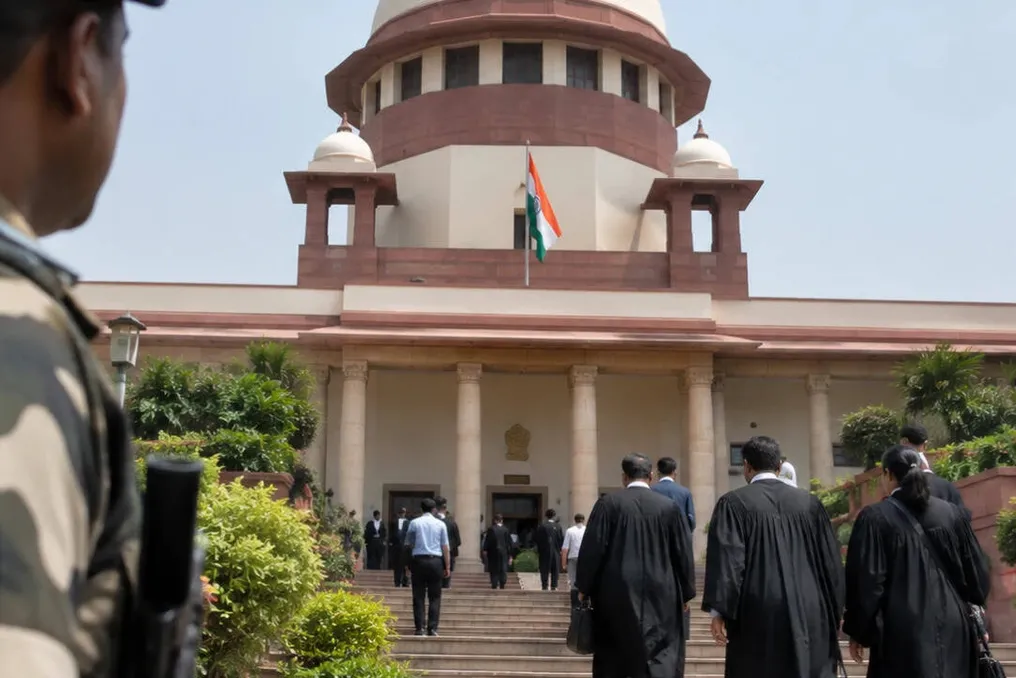
Appealing against the High Court's decisions, Additional Solicitor General Aishwarya Bati approached the Supreme Court bench chaired by Chief Justice Surya Kant and judges Joymalya Bagchi and Vi Mohana on Monday. She stated that the recruitment rules clearly stipulate that once a candidate utilizes the age concession based on belonging to a reserved category, they are prohibited from transitioning from the reserved category to the general one.
The bench agreed to examine the validity of the High Court's decision, which asserted that there is no legal principle prohibiting candidates from reserved categories from applying for unreserved vacancies solely because they utilized concessions applicable to reserved categories.
The center emphasized: 'This case concerns a candidate who acknowledged utilizing the age concession exclusively available to OBC candidates, thereby becoming eligible to participate in the recruitment process only within the reserved category.'
It stressed that in such cases, switching from the reserved to the general category is strictly forbidden by the recruitment rules.
The center also warned that 'the challenged decision would have far-reaching consequences for recruitments conducted by SSC and other recruiting agencies across the country. It would allow candidates who utilized reservation-specific concessions to claim transfer to unreserved vacancies contrary to recruitment rules, thereby undermining completed selections, distorting merit determination by category, harming the rights of unreserved candidates, and causing widespread administrative uncertainty in public employment.'