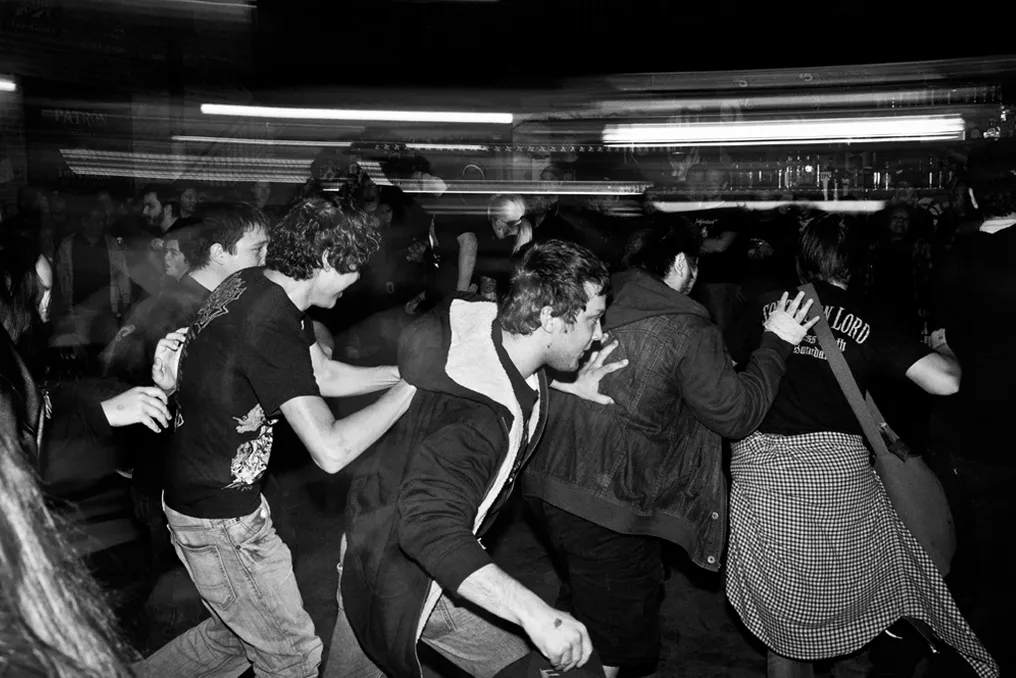
In rock shows, the so-called 'circle pits' are common moments where the audience moves in circles together. A notable curiosity is that, most of the time, these circles spin in the same direction.
A study conducted in 2013 analyzed over one hundred of these circles and found that 95% of them spin counter-clockwise. Although the researchers responsible for the study do not know the exact cause of this phenomenon, they speculate that it may be linked to human laterality, that is, the predominance of using one hand or foot.
The theory suggests that the circle spins in the direction that most people instinctively prefer, and most of the population is right-handed. This connection has already been investigated by science.
A previous study, dated 2003, evaluated 93 individuals, divided into 69 right-handers and 24 left-handers. The researchers used a device to monitor the spontaneous rotational movements of the participants over three days, for 20 hours. The result showed that right-handers had a tendency to turn left, mirroring the pattern observed in circle pits. Left-handers, on the other hand, showed a preference for turning right.
Scientists associated this pattern with research on animals, where rotational behavior tends to occur in the direction of the cerebral hemisphere with lower dopamine concentration. The hypothesis raised is that the asymmetries of this neurotransmitter could explain the observed difference, suggesting that when music stimulates collective movement, there is a search to compensate for a dopamine deficit.
However, this conclusion is not considered definitive. Other works, such as one conducted in 2007, failed to establish a significant link between manual laterality and the preferred direction of deviation during a walk performed blindfolded. Thus, the reason why mosh pits spin counter-clockwise remains without a conclusive answer.