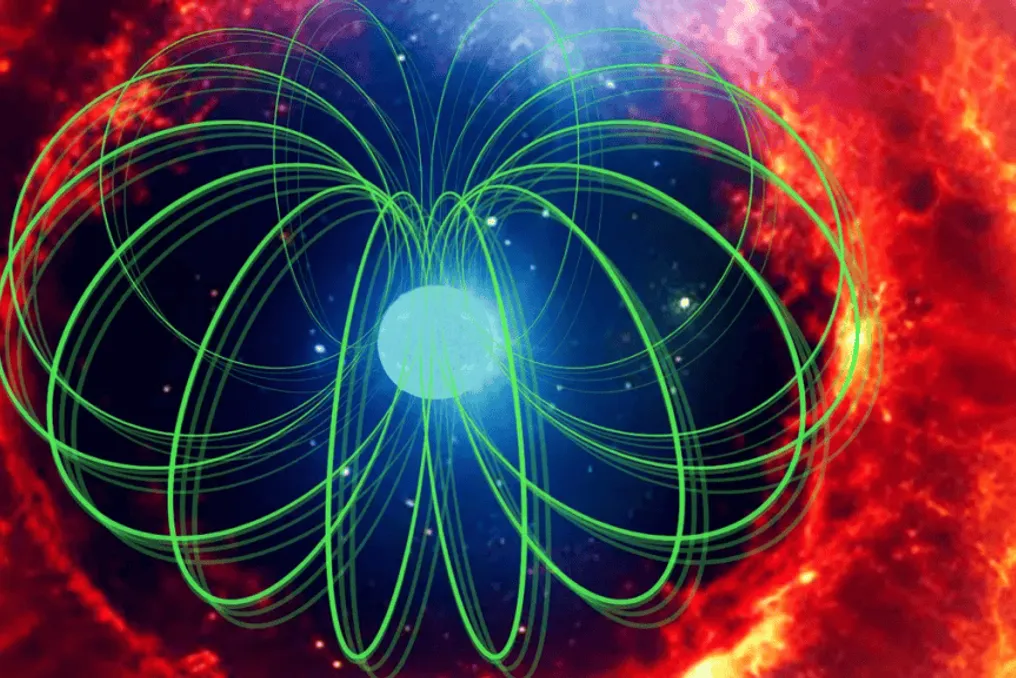
Astronomers identified a cosmic event, designated GRB 220706A, which continued to emit X-ray signals for about 27 days after the initial burst. This phenomenon, classified as an unusual type of gamma-ray burst, kept its central mechanism active for approximately 20 days longer than previous records.
The event was recorded on July 6, 2022. Researchers, cited by Space.com, highlight that the case is notable because the exact cause sustaining the explosion for such a long time is still unknown to scientists.
Gamma-ray bursts (GRBs) are considered some of the most powerful events in the Universe, potentially linked to the collapse of massive stars, which can result in a supernova and the formation of a black hole. However, the longevity of GRB 220706A poses a significant challenge to existing theoretical models used to explain such occurrences.
Benjamin Gompertz, a researcher at the University of Birmingham (England), explained to Space.com that GRB 220706A constitutes an extremely atypical late X-ray emission. Although post-gamma-ray burst emissions are common, they historically occurred only in the first few days after the event's detection.
According to Gompertz, the emission observed almost 27 days after the explosion, using the event itself as a reference, suggests the existence of a continuous process. The previous record for late emission was around six days.
One possibility raised is the interaction between the flow of material generated by the explosion and dense layers of matter expelled by the star before its collapse. In this scenario, the star would have become unstable near the end of its life, releasing its outer layers into space.
Scientists also consider that the star responsible for the explosion could be substantially larger than those typically associated with such events. The team's estimates indicate that a star with a radius equivalent to one thousand times the Sun's radius would be required to power GRB 220706A for such a long period, pointing towards blue supergiants, although this theory does not yet resolve all aspects of the phenomenon.
The ability to identify events like GRB 220706A is also subject to the limitations of the instruments used to monitor the Universe. Gompertz mentioned that many satellites used in gamma-ray detection orbit the Earth at low altitudes. Because of this, these satellites can momentarily lose focus on a target every approximately 90 minutes, which complicates the tracking of phenomena that span weeks.
Additionally, ultra-long bursts appear to exhibit higher intensity in X-rays compared to gamma rays, requiring specialized equipment to capture this type of radiation. Recent missions, such as the Einstein Probe, have the potential to aid in the discovery of other similar events, as this observatory has high sensitivity to X-rays and can identify explosions that might be overlooked by instruments primarily focused on gamma rays.
For researchers, finding more examples of these events will be crucial to determine whether they belong to the same class of conventional events or represent a new category of stellar phenomenon. Currently, GRB 220706A lacks a conclusive explanation, demonstrating that the mechanisms powering cosmic explosions may be more complex and prolonged than current models can describe.