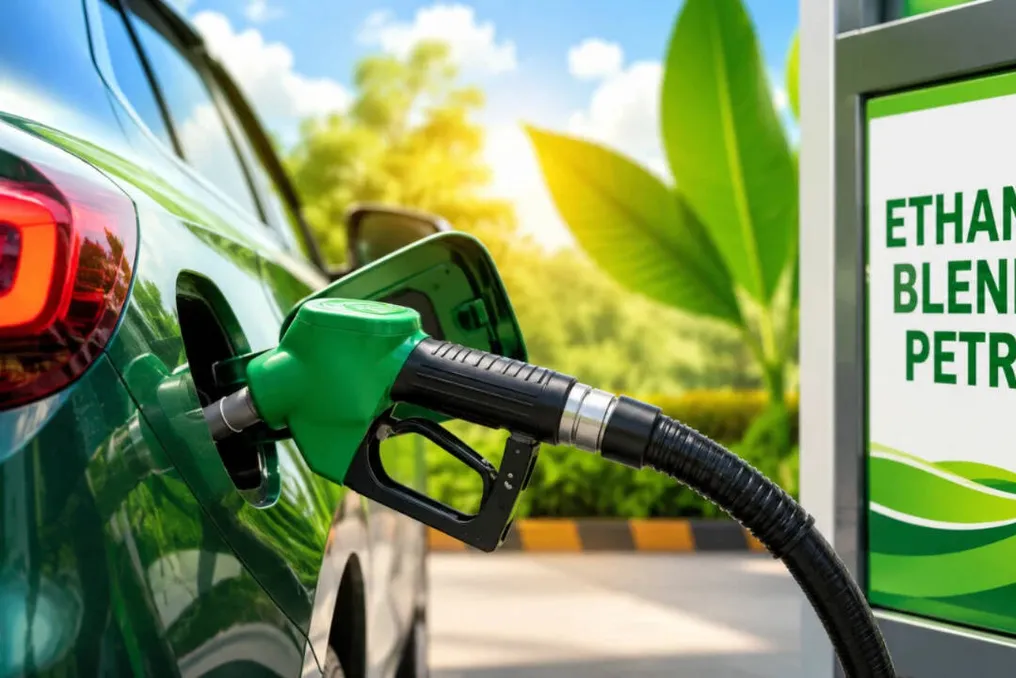
The Ministry of Road Transport has introduced amendments to the Central Automotive Transport Regulations to pave the way for the release of Flexible Fuel Vehicles (FFV) capable of operating on E100 fuel. E100 fuel is nearly pure ethanol, consisting of about 93–95% ethanol mixed with gasoline.
These changes occurred just a few months before some automakers plan to introduce their E100-based models. Internal combustion engine vehicles equipped with flexible fuel capability can use gasoline, biofuels such as methanol or ethanol, or any mixture thereof stored in a single fuel tank.
Officials emphasized that E100 fuel is intended exclusively for vehicles designed and certified for its use. A representative from the Ministry of Transport clarified that this restriction does not apply to other modes of transport, stating that cars using E20 or regular fuel cannot switch to E85 or E100, and therefore the notification does not oblige owners of existing vehicles to change fuel categories or modify their cars now or in the future.
According to TOI, the rule adjustment was necessary to obtain type approval and registration for FFV on E100 fuel, given manufacturers' readiness to release their products. Depending on the vehicle's design and certification, the blending range can reach E85 or E100, where ethanol predominates.
Flexible fuel technology is used in countries such as Brazil and the USA. The use of ethanol has a lower carbon footprint compared to traditional gasoline, and higher concentrations of ethanol help reduce emissions of carbon monoxide (CO) and certain hydrocarbons from the exhaust pipe. Furthermore, increasing the proportion of ethanol helps reduce dependence on crude oil imports.
Experts note that while the government notification will allow OEMs to produce FFVs, this will not be enough to stimulate their adoption. This is evidenced by the fact that only 17 such vehicles were registered even after almost seven months since the launch of E85 vehicles.
Industry representatives have called for the Goods and Services Tax (GST) for FFVs to be reduced from 28% to 5% (the level of electric vehicles) to make vehicles more affordable for buyers and to compensate for the range loss, which is about 27% when using E100 fuel. They also sought a reduction in fuel cost to approximately 75 rupees per liter. However, a more serious issue is the availability of E100, as there are very few gas stations stocking this fuel, although the vehicle can run on other grades of ethanol-blended fuel.