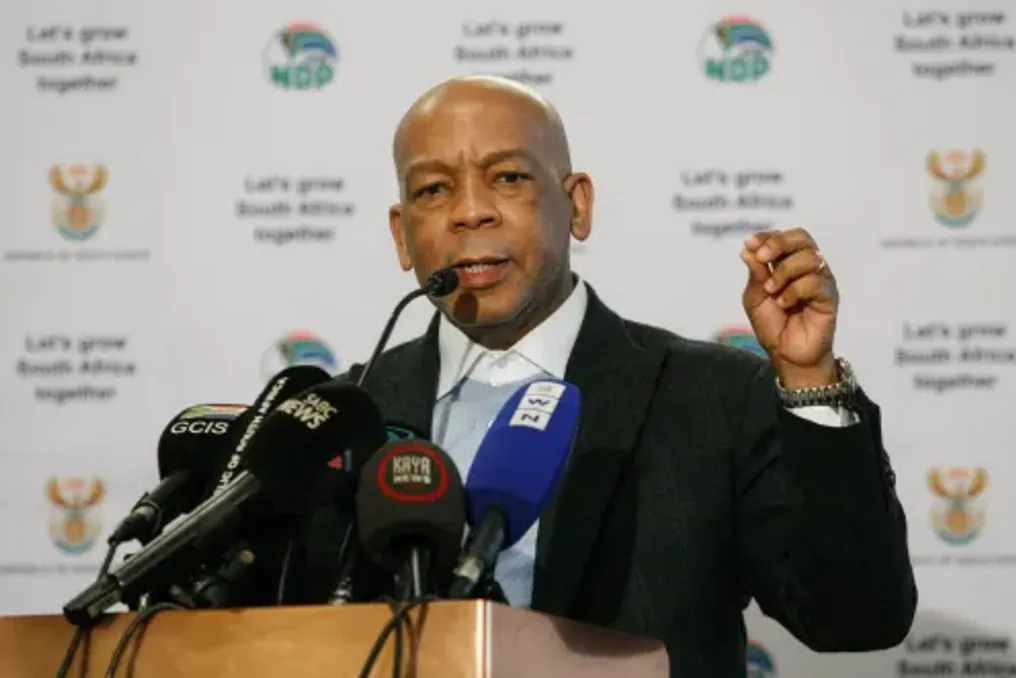
The Minister of Electricity and Energy, Kgosientsho Ramkgoppa, explained that the average increase in Eskom tariffs by 9.01% applies to municipal wholesale buyers in the 2026/27 financial year, according to the South African National Energy Regulator's tariff determination.
Ramkgoppa emphasized that this increase in the cost of electricity supplied by Eskom to municipalities does not automatically mean an equivalent percentage increase in every household's bills.
These clarifications were provided in response to questions from Parliament by EFF faction member Nazier Polsen, who asked whether his department assessed the impact of the increase, which came into effect on July 1, 2026, on Cape Town households, especially low-income and needy families.
In his response, Ramkgoppa explained that the country's power supply industry operates within a system where Eskom supplies electricity directly to some customers and wholesale to municipalities, which then distribute and sell energy to consumers in their service areas.
He stated that no separate household-level study had been confirmed for the City of Cape Town isolating the impact of the 9.01% increase in Eskom's wholesale tariff.
The reason for this is that only the increase in the wholesale tariff is insufficient to determine the real financial impact on the population. Such an assessment requires an analysis of the city's approved retail tariffs for 2026/27, household consumption profiles, applicable fixed charges, support mechanisms for the needy, and the degree to which changes in wholesale electricity costs are reflected in the tariffs applied to different consumer categories.
Nevertheless, the minister noted that his department recognizes the importance of protecting vulnerable consumers from energy poverty. Ramkgoppa mentioned that existing support measures in the City of Cape Town include a subsidized lifeline tariff for eligible residential customers and free basic electricity quotas for suitable households.
According to the city's tariffs for 2026/27, qualified customers using the lifeline tariff can receive either 60 kWh or 25 kWh of free basic electricity monthly, depending on average electricity consumption. Compliance requirements apply.
When asked about the city's decision to procure up to 200 megawatts of electricity from Independent Power Producers (IPPs), Ramkgoppa stated that his department supports the diversification of electricity supply and the participation of municipalities in procuring from IPPs.
He added that this is part of broader efforts to improve supply reliability, reduce dependence on a single electricity supplier, stimulate private investment, and promote the development of a competitive electricity market. Ramkgoppa stressed that the procurement of 200 megawatts of electricity by the City of Cape Town from IPPs aligns with the overall goal of diversifying electricity supply.
Ramkgoppa also reported that his department is engaging with the city to consider its application for appropriate determination in accordance with the Electricity Regulation Act. He clarified that municipal procurement of electricity from IPPs remains subject to applicable legislation, regulatory requirements, grid connection standards, environmental norms, and procurement requirements.
This, he said, falls within the scope of broader measures to improve energy supply reliability, reduce reliance on a single supplier, and develop a competitive market. He reiterated that the City of Cape Town's procurement of 200 megawatts of electricity from IPPs is consistent with the overall goal of diversifying electricity supply.
Polsen also asked Ramkgoppa whether he assessed the consequences of the growing trend of municipalities independently purchasing electricity, bypassing Eskom. In response, Ramkgoppa stated that Eskom recognizes the changing energy landscape where municipalities are increasingly purchasing electricity from IPPs.
He noted that Eskom has developed a new business model aimed at adapting to this evolving market, strengthening its competitiveness, and ensuring long-term sustainability. This model allows Eskom to respond to increased competition by developing additional products and services, more flexible offerings for customers, and new revenue streams across the entire energy value chain.
Ramkgoppa concluded that Eskom's sustainability will depend not only on electricity sales but also on its ability to diversify offerings, retain and attract customers, improve operational efficiency, and adapt to the changing needs of municipalities and other consumers.