
Indian AI Startups Consider Relocation Costs to the US in Pursuit of American Capital
Read more
Business Standard
business-standard.com

Indian AI Startups Consider Relocation Costs to the US in Pursuit of American Capital

Despite venture capital funds creating opportunities for Indian artificial intelligence (AI) startups to enter the US market, securing initial clients in America remains a significant challenge. American companies typically require proven work experience before entering into agreements with new suppliers, which complicates startups' efforts to attract initial customers.

Venture firms such as Antler India and All In Capital have launched specialized programs to help local AI startups establish themselves in the United States. While some companies have already relocated their headquarters, found clients, and attracted subsequent funding, their expansion plans are complicated by high costs for local hiring and visa issues.

Details on Challenges

Ashish Bhatia, founder and CEO of India Accelerator, noted that winning the first few clients is one of the main difficulties for Indian startups aiming to enter the US market. He explained that firstly, buyers in the US require references, making the acquisition of the first two or three clients the most difficult. Secondly, requirements for security, regulatory compliance, and architecture are significantly higher. Thirdly, hiring sales and business development staff in the US is expensive, and visas for founders, who often move between countries, create additional obstacles.

Similarly, All In Capital identified key challenges as client access, achieving product-market fit in a new market, and building a local network. Antler India pointed out another barrier—the lack of a peer network. Founders entering a new market may not have reliable contacts for advice on hiring, pricing, legal structures, or pitching to investors.

To overcome these difficulties, venture funds provide support that goes beyond mere financing. They assist startups in finding potential clients, building local connections, and managing operational requirements.

Examples of Support Programs

Antler India launched the Embark program in May 2025. Over this period, more than 50 startups participated across four cohorts, including over 15 from India. Raghav Goyal, Investment Director at Antler India, reported that seventy-five percent of participants now have paying clients or active pilot projects in the US. More than half of them have secured subsequent rounds of funding. Nearly 50 percent have moved to the US, converting their holding company into an American structure and obtaining O-1 visas for founders. Most of them signed their first contract with an American client within three to four weeks of participating in Embark. Among the startups that relocated their headquarters to the US are Dodge, KuboCare, Nudge, and Aina.

Likewise, All In Capital launched the Golden Ticket program in January of this year to aid Indian startups in expanding into the American market. The program received over 750 applications in the first ten days and aimed to select 20–30 startups. The program's portfolio included Vasuki AI, which develops commodity hedging solutions; Tross, which creates a data layer and application programming interface (API) for AI agents in healthcare; and Mowito AI.

Among these companies, Mowito opened an office in Detroit, started pilot projects with American clients, and attracted additional funding from a Canadian investor. Kushal Bhagya, Co-founder and Partner at All In Capital, emphasized that early progress should be assessed based on the quality of client interactions and pilot projects, not just the number of users.

Recognizing the complexities of entering a new market, venture funds are increasingly offering operational support alongside capital. For instance, Antler India's Embark program facilitates introductions to American clients and provides practical assistance in early sales. It also collaborates with partners such as Deel, Rho, Alma, and Inkle, helping startups obtain visas and establish American entities.

Nevertheless, not all Indian startups aiming to expand into the US relocate their headquarters abroad. As Jasnoor Gill, Investment Director at Antler India, noted, 'Some startups keep their engineering and product teams in India while developing American teams, so relocation is more related to proximity to clients and capital than leaving India behind.'

However, the path of expansion was different for each company. Some firms participating in these programs decided to return. According to Gill, a couple of startups returned to India, usually because their core clients or teams were better served from that country. Nevertheless, the more common scenario is that founders develop higher ambitions regarding the US after spending time with American clients and investors.

Similar stories

Goldman Sachs predicts Indian company IPOs could boost market capitalization by $100 billion
Read more
business-standard.com

Goldman Sachs predicts Indian company IPOs could boost market capitalization by $100 billion

Investment bank Goldman Sachs believes that India's artificial intelligence (AI) ecosystem has the potential to add between $50 and $100 billion to the country's market capitalization over the next two to five years. This growth is driven by an expected wave of initial public offerings (IPOs).

Goldman Sachs estimates that during this period, 25–50 percent of nearly 70 private AI companies in the mid-to-late development stage will go public. With a weighted average valuation approximately four times higher than the current assumed value, these companies will expand the representation of the Indian AI segment in public markets.

Listen to this article

In a joint note dated October 19, Timothy Mou, Co-Head of Asia Macro Research and Chief Strategist for Asia-Pacific Equities at Goldman Sachs, noted that listings could expand the universe of AI in India by bringing underrepresented segments of the AI value chain to public markets.

According to the Goldman Sachs report, funding for AI startups in India through private equity (PE) has tripled since 2024. Furthermore, the share of AI in the total volume of PE allocations has increased fourfold, reaching about one-fifth of all private capital directed to India. According to Stanford University's AI Index for 2026, India is now among the top six global leaders in attracting private funding for AI and among the top four in the number of new AI companies, contradicting the notion of India's peripheral position in global AI development.

Goldman Sachs identified 84 private companies as 'Private AI Contenders' with a combined current valuation of $55 billion. These companies account for almost 40 percent of all private capital raised in India's AI sector since 2025 and cover the entire value chain—from infrastructure providers and core AI developers to enterprises implementing AI across various industries.

The largest segment by value is 'upstream AI enablers.' These companies are involved in energy generation, power equipment, transmission, semiconductor supply chains, chip design, quantum computing, data centers, cloud services, and data management. Goldman Sachs values the current worth of this segment at $35 billion, making it the largest potential source for future AI-related listings.

'Downstream AI adopters' represent the most numerous group, comprising 42 companies—about half of the identified cohort—with a combined estimated valuation of $18 billion. These enterprises apply AI in areas such as computer vision, conversational AI, robotics, and edge computing, as well as in healthcare, financial services, enterprise software, defense, cybersecurity, and commerce.

The mid-tier segment, which includes core AI developers engaged in fundamental research, model training, and AI operations, remains relatively small. It comprises only seven companies with a combined estimated valuation of $2 billion.

Goldman Sachs forecasts that upstream AI enablers could account for 66 percent of potential listings, followed by downstream AI adopters at 31 percent, and core mid-tier AI drivers at 3 percent.

Although the projected increase is modest compared to the $670 billion universe of AI enabling technologies defined by the bank in a previous analysis, the broader significance lies in expanding India's AI ecosystem into the public market. Goldman Sachs notes that potential IPOs could introduce previously underrepresented entities, including data center operators, corporate AI service providers, cloud and data management systems, and AI specialists in healthcare and computer vision.

These companies are concentrated in established technological and business hubs, led by Bengaluru, Delhi-NCR, Mumbai, and Hyderabad, while Ahmedabad, Pune, and Chennai are beginning to emerge as additional centers of activity.

Indian Family Offices Support Domestic AI Companies to Reach US and China Levels
Read more
business-standard.com

Indian Family Offices Support Domestic AI Companies to Reach US and China Levels

The rise of the artificial intelligence boom has strengthened the technological dominance of the US and China, creating significant fortunes in the North Asian chip supply chain. In response, investors and wealthy families in India are betting on local startups, striving to secure their place in the global AI race.

At least six local companies have emerged with valuations exceeding one billion dollars, indicating the formation of a new generation of tech firms amid the accelerating adoption of AI among Indian consumers and enterprises.

Among the investors actively promoting support for these startups are the family office of billionaire tech founder Azim Premji, QED Innovation Labs from WhatsApp Inc. CEO Kunal Shah, and the family office of Manipal Group Chairman Radhana Pai.

Nevertheless, India faces a significant funding deficit. According to the Stanford University AI Index Report, private investments in India's AI economy amounted to over $15 billion between 2013 and 2025. These figures lag significantly behind investments in the US AI ecosystem, which reached $757 billion, and China, which received nearly $132 billion. This gap presents opportunities for financing the domestic AI industry from wealthy families, conglomerates, and venture capitalists.

Riddiman Jain, Head of Investments at the Indian capital manager Waterfield Advisors, noted that 'several family offices and business angels are now interested in direct investments as they become accustomed to how the Indian AI ecosystem is forming.' He added that 'AI requires patient capital, which is lacking, and the investment universe is still in a very early stage.'

Premji Invest has become the largest Indian family office investing in the global AI landscape. Recently, in June, it participated in a $27 million round for the AI verification platform Pramaana Labs, founded by graduates of the Indian Institute of Technology Madras (Chennai).

This investment firm's portfolio includes billion-dollar global AI and technology platforms such as Databricks and Canva, as well as generative AI startups Spotdraft and Writer, according to Tracxn data.

Dr. Radhana Pai's family office, Claypond Capital, has ramped up its investments this year. In September, it participated in a $40 million round for the content startup Flam, and in July, it supported a $130 million round for the coding platform vibe Emergent.

The influx of capital is fostering the emergence of a new generation of firms covering AI models, enterprise software, coding, and other applications. Anirudh Damani, Managing Partner at Artha Venture Fund, stated, 'We are at the beginning of a major surge in AI investment in India.' He also emphasized that India maintains a cost advantage in the AI sector, either by providing software to global companies or by developing AI applications and services.

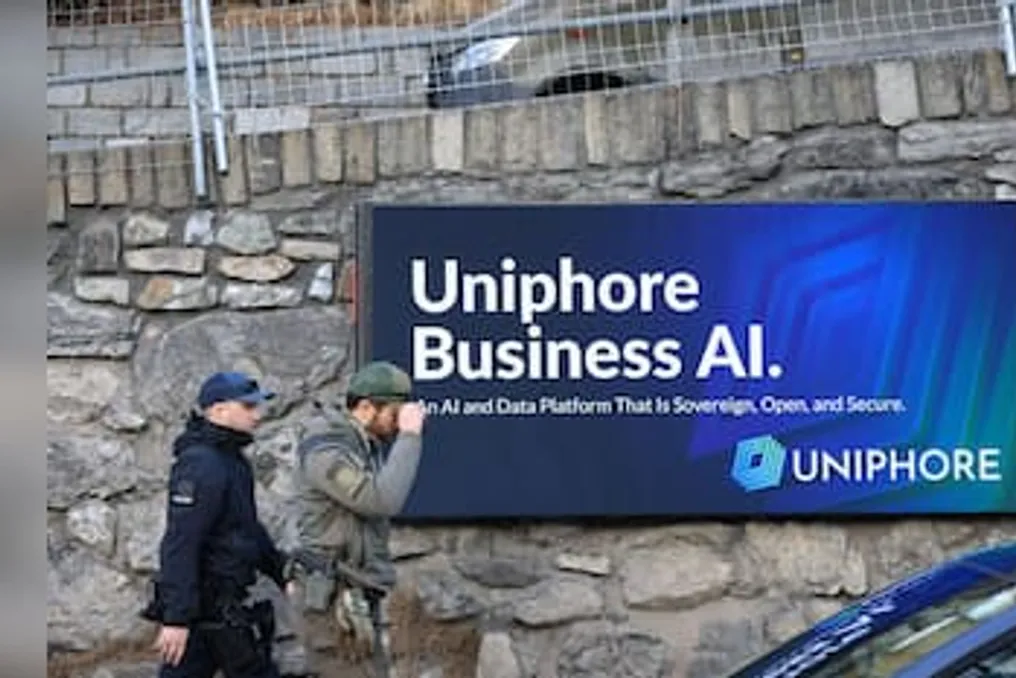
Fractal Analytics Ltd., based in Mumbai, went public in February, becoming the first Indian company with an AI unicorn to list on the stock exchange. Uniphore, which creates AI models and applications, was valued at $2.5 billion last year after a $260 million late-stage round supported by chip manufacturers such as Nvidia Corp. and Advanced Micro Devices Inc.

Founders Umesh Sachdev and Ravi Sarogi collaborated at IIT Madras and founded the company in 2008, later relocating the headquarters to Palo Alto, California. Sarvam, founded in 2023 by researchers Vivek Raghavan and Pratyush Kumar, is the second most valuable AI startup. After raising $345 million this year, with support from investors like HCL Technologies Ltd., its valuation reached $1.5 billion. Sarvam, located in Bengaluru, creates AI models for voice, documents, coding, and other use cases in 22 Indian languages.

The growing interest from family offices and wealthy investors is helping India build a new generation of AI companies. However, as a low-to-middle-income economy, the country faces constraints regarding capital, computing infrastructure, specialized research talent, and other resources, according to a World Bank report.

While the private sector leads AI investment in the US, the Chinese government has been the main driver of investment in the world's second-largest economy. Beijing plans to spend about 2 trillion yuan ($300 billion) over the next five years on building data centers across the country.

In New Delhi, the IndiaAI mission of the government, allocated 10,370 crore rupees ($1.1 billion), focuses on computing power, datasets, sovereign AI models, and other public infrastructure, leaving private investors to finance the majority of AI development in the country.

India's two wealthiest magnates, Gautam Adani and Mukesh Ambani of Reliance Industries, have pledged to invest around $210 billion in data centers, semiconductors, and other AI-related services. A part of Tata Group's software services collaborates with OpenAI in data centers, and its electronics division is investing about $12.5 billion in two semiconductor fabrication plants. The group is also developing an $11 billion AI innovation city near Mumbai.

Google Inc., Amazon.com Inc, and Microsoft Corp. have separately announced investments in data centers in India totaling around $45 billion. Damani of Artha Venture Fund noted, 'India is adapting to and adopting new technologies much faster than most developed countries.' He added, 'I do not doubt that we will quickly catch up in terms of AI applications and adoption.'

Popular