The state of Maranhão registered the opening of 58,698 small businesses between January and September 2026. This number represents a growth of 20.5% compared to the 48,716 new ventures counted in the same period of 2025. The data was compiled in a survey released by the Brazilian Service for Support to Micro and Small Businesses (Sebrae).
Based on information provided by the Federal Revenue and the Brazilian Institute of Geography and Statistics (IBGE), nearly ten thousand additional businesses were formalized in the state over the course of a year.
São Luís concentrates new businesses
The Services sector led the registration of new openings, totaling 31,584 new businesses between January and September 2026. This volume corresponds to 53.8% of the total registered in the period and demonstrates a 27.8% advance compared to the corresponding months of 2025.
In industry, 3,793 new companies were registered, which constitutes an increase of 29.4%. The agricultural sector showed the largest percentage growth among all analyzed segments, rising from 396 to 586 new businesses, an advance of 48%. Civil construction also grew by 27.8%, while commerce registered an increase of 7.8%.
Among the segments with the highest number of openings, Logistics and Transport increased from 7,372 registrations in 2025 to 8,668 in 2026, representing a growth of 17.6%. Conversely, the other four of the top five segments—Health and Wellness, supermarkets and food wholesalers, Home and Construction, and Food Services—showed a reduction in the number of new businesses.
The distribution of these new ventures varies among the municipalities of Maranhão. São Luís remained the main hub for openings, while São José de Ribamar saw a growth of 12.6%, increasing from 3,023 to 3,403 new businesses when comparing the periods.
This growth was significantly driven by individual microentrepreneurs (MEIs). Maranhão increased its formalizations in this category from 32,031 in January to September 2025 to 41,755 in the same period of 2026, a jump of 30.4%. Microenterprises registered a growth of 1.4%, and small businesses advanced by 2.5%.
Friends turn recipes into a business
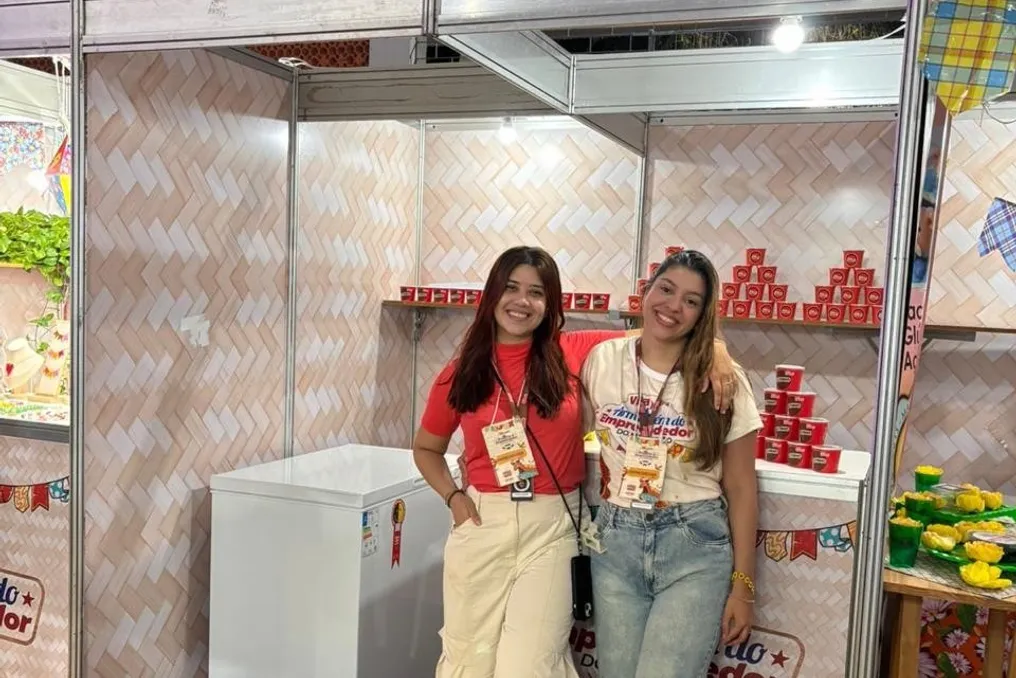
A notable example of a new venture in Maranhão is the trajectory of Nara Corrêa and Milena Godinho Cardoso. Both wished to start their own business and establish a brand that reflected their identity.
Thus was born Que Doce!, a company specializing in frozen desserts, which started as an individual microenterprise (MEI) and recently migrated to the microenterprise category. Planning began in 2025, when the partners decided to convert their interest in confectionery into a commercial activity, and the first tests generated the current recipes in the company's portfolio.
After testing various products, the entrepreneurs opted to focus on producing frozen desserts. The first line, named Levinho, includes four flavors: passion fruit, strawberry, chocolate, and purple grape. The intention is to offer an item that can be consumed frozen, like ice cream, or after thawing, acquiring a creamy texture.
The company is preparing for a new phase, which involves changes in visual identity and packaging, as well as a greater focus on promoting the Levinho line. The partners are also working on regularizing the business with the aim of expanding production and, eventually, building an industrial structure. Nara Corrêa stated: 'Our biggest dream is to become a genuinely Maranhão frozen dessert industry.'
Consultancies help structure the company
Contact with Sebrae was established through the Syndicate of Food Industries of the State of Maranhão (Siama), which is part of the Federation of Industries of the State of Maranhão (Fiema). This entity encouraged the entrepreneurs to formalize their activities and structure the company.
Since then, Que Doce! has received support from the Regional Unit of Sebrae in São Luís. The partners also participate in consultations in various areas to improve management and business processes. According to the entrepreneurs, this monitoring helped identify areas needing improvement and define goals and phases for the business development.
Progress includes investments made with capital derived from sales. The partners emphasize that growth requires planning and respect for the financial conditions of each stage. Nara Corrêa stressed: 'Experience shows that the growth of a small business does not depend only on gaining customers. It is necessary to develop management capabilities, adapt production, and create conditions for the company to operate in a regular and sustainable manner.'