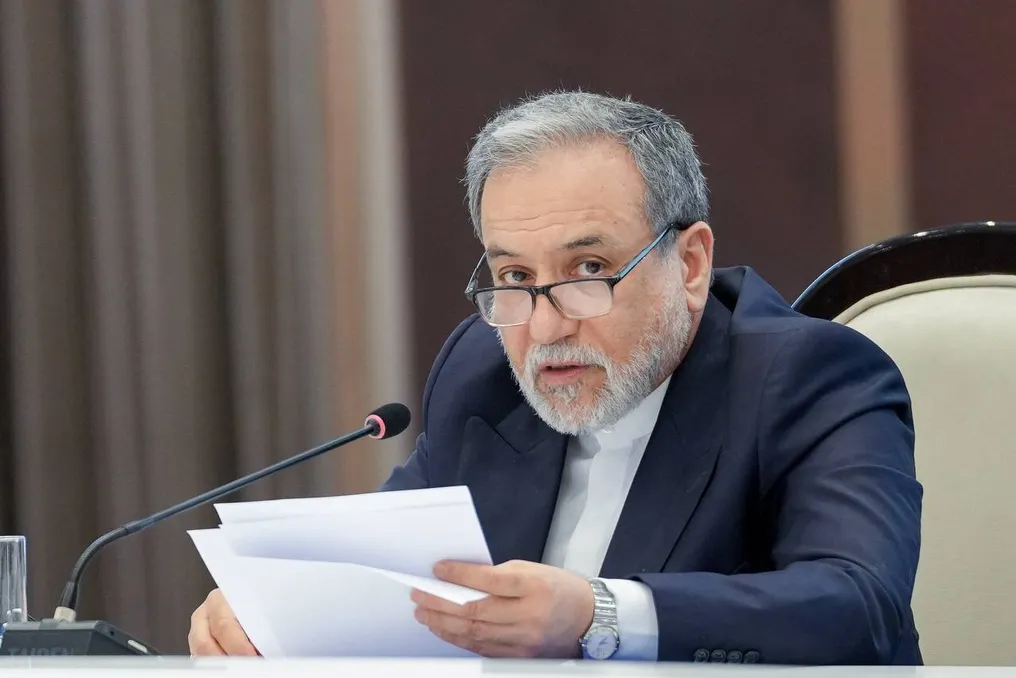
Iran's Foreign Minister Abbas Araghchi called for deepening interaction between Iran and Russia. The goal of such cooperation is to diversify energy supply routes, strengthen the stability of the global gas market, and create new opportunities for investment and foreign currency earnings.
Araghchi warned that geopolitical tensions and military threats are disrupting international energy supplies. In his op-ed published in the Russian newspaper Vedomosti on Monday, he noted that energy security has become one of the most acute global problems alongside food security, linking this situation to 'coercive and arrogant actions by the United States in the region.'
He referred to estimates from the International Energy Agency, which indicate that over 112 billion cubic meters of liquefied natural gas passed through the Strait of Hormuz in 2025, accounting for nearly a fifth of global trade in this fuel. Araghchi stated that the recent US military-Israeli aggression against Iran, along with ongoing military threats, has led to the closure of a strategic waterway and disruption of global gas supplies, especially to Asian markets.
He added that this disruption has caused a sharp rise in gas prices in Europe, and gas reserves before winter have significantly fallen compared to last year's figures. The Minister emphasized that Asian markets consume about 90% of the gas transported through the Strait of Hormuz, highlighting the importance of this waterway for global energy security and the economic interests of both producers and consumers.
Araghchi warned of possible far-reaching consequences of regional instability for international energy markets, calling for broader dialogue among gas-producing countries, diversification of supply routes, and strengthening the protection of critical energy infrastructure. He also stressed the need to develop practical mechanisms to mitigate the impact of geopolitical shocks on energy supplies and market stability.
The Iranian Foreign Minister highlighted the potential of expanded energy partnership between Tehran and Moscow, particularly in the fields of investment, technology, equipment, production, operational efficiency, and energy export. He noted that closer bilateral cooperation could help diversify transport routes for energy resources and generate additional income in foreign currency, thereby contributing to the stability of international gas markets.
The article also mentions the 'Global Gas Outlook 2055' report published by the Gas Exporting Countries Forum (GECF). This forecast predicts that by 2055, 86% of global gas production will come from reserves that currently do not produce gas. Araghchi pointed out that Iran, possessing the second-largest proven natural gas reserves after Russia, has significant potential to expand its role in the global gas sector.
According to the forecast cited in the article, the share of GECF member countries in global gas production is projected to rise from 38% in 2024 to 44% by 2055, representing 65% of the net growth in global production during this period. Araghchi acknowledged that realizing the potential of Iranian-Russian energy cooperation will require significant investments, advanced technologies and equipment, as well as solutions to problems arising from unilateral coercive measures and the complexity of long-term energy contracts.
He characterized GECF as an important multilateral platform for strengthening coordination among gas-producing countries and promoting cooperation in response to common challenges. According to him, political will and mutual trust will be necessary to turn this potential into practical results.
Araghchi also addressed the issue of maritime security in the Strait of Hormuz. He stated that Iran has proposed a seven-day plan to facilitate the resumption of the waterway's operation and normal maritime traffic, provided that necessary conditions are met and military threats are eliminated. He asserted that responsible dialogue and mutual commitments can help reduce tensions, strengthen sustainable maritime security, and restore stability in global energy markets. Araghchi concluded by writing that 'it ultimately depends on the choice made by the United States,' emphasizing that cooperation and dialogue are vital for building greater stability in global gas and energy markets.