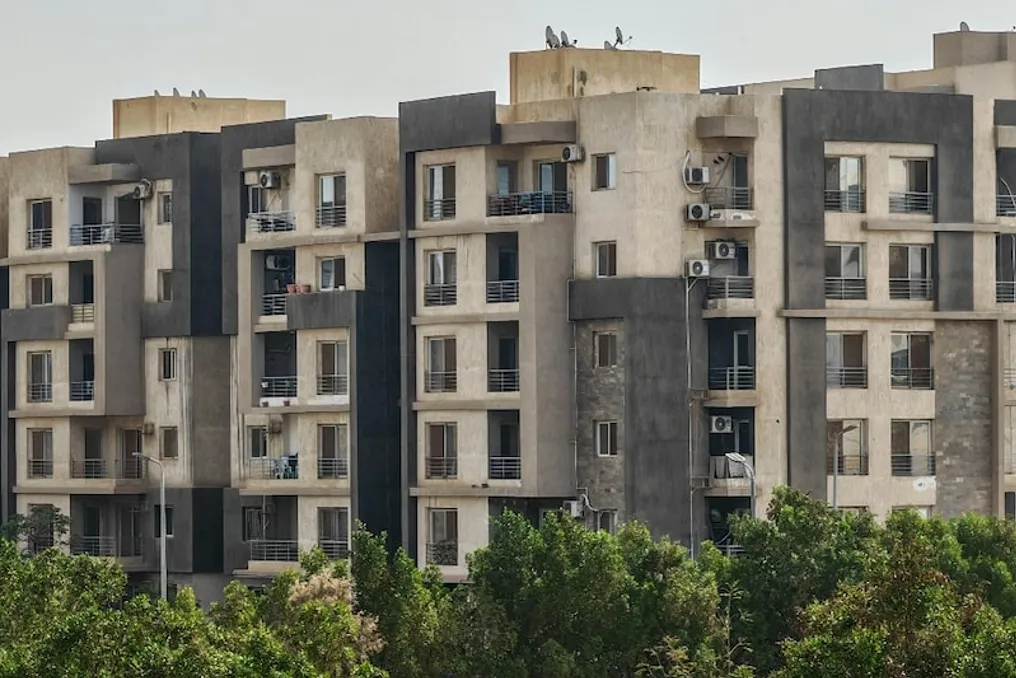
Startup uses settlement addresses to create alternative creditworthiness data
Read more
TechCentral
techcentral.co.za

Startup uses settlement addresses to create alternative creditworthiness data

A startup founded by a former head of the credit department at Capitec is creating digital records of residential properties that fall outside South Africa's title deed system. The company believes that banks, insurance companies, and credit bureaus are interested in information about the people living in these homes.

The DigiDeeds application was launched in March and has already attracted over 6,600 participants in areas such as Soweto, Hyelitsha, and Sochangwe. Community members receive a free 'DigiDeed'—a digital certificate that serves as proof of residence, and for owners, it records ownership of the structure, but not the land beneath it.

Co-founder and CEO Jacob Karstens stated in an interview with TechCentral on Monday that they have spent decades trying to understand how to integrate people into the official property system, emphasizing the need for the formal system to recognize assets that people already own.

Karstens, a qualified accountant, spent twenty years as a Credit Executive Director at Capitec, where he was supervised by the bank's data-driven decision-making teams. He noted that the key was synchronizing operations with data so that both sources told the same story.

The scale of the problem DigiDeeds solves is enormous. Citing the African Housing Finance Centre's 2024 annual report, the company points out that only 6.9 million out of 17.8 million homes in South Africa have a title deed. According to the company, more than 35 million people live in dwellings not included in the official property system, including informal and RDP houses, courtyard rooms, and rural homes on communal land.

For these people, proving an address may require a trip to the district councilor. During a DigiDeeds community survey, one person described spending 38 rand on a taxi and taking a day off, unsure if the councilor would be present.

Free for Participants

The application verifies three aspects. A participant takes a selfie and photographs their ID or passport; the application scans the barcode for the ID. Then, the user marks the location of their home and photographs it, with the coordinates being cross-referenced with GPS and the Geographic Information System (GIS). Finally, seven neighbors confirm the address and indicate whether the person is the owner, tenant, or simply a resident of that home.

When asked about the legal validity of a DigiDeed, Karstens referred to Roman law, stating: 'If seven Romans say so, then so it is.' DigiDeeds claims to have a lawyer's opinion that this approach complies with current legislation. He added that they do not provide land or title because, as is known, people do not own the land.

The application itself is free for participants. DigiDeeds makes money from data. The company acquires GIS data, enriches it with information provided by its members and neighbors, and sells the resulting output to credit bureaus, which Karstens calls 'wholesalers,' as well as banks, which he calls 'retailers.'

Karstens explained: 'We buy some GIS data, enrich it significantly, and sell it through service providers.' He reported that each participant generates 26 data points, from which DigiDeeds derives 11 'features' for use in credit models, currently totaling over 200,000 data points. Neighbors have provided over 40,000 confirmations. The platform also calculates a 'stability indicator' on a scale of 0 to 100.

He mentioned that three major banks and three primary credit bureaus have acquired this data for testing, though he did not name them, citing non-disclosure agreements. DigiDeeds positions these records as 'alternative data' to improve customer assessment by creditors, as well as as address verification for Know Your Customer checks in accordance with the Financial Intelligence Act (Fica).

Karstens asserts that a DigiDeed can be pledged to a creditor as collateral through assignment, providing households with collateral they never had.

Fraud and Privacy

The database of IDs, selfies, house photos, and GPS coordinates of low-income households presents an obvious target. Karstens reported that the DigiDeeds application and database were developed by the Stellenbosch Octoco software group and its subsidiary Polymorph, based on Neo4j, a graph database that, according to him, already helps detect fraudsters. The company has a full-time Chief Information Officer, and Karstens is registered as an information officer under the Protection of Personal Information Act. Participants consent to the use of their data in the application.

He warned: 'As soon as someone becomes the easiest target, they will start being attacked.' DigiDeeds operates exclusively in established settlements, including informal housing within them. Karstens clarified that they do not serve those who are illegally on the land.

DigiDeeds was established in November 2024. Karstens noted that the company has over 100 investors. Its co-founder and non-executive director is Charles Robertson, a property developer. Ruben Richards is the chairman, and other non-executive directors include Jan Abrahamse, a banker who worked with Karstens at Capitec, and Marcus Kurag, founder of the consulting firm Africa Practice.

Karstens aims to attract 125,000 participants within 12 months. It requires 500,000 to comfortably reach the break-even point. DigiDeeds plans to add services such as solar energy, grid connection, and security, which providers can offer to participants with verified housing, and Karstens reported that the company has received invitations to expand to other countries starting next year.

His statements regarding potential economic impact are even more ambitious. When asked about studies on the potential value that could be unlocked, he replied that he himself had not conducted such studies. Nevertheless, he believes that if banks and other institutions adopt this model, it could double the pace of South Africa's economic growth.
Similar stories

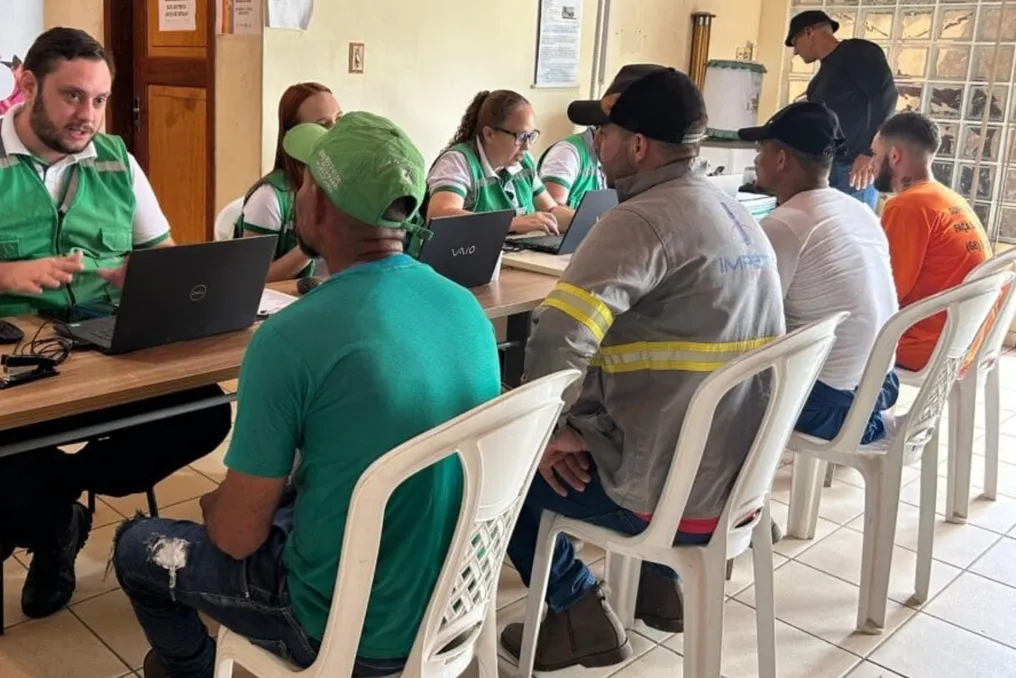
Six Cras in Acre receive funding for internet connection through Ministry of Communications public notice
Read more
g1.globo.com

Six Cras in Acre receive funding for internet connection through Ministry of Communications public notice

A public notice issued by the Ministry of Communications (MCom) selected six Social Assistance Reference Centers (Cras) to receive internet connectivity in five municipalities in Acre. The contracts signed through this action total more than R$ 192 thousand.

This initiative is funded by the Fund for the Universalization of Telecommunications Services (Fust). Company proposals were received after the unit administrators filled out a specific form.

In the state of Acre, seven Cras expressed interest in the improvement, according to the listing published by the ministerial body, but only six obtained contracts, as one unit could not find a winning company.

According to the ministry, the availability of this service will ensure that the professionals of these units can access the essential tools for their work. Furthermore, the public will have easier access to governmental digital services, information about social benefits, as well as professional training and employment opportunities.

More information

Minister Frederico de Siqueira Filho emphasized the importance of digital inclusion, stating that it must reach all regions of Brazil, including the Acrean communities that most need these services.

The detailed relationship released by the ministry specifies the locations and respective values: Cras Porto Acre will receive R$ 21,167.75 to cover one environment; Cras Casa da Família, in Santa Rosa do Purus, will have coverage for four environments at a cost of R$ 21,727.29; Cras Vera Lúcia, in Porto Walter, will be equipped for three environments for R$ 21,727.29; Cras Reviver, in Feijó, will also have coverage for three environments at a value of R$ 21,727.29.

Additionally, Cras Novo Horizonte, located in Rio Branco, was granted R$ 22,878.23 for seven environments, and Cras Rui Lino, also in Rio Branco, will receive R$ 24,148.99 to cover six environments.

Registration opened in housing program in Nossa Senhora do Socorro city with 384 units
Read more
g1.globo.com

Registration opened in housing program in Nossa Senhora do Socorro city with 384 units

The administration of Nossa Senhora do Socorro has started accepting applications for participation in the Viva Bem Socorro housing program (Phases I and II), which is linked to the federal Minha Casa, Minha Vida program. This competition offers 384 housing units financed by the Rental Housing Fund (FAR).

Who can participate

To participate in the program, one must meet several conditions. The candidate must have a total monthly income of no more than 3,200 reais and also prove residency in Nossa Senhora do Socorro for at least two years. Furthermore, they must meet the housing deficit criteria established by law.

Among the priority groups and vulnerability criteria considered are families living in substandard housing; families cohabiting with another family unit and aiming for independent housing; individuals whose rent expenses exceed 30% of family income; residents of overcrowded rental properties; persons in or on the path to homelessness; as well as families receiving temporary housing assistance.

Required documentation

During online registration, the applicant must fill in the necessary information and attach the following documents: official identification documents, an updated Unified Registry summary form (CadÚnico), proof of income (if applicable), and documents confirming the housing situation and claimed priority criteria.

The municipal administration specified that registration alone does not guarantee housing, as all registered participants will undergo document verification and classification according to the program rules and procedures of Caixa Econômica Federal.

Developers offer special promotions during the festive season, including gifts ranging from gold coins to smart homes
Read more
www.aajtak.in

Developers offer special promotions during the festive season, including gifts ranging from gold coins to smart homes

The real estate market is experiencing a boom during the festive season as developers offer various promotions to attract homebuyers. This could be a good opportunity for those planning to purchase an apartment in the Delhi-NCR region. The residential real estate market in this area is strengthening due to growing demand for luxury housing, increasing property prices, and improved buyer sentiment ahead of the holidays.

In recent years, the luxury housing market in Gurugram has attracted buyers not only domestically but also globally. To entice buyers, developers have introduced special festive offers. BPTP Limited launched a special promotion called 'BPTP Pushpanjali' for its residential projects in Gurugram and Faridabad.

Under this promotion, clients who book a home within the specified timeframe can receive gifts according to the project terms, such as 20 grams of gold coins, home electronics, and smart home technology.

Saurabh Paliwal, Co-Managing Director of Sales at BPTP Limited, noted that 'Navaratri is considered a symbol of a new beginning, and many families plan to buy a new home during this period. Considering this, BPTP has launched the 'BPTP Pushpanjali' promotion to make this moment special for clients purchasing homes in Gurugram and Faridabad.'

JMS Group has also initiated the 'Navratri Nav Rewards' program. Group Director Pushpendra Singh stated: 'Our goal is to make the festive season even more special for our clients and strengthen our relationship with them. This gift is an attempt to express gratitude for the trust and commitment to JMS Group.'

Jitendra Yadav, Director of Roots Developers, emphasized that 'Homebuyers during the festive season of 2026 are making decisions more thoughtfully than before. People's interest in buying homes during festivals like Navaratri and Diwali is increasing, and so is the number of clients in projects. However, buyers are no longer making decisions solely based on festive offers. They are also paying attention to the developer's past experience, transportation accessibility, and timely project completion. He added that people prefer to buy homes in areas with better connectivity.'

It should be noted that numerous multi-million dollar real estate deals have been concluded in Gurugram over the past few years. In 2025, 7,430 homes valued over 5 crore were launched in Gurugram, exceeding the 5,710 units in Mumbai. Throughout 2025, the NCR housing sector demonstrated significant growth. During this period, a total of 50,167 new residential units appeared in the market, with a total market value of 2.16 lakh crore. The average price per property was approximately 4 crore. A key point was that in 2025, Gurugram's contribution to the total NCR housing sales, amounting to 1.63 lakh crore, accounted for about 60%, clearly demonstrating the dominance and strength of this city in the entire regional real estate market.

Popular