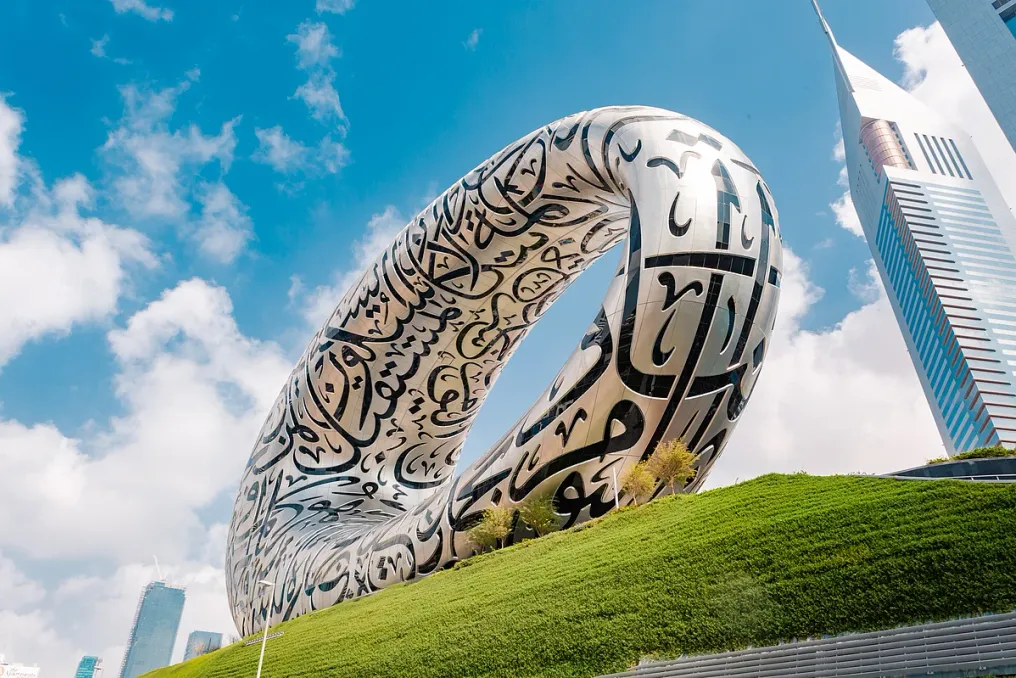
The Museum of the Future in Dubai plans to resume its activities in the first quarter of 2027. Although the building's exterior will remain familiar, the internal visitor experience will be entirely new.
Instead of the previous exhibitions that defined the museum since its opening in 2022, fresh exhibits, immersive environments, and new laboratories will appear. Visitors are promised a more active role in studying science, research, and potential future directions.
Azza Al Nuaimi, Chief Operating Officer of the Museum of the Future, told Khaleej Times that the museum's updated experience will have its own 'focus and direction,' rather than simply being an update of existing galleries.
According to the museum's frequently asked questions on its website, none of the current exhibits or experiences will return in the same form; they will be replaced by completely new ones, unified by a new narrative thread and a different way of interacting with the visitor.
Al Nuaimi emphasized that the goal is to make the future something visitors can do, not just represent.
Visitors will have the opportunity to explore new possibilities, participate in work conducted in the laboratories, and contemplate how today's decisions can shape tomorrow's world.
The people creating this experience are also changing. The museum announced that its new recruitment campaign, 'Future Perfects,' for the visitor engagement team received over 20,000 applications in the first 48 hours alone. During staff selection, priority is given to qualities such as curiosity, imagination, emotional intelligence, and adaptability, rather than prior experience in museums or customer service.
The museum is expected to reopen around its fifth anniversary. It first opened on February 22, 2022, although the exact date of its return in 2027 has not yet been announced.
According to the museum's FAQ, tickets for the updated experience will go on sale closer to the reopening date.
For nearly five years, the museum visitor journey immersed people in the imagined year 2071 aboard the OSS Hope, through the Heal Institute and Al Waha, past emerging technologies in Tomorrow Today and Future Heroes for young guests.
When asked about the fate of these experiences, Al Nuaimi replied: 'Existing exhibitions will be dismantled to make way for new experiences.'
However, what will happen to individual exhibits is still under development. 'Decisions regarding individual exhibits will depend on their nature, condition, and potential for future use. We cannot yet confirm which elements will be preserved, relocated, reused, or decommissioned.'
The mission of a museum dedicated to the future is that the future does not stand still. Since the opening of the Museum of the Future in 2022, artificial intelligence, biotechnology, and space exploration have rapidly advanced.
When asked whether this means some ideas presented four years ago already seem outdated, Al Nuaimi pointed to the 'significant' pace of change in these fields and the new questions they have raised about how technology and scientific progress will affect society and daily life.
She added: 'However, the Museum was never intended to precisely predict what the future would look like. Its goal is to explore possibilities, prompt people to question assumptions, and consider choices that can shape what is to come.'
'As new developments emerge, the way we explore these questions must also evolve. The next chapter will be built on this approach, presenting new perspectives while maintaining the curiosity and openness at the core of the Museum's mission.'
This idea is at the heart of describing the museum as a 'living museum.' A traditional museum preserves objects and stories of the past. A science center explains how something works. The Museum of the Future considers what future achievements in science and technology might mean for humanity.
In concept, its exhibitions are not meant to remain frozen in time. 'This is what we mean by a 'living museum': a place that continues to evolve with the future it seeks to explore,' said Al Nuaimi.
It is not necessarily the case. An exhibit in the museum does not have a fixed lifespan. The duration of an experience depends on the subject matter, the speed of its development, and whether new discoveries lead to a different way of studying it. 'Some themes will remain relevant in the long term, although the way they are presented may change,' noted Al Nuaimi.
Thus, although the current transformation is massive, it does not mean the entire museum will necessarily be rebuilt on a fixed cycle every few years.
People around the world are helping to shape the future. Over 1,000 ideas have been submitted about what the Museum of the Future should explore, some of which have already been incorporated into the new experience. Officials have not yet disclosed which ones were accepted.
This transformation follows the first chapter, during which the museum was visited by over five million people, and 620 events and 224 educational programs were held.
Al Nuaimi concluded that while the physical experience may change, one ambition remains constant: to create a place where people from different walks of life and disciplines can gather to contemplate the future of humanity.