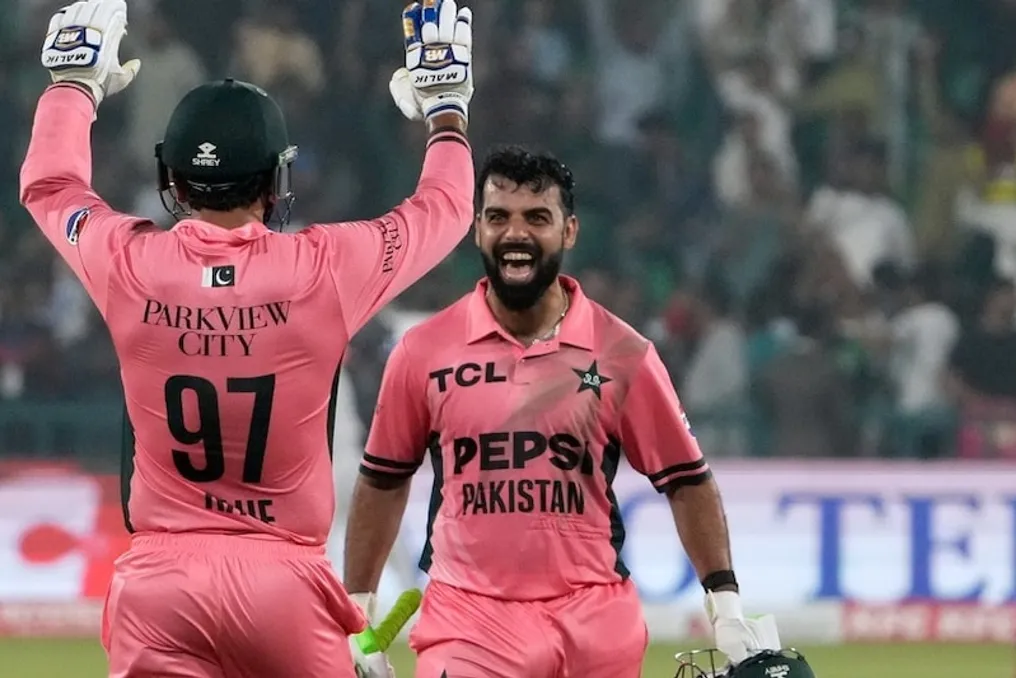
Shadab-Rauf helped Pakistan achieve historic victory over England in ODI Tri-series
Read more
Aaj Tak
www.aajtak.in

Shadab-Rauf helped Pakistan achieve historic victory over England in ODI Tri-series

In the ODI Tri-series match between Pakistan and England, held on October 25th at Gaddafi Stadium in Lahore, Shadab Khan played a decisive innings, turning a defeat into a victory for the Pakistani team.

Pakistan lost nine wickets with a score of 154 runs, and an additional 88 runs were needed for victory. However, Shadab, along with Haris Rauf, managed to change the course of the game by adding 89 runs without loss of wicket for the tenth wicket, securing the win for Pakistan and qualification for the Tri-series final.

Shadab Khan scored 113 runs without loss of wicket off 96 balls, including 13 fours and five sixes. This marked his first century in ODI format. Haris Rauf, batting at number eleven, supported him by scoring seven runs.

Despite England having the last wicket remaining, both batsmen maintained composure under pressure. Ultimately, Rauf hit the winning four, bringing an unforgettable victory to Pakistan.

The partnership between Shadab Khan and Haris Rauf became the largest partnership in successfully chasing a target in ODIs for the tenth wicket. Previously, this record belonged to Derek Murray and Andy Roberts, who scored 64 runs without loss of wicket against Pakistan during the 1975 World Cup.

During his innings, Shadab reduced the pressure of the target by constantly hitting boundaries. Rauf, on the other side of the field, defended his wicket and played thoughtfully when necessary. Their combined play completely changed the course of the contest.

Prior to this, Pakistan captain Shaheen Shah Afridi played a key role in restricting England's score to 241 runs. He took four wickets for 46 runs, while Rajaulullah, making his ODI debut, secured two wickets.

England's innings started poorly, and the team lost three wickets for only 19 runs. After this, Ben Duckett stabilized the game, scoring 105 runs off 111 balls. Sam Curran earned 42 runs, and they formed a partnership of 93 runs for the fifth wicket. In the end, Gus Atkinson added 36 runs without loss of wicket, taking the team to an acceptable total.
Similar stories

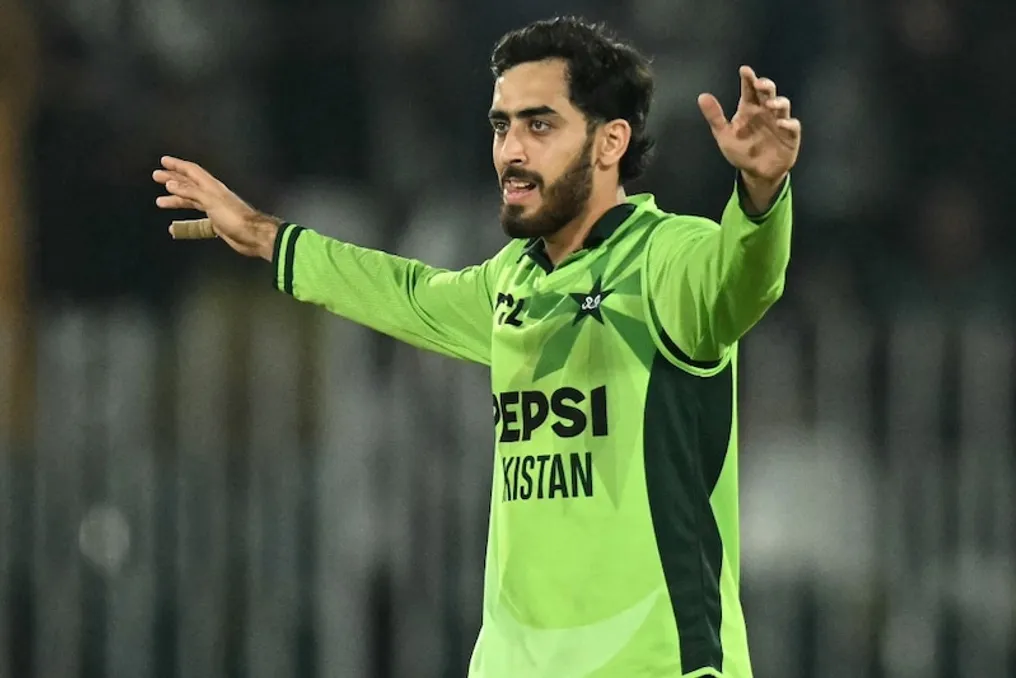
Pakistan defeats England in ODI Three Series thanks to Arafat Minhaz's performance
Read more
www.aajtak.in

Pakistan defeats England in ODI Three Series thanks to Arafat Minhaz's performance

Pakistan's 21-year-old all-rounder, Arafat Minhaz, forced the English team to capitulate with his outstanding performance. In the ODI Three Series match, he first scored 59 runs and then took six wickets, securing an 87-run victory for Pakistan.

In the match, which took place on October 20th at Rawalpindi Stadium in Rawalpindi, Pakistan, having lost the toss, started batting and scored 302 runs, losing 9 wickets. England's reply finished at 215 runs. This win was Pakistan's second in the tournament.

The challenging English side started their innings aggressively. Tom Banten and Ben Duckett helped the team build pressure on Pakistan, scoring 91 runs for the first wicket. However, Haris Rauf broke this partnership by dismissing Duckett, who had a score of 45. Banten scored 57 runs off 53 balls before being dismissed by Arafat Minhaz.

Subsequently, Arafat Minhaz got rid of England's captain, Harry Brook, with a score of five. Joe Root and Sam Curran tried to stabilize the game, but Naseem Shah dismissed Root, who was scoring 33 runs. Then Haris Rauf removed Curran (27 runs), worsening England's problems.

After this, Arafat Minhaz became the target of Jordan Cox and Jamie Overton. Minhaz did not stop there, consecutively dismissing Will Jacks and Adil Rashid, thus completing his six-wicket haul. Minhaz had previously taken five or more wickets in a single ODI international match twice. England's innings concluded after 38.4 overs after Gass Atkinson was run out. Minhaz took six wickets, scoring 40 runs in 8.4 overs. Additionally, Haris Rauf secured two wickets, and Naseem Shah one.

Prior to this, Pakistan's attack also looked difficult. Gass Atkinson dismissed Fahhar Zaman on the very first ball. Sam Ayub returned to the field, scoring eight runs, while Babur Azam scored 34 runs off 52 balls, being dismissed by Will Jacks. Salman Ali Agha managed only 16 runs, and Pakistan lost four wickets, scoring 59 runs.

At that moment, Hasan Nawaz and Saad Beg managed to stabilize the innings. They added 51 runs for the fifth wicket. Saad scored 35 runs, but Gass Atkinson ended his innings. On the other hand, Hasan Nawaz continued to play aggressively, scoring 79 runs off 74 balls, including five fours and four sixes. After Hasan Nawaz was dismissed, Arafat Minhaz took full responsibility. He scored 59 runs off 58 balls, and together with Fahim Ashraf, quickly advanced Pakistan's score. They formed a partnership of 72 runs for the seventh wicket. Fahim scored 39 runs off 25 balls. In the final overs, captain Shakib Afridi helped Pakistan cross the 300-run mark, hitting two consecutive fours. He remained not out, scoring 10 runs. Sonny Baker from England took three wickets, and Gass Atkinson earned two wickets.

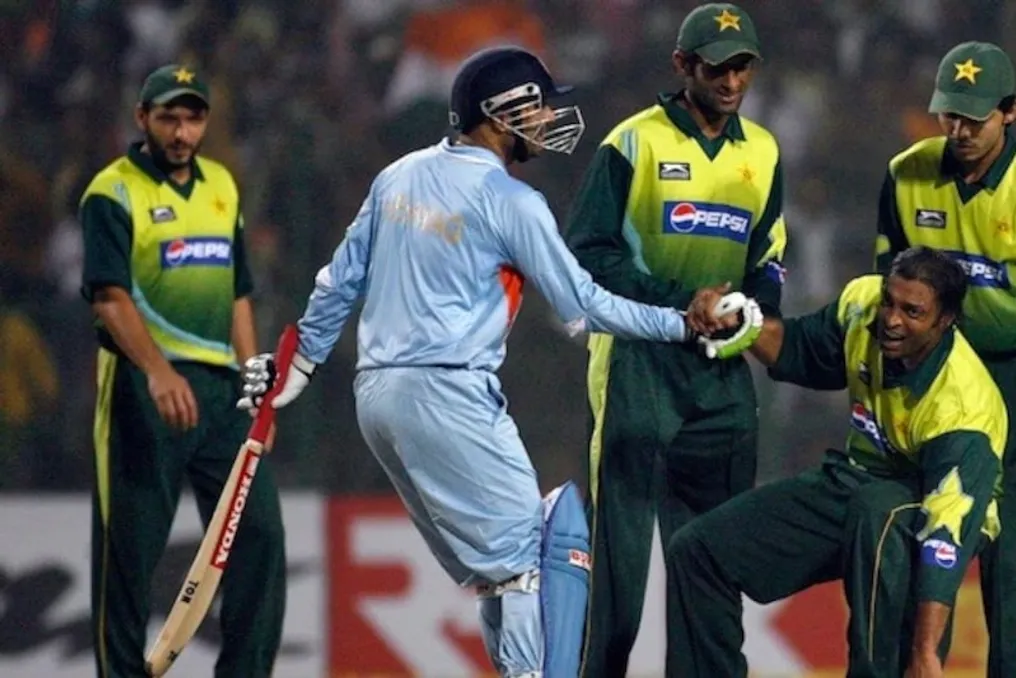
Virendra Sehwag and Shoaib Akhtar engaged in a verbal spat during the match
Read more
www.aajtak.in

Virendra Sehwag and Shoaib Akhtar engaged in a verbal spat during the match

The history of confrontations between Indian and Pakistani teams has always been characterized by an atmosphere of high tension and spectacular clashes, including verbal battles between players.

October 20 marks the 48th birthday of Virendra Sehwag, a former opening batsman for the Indian national team. Throughout his 14-year career, Sehwag demonstrated mastery, dealing significant damage to many prominent world cricketers.

Sehwag usually played at his own pace on the field, but when any player tried to throw him off balance, he responded to provocations both verbally and with his bat.

One of the well-known and memorable episodes involves Pakistan's fast bowler Shoaib Akhtar. During one match, Akhtar attempted to disrupt the Indian batsmen with his speed, but Sehwag successfully directed his balls all over the field.

Annoyed by this, Akhtar began bowling constant bouncers at Sehwag, constantly teasing him with the phrase: 'If you can, show me a hook shot.' Sehwag, who was playing openly, singing and whistling, soon realized that Akhtar was provoking him.

Initially, Sehwag responded calmly, asking if he was bowling or begging. However, when Akhtar insisted and challenged him to play a hook shot, Sehwag gave him a harsh reply that is still discussed in cricket circles.

Responding decisively to Akhtar, Sehwag pointed towards the non-striker's end and stated that his father was standing there. He challenged: 'If you dare, ask him, he will play a hook shot.' At that moment, Sachin Tendulkar, the Master Blaster, was at the non-striker's end.

After this, when Sachin came to the crease, Akhtar bowled another bouncer at him, which Sachin brilliantly deflected and sent out of the stadium for a sixteen runs. After this powerful shot, Sehwag approached Shoaib Akhtar and mockingly said: 'Son, son remains a son, and father remains a father.'

Virendra Sehwag's international career was exceptionally successful. Analyzing his Test results, it is clear that he scored 8586 runs in 180 innings played in 104 matches, with an impressive average of 49.34. His best individual score was 319 runs. In Tests, he maintained an aggressive style of play, scoring 23 centuries and 32 half-centuries at a strike rate of 82.23, and hitting 1233 fours and 91 sixes.

In One-Day International (ODI) format, Sehwag also displayed magnificent play. In 245 innings played in 251 ODI matches, he earned 8273 runs with an average of 35.05 and an explosive strike rate of 104.33, including his double century (maximum 219 runs). In ODIs, he scored 15 centuries and 38 half-centuries, and hit 1132 fours and 136 sixes.

Furthermore, in 19 T20 International matches, he scored 394 runs at a strike rate of 145.38.

Popular