Bodyweight training helps combat frailty in the elderly, points out USP study
Read more
Super Abril
super.abril.com.br

Bodyweight training helps combat frailty in the elderly, points out USP study

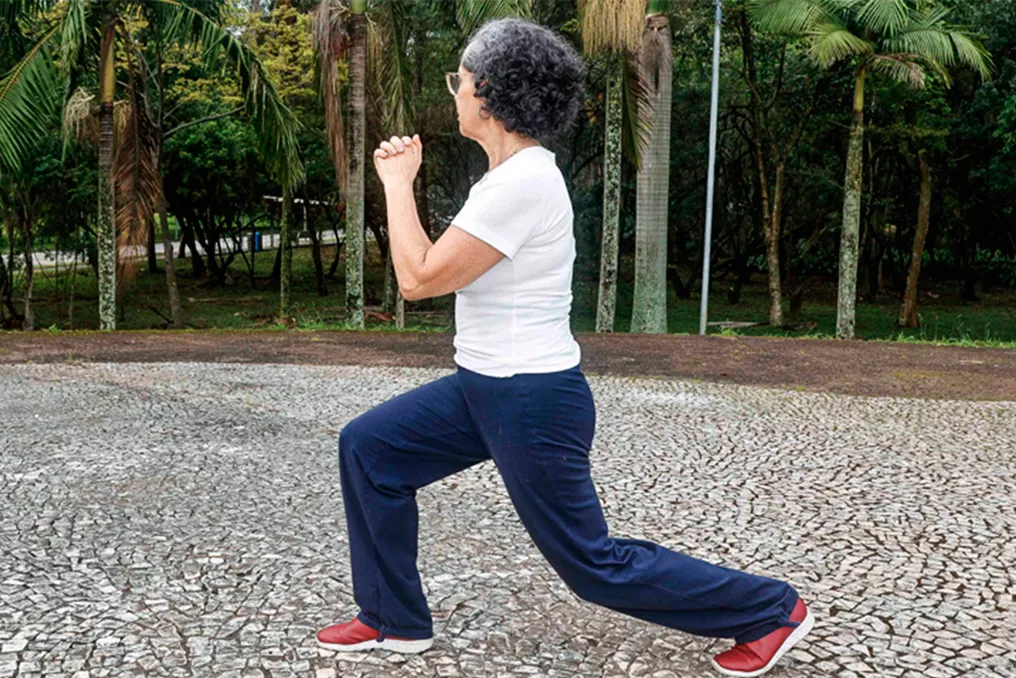
Simple exercises, using only body weight and adapted to individual needs, demonstrate the ability to reduce frailty in older people. Research conducted by USP showed that an interval training program applied to patients at a Basic Health Unit (UBS) in Sorocaba (SP) managed to reverse the state of frailty, improving the strength and functional performance of the elderly, in addition to reducing blood pressure indicators.

Definition and Prevalence of Frailty

According to Francisco Luciano Pontes Júnior, Professor of Gerontology at the School of Arts, Sciences and Humanities (EACH) of USP, frailty is defined as a clinical condition marked by decline in various physiological systems and reduced capacity of the organism to withstand stresses, such as infections. This condition is linked to problems with daily activities, risk of falls, hospitalizations, and mortality. It is estimated that frailty affects 9.1% of the Brazilian population and 17.4% globally, with pre-frailty being even more common, with prevalences of 51.8% in Brazil and about 46% worldwide.

The research monitored 60 participants, whose average age was 74 years, over one semester. These individuals were randomly allocated into two groups: one performed exercises using their own body weight, alternating phases of effort and recovery, three times a week; while the second group maintained its usual routine, serving as a control group.

Results of Interval Training

Throughout the study, participants who followed the training demonstrated a higher chance of progressing to stages of lower frailty. Lucas Marques Vieira, author of the research conducted at EACH in collaboration with the University of Manitoba, Canada, reported that 'the improvement can already be observed in the first 12 weeks and occurred progressively until the end of the 24 weeks of training.' He added that there were notable improvements in lower limb strength, walking speed, mobility, and performance in the sit-to-stand test from a chair.

The sessions took place three times a week, totaling 24 weeks, lasting 30 minutes. Each session began with five minutes of warm-up, followed by 20 minutes of interval exercises with body weight—alternating 30 seconds of exercise and 30 seconds of rest—and concluded with five minutes of stretching for calm return. The intensity of the exercises was gradually increased, moving from moderate to vigorous.

All exercises were adapted and included variations of squats and other multi-joint activities, involving different combinations of movements in the upper and lower limbs, as well as the abdominal region. Vieira clarifies that the state of frailty was assessed using the Fried Frailty Phenotype model, which uses five criteria for this classification: unintentional weight loss (4.5 kg or more, or more than 5% of body weight in the last year); exhaustion (feeling of excessive tiredness); reduced grip strength (low strength measured by dynamometer); low walking speed (slowness when covering 4.6 meters); and low physical activity level (estimated by questionnaire).

The findings were considered very positive, as the use of body weight as resistance allowed for the work of several muscle groups without the need for complex equipment. After 24 weeks, participants initially classified as frail showed significant improvements: 80% migrated to the pre-frail state and 20% were classified as robust. Among those who started as pre-frail, 69.2% achieved the robust classification after the training period.

Vieira also noted a decrease in systolic blood pressure. No relevant changes were detected in body weight, body mass index (BMI), fat percentage, or appendicular muscle mass of the participants. For Pontes, the bodyweight training program has the potential to be adopted as a strategy for managing frailty in primary healthcare, given that it requires little structure and does not depend on specialized equipment. The supervisor also emphasizes the importance of the participation of Physical Education professionals in UBSs, working alongside the health team in the prevention and care of chronic diseases through physical exercise. The results were published in the article Effect of bodyweight interval training on frailty status in older adults: a randomized controlled trial, in the journal European Geriatric Medicine.


Similar stories

Reasons why dogs might consume their own vomit or regurgitation
Read more
super.abril.com.br

Reasons why dogs might consume their own vomit or regurgitation

Although the idea of a dog eating its own vomit might seem strange to a human, it is a relatively common behavior in the canine species. Similar to other undesirable habits, such as ingesting feces or rolling in mud, this occurrence, most of the time, does not indicate a health problem.

There are several reasons why dogs might adopt this behavior. One is linked to the evolution of the species: the regurgitated material emits an odor that can attract predators, in addition to signaling a state of fragility. By consuming it, the dog would be eliminating traces and improving its camouflage in nature, although this theory still lacks definitive scientific proof.

Another cause may be a habit acquired during childhood. During the weaning process, the mother may regurgitate food to facilitate the puppy's feeding, pre-digesting part of the food. If the dog maintains this habit in adulthood, it may continue to practice it.

Additionally, the behavior may be related to resource defense. Some dogs demonstrate food aggression out of fear of having their food stolen; this is another crucial evolutionary trait for survival. In this context, the vomit may be perceived by the dog as a valuable resource that needs to be protected, leading to its ingestion.

For dogs, smell is the primary sense. While vomit may have an unpleasant odor to us, dogs can identify the aroma of the original food, interpreting the content as something edible rather than waste.

Difference Between Vomit and Regurgitation

It is essential to distinguish between vomiting and regurgitation, as they are distinct processes. Vomiting involves abdominal contractions and releases digested material mixed with bile (a yellowish liquid), and it does not always occur immediately after a meal. It is an involuntary act that can be a consequence of infections, ulcers, or medication use, and may be preceded by signs of distress.

Regurgitation, on the other hand, consists of expelling material from the esophagus before it reaches the stomach and intestines, and typically happens right after eating, often due to haste. It is not associated with abdominal contractions; the dog simply lowers its head and the contents come out, consisting of undigested food mixed with mucus, which can be attractive to the animal.

Often, what humans classify as vomiting is, in reality, just regurgitation. For a dog, ingesting regurgitation rarely represents a major problem. However, eating vomit requires more attention, as it can be the result of ingesting inappropriate substances, and by reingesting it, the dog may absorb the toxin or problematic food.

Furthermore, vomit has a high acidity level, which can cause damage to the dog's tooth enamel and esophageal lining.

When Should I Be Concerned?

Regarding vomiting, the dog tends to expel the contents several times until it completely eliminates what caused the discomfort, and then the episode ceases. It is vital to keep harmful food or substances out of the animal's reach to prevent new occurrences.

The condition should only be considered a cause for alarm if the vomiting is persistent, lasts longer than usual, contains blood, or is accompanied by signs such as dehydration, loss of energy, or diarrhea. In these cases, a veterinarian must be consulted.

As for regurgitation, it usually results from the dog eating too quickly. In some animals, this can be a repetitive pattern. To mitigate the problem, it is recommended to slow down the feeding speed. A simple strategy is to provide smaller portions more frequently, as dogs tend to eat slower when there isn't a large amount of food available. There are also specific bowls designed to slow down consumption.

If there is more than one dog, it is advisable to feed them separately to avoid feelings of competition. Proximity can induce anxiety, leading the animals to eat as quickly as possible to prevent the other from taking their share.

Two Basic Health Units in Mogi das Cruzes close for renovation starting this Monday
Read more
g1.globo.com

Two Basic Health Units in Mogi das Cruzes close for renovation starting this Monday

The Basic Health Units (UBSs) located in the neighborhoods of Vila Suíssa and Vila Jundiaí, in the city of Mogi das Cruzes, will be temporarily closed to undergo a renovation process, scheduled to begin this Monday, the 26th. During the construction period, affected patients will be directed to receive care at other units belonging to the municipal health network.

According to information provided by the City Hall, all previously scheduled appointments will be maintained even during the renovation period. However, the official communication from the municipal administration did not specify which health posts will receive patients from these two units.

The renovation work is expected to be completed in May 2027. The City Hall justified that the purpose of these modernizations is to improve the physical infrastructure of the locations, aiming to offer greater comfort, safety, and better conditions for both users and healthcare professionals.

Revitalization Program

The municipality has a total of 18 UBSs, which provide various services, including consultations in general medicine, pediatrics, gynecology, and obstetrics, in addition to mental health support. These units also provide initial mental health care without the need for a prior appointment and refer to specialized municipal network services when necessary.

The renovations are part of a program established by the City Hall that covers improvements in 16 Basic Health Units in Mogi das Cruzes. To date, six units have completed their renovations and been returned to the community: Jardim Maricá, Braz Cubas, Mineração, Jardim Ivete, Santo Ângelo, and Jundiapeba. Furthermore, the Vila Nova Aparecida UBS will reopen on Monday (26) after undergoing works, while the Jardim Camila UBS remains under renovation, with an expected completion date of December 2026.

The next phases of this program will include the Vila Natal, Ponte Grande, Alto do Ipiranga, Vila Moraes, Vila da Prata, and Santa Tereza units, although the start dates for construction in these locations are still pending definition.

How to Schedule Appointments at UBSs?

To schedule appointments with general practitioners, pediatricians, and gynecologists, citizens must contact the number 160, which belongs to the Integrated Health System (SIS). In addition to the 18 traditional UBSs, the municipality has the Jardim Universo UBS, which operates under a different model and offers 24-hour emergency care.

Understand the Difference Between UPA, UBS, and USF

The municipal health network includes other services besides UBSs, such as Emergency Care Units (UPAs) and Family Health Units (USFs), in addition to 24-hour care units. Each of these facilities is designed to serve different types of cases, from severe emergencies to routine check-ups, making it essential to know which unit to seek out to optimize care and ensure the correct referral for each demand.

Popular