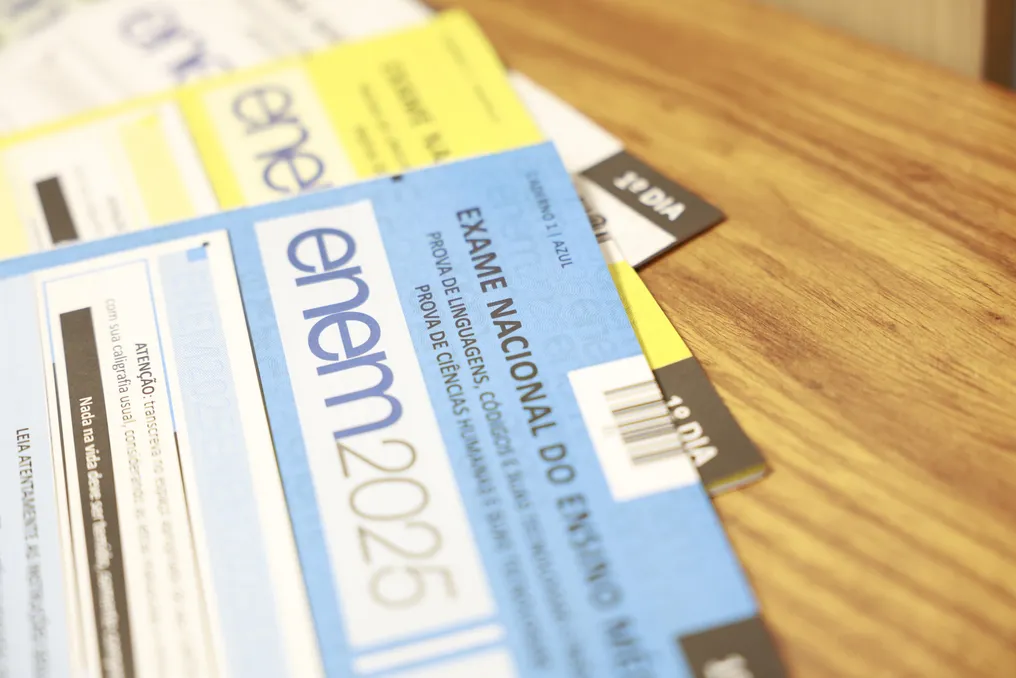
With the approach of the National High School Exam (Enem) 2026, students are beginning to project their futures after taking the test. For many, the main goal is to enter higher education and start a professional career. Others see passing as a chance to change their families' socioeconomic situation.
Miguel Paredes, a student from Bayeux, located in Greater João Pessoa, exemplifies this dedication. He balances full-time studies with an internship and preparatory courses, aiming for a spot in a public university. Although he is still undecided about his course, he is convinced that he will continue studying after finishing high school.
For Miguel, passing transcends just getting a spot; he dreams of being one of the first members of his family to attend a public university, which would be a source of great pride for his supporters. He states that such an achievement 'would transform my life in a gigantic way, because I would go directly from school to university.'
The journey to the exam requires great effort. Miguel reports getting home late after long days of study and work. To maintain preparation, he uses mind maps, flashcards, and attends preparatory classes, identifying fatigue as his biggest obstacle. With the date approaching, he feels apprehension, especially about the risk of forgetting vocabulary and connectors during the essay, but he also feels satisfied that this important phase is ending.
Miguel's post-test plans include rest, work, and pursuing his desired career. He encourages other candidates with the message: 'Never give up, your dream is closer than ever.'
Enem represents hope for students
Sara Soares, also a resident of Bayeux, at 17 years old, sees in Enem the opportunity to realize her aspirations. For her, the test symbolizes the possibility of defining a profession, achieving autonomy, and building the desired future. She affirms that 'the Enem test symbolizes more than a future, but it represents change. Hope! It is the dream becoming reality.'
Sara's influences include her mother, Maria José Soares, known as Dona Branca, who is a Geography teacher and school supervisor, and her school's Sociology teacher, Maysa Carvalho. Both women motivate her to value knowledge and the opportunities that education provides. When planning the coming years, Sara hopes to be graduated, have financial stability, be happy with herself, and be able to help her family. She believes that her score on Enem can help her achieve these goals, although she also anticipates moments of leisure with friends, trips to the beach, and forró parties.
Sara also shares a message of confidence with her peers in the final stretch: 'May all effort be worthwhile. May everything already have been worth it. Knowledge is one of man's riches. And I can be whatever I want.'
Anxiety and pressure over the result
The expectation of passing is often accompanied by insecurity, especially when the student links the result to the fulfillment of personal and family goals. According to clinical psychologist Sarah Leite, from João Pessoa, it is normal to experience anxiety before crucial evaluations, but it is essential to monitor when this worry begins to interfere with daily routine.
Signs that professional support may be necessary include sleep problems, loss of focus, and constant restlessness, even during rest periods. Sarah Leite explains that 'psychotherapy can help understand what lies behind these worries and develop strategies to cope better with them.'
The psychologist also warns about future pressure. The desire to attend university, choose a field, and meet family expectations can lead young people to view Enem as a final decision about their lives. However, Sarah emphasizes that not all plans need to be fully defined at this stage, as new paths can emerge along the way. She cautions that 'passing is important, but it cannot be the only measure of your potential or your future.'
How to deal with the fear of not passing?
Thoughts like 'what if I don't pass?' can intensify anxiety both during preparation and while awaiting the result. Sarah suggests a technique: writing down these apprehensions in a notebook and then questioning what proof there is that the negative scenario will actually occur. The specialist clarifies that anxiety tends to make the student predict the worst and suffer over something that has not yet materialized, making it vital to recognize the fear without accepting it as absolute truth.
If passing does not occur as expected, the frustration should be accepted without the student interpreting the result as a judgment of their competence. Sarah highlights that 'a result does not define anyone's ability, nor does it determine their entire future.' After the test, the recommendation is to gradually resume the routine, dedicating time to pleasant activities, rest, and socializing with friends and family. Constantly checking answer keys, comparing answers, or seeking score estimates can increase the level of worry while waiting.
For the specialist, the goal is not to completely eradicate anxiety, but rather to learn to manage uncertainty in a healthier way. While Miguel awaits his spot in the public university and Sara nurtures her plans for building a future, both share the belief that studies should open new doors. Despite the nervousness of the final stretch, they maintain faith that the effort invested will bring them closer to the dreams they aim to achieve.