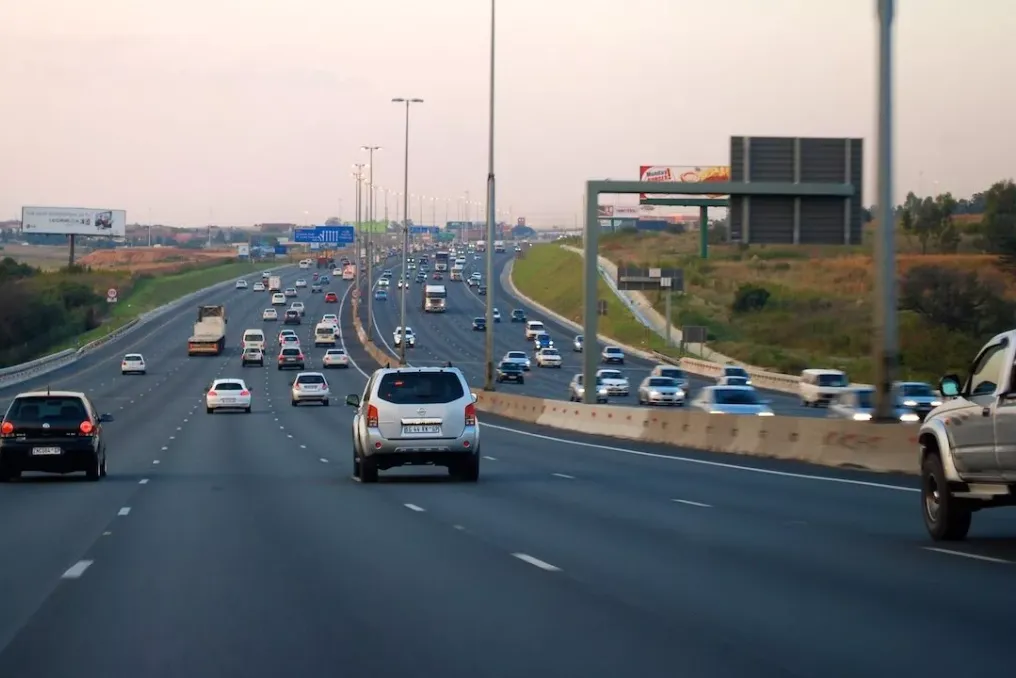
Part of the N1 highway in South Africa near the Zimbabwe border may become toll road
Read more
Getaway
getaway.co.za

Part of the N1 highway in South Africa near the Zimbabwe border may become toll road

A section of the N1 highway, measuring 1.1 kilometers and located near the Beitbridge border crossing in the Limpopo province, could potentially be converted into a toll road, requiring payment from drivers traveling between South Africa and Zimbabwe.

Transport Minister Barbara Crisi announced this proposal in a written response to Member of Parliament George Michalakis, who inquired about national roads being considered for toll implementation.

The proposed section is situated in the Musina local municipality, close to the border between South Africa and Zimbabwe. The process has entered the public consultation phase, although available information does not confirm the start of charging or specify the proposed tariff.

Crisi stated that 'the notice of intention to introduce a toll was published on August 15, 2025, in Government Gazette 53178.' She also clarified that 'public consultations have concluded, and the consultation report has been prepared and submitted to the SANRAL Council for consideration.'

Barbara Crisi further confirmed that the South African National Roads Agency (SANRAL) had not submitted applications to declare toll roads for review and approval during the 2025/26 financial year. However, the Beitbridge proposal was submitted and approved for public consultation.

The N1 is one of South Africa's main transport corridors, connecting Cape Town, Gauteng, and Limpopo before leading to Zimbabwe. The introduction of a toll on the border section could affect drivers, transit passengers, and freight carriers using this route.

This proposal comes amid ongoing issues where road users continue to face tolls on major national routes. According to IOL, SANRAL increased toll tariffs by 3.12% starting March 1, 2026. The publication reported that a one-way trip between Johannesburg and Beitbridge cost R357.50 for a private vehicle under the current tariff structure.

This development follows a separate decision regarding the closure of a disputed electronic toll collection scheme in Gauteng. In June 2026, the government confirmed that outstanding historical debt for electronic payments would be written off, while emphasizing that the principle of user payment remains part of the country's road infrastructure funding system.

The South African government stated that this decision aims to provide clarity and finality regarding historical debt. Nevertheless, the Beitbridge proposal is a separate process from the discontinued electronic toll collection scheme in Gauteng. Next steps depend on the review of the consultation report and the relevant toll road approval process.
Similar stories

Botswana drivers pay less for fuel imported from South Africa
Read more
www.2oceansvibe.com

Botswana drivers pay less for fuel imported from South Africa

Although Botswana sources most of its fuel from South Africa, drivers in the country pay a lower price for gasoline, according to a comparison published by BusinessTech on October 20. This comparison focuses on individual pricing decisions and applicable levies in each country, rather than solely on the fuel source.

According to the publication, the price of AI-95 gasoline in Botswana is P18.21 per liter, while the domestic price in South Africa reaches R30.25. Using the exchange rate employed in the comparison (P1 to R1.20), the price in Botswana converts to R21.85 when rounded to the nearest cent.

For South African drivers, this comparison comes after another significant price hike. The government announced an increase in the price of AI-95 gasoline by R3.33 per liter starting October 7, citing rising international product prices and supply shortages.

The statement also mentioned uncertainty regarding oil flows through the Strait of Hormuz, increased transportation costs, and dwindling reserves. A slight strengthening of the rand against the dollar could not offset these factors.

World Bank trade data shows that South Africa is the leading source of fuel imports for Botswana in 2023, followed by Namibia and Mozambique. However, this historical trade ranking does not mean that both countries must set identical prices for drivers today.

South Africa adjusts regulated fuel prices monthly. The official announcement explains that the calculation takes into account imported crude oil and finished products, international prices, and import costs such as freight.

Botswana has its own regulator and makes pricing decisions. BusinessTech reports that the Botswana Energy Regulatory Authority last reduced fuel prices in July, and that the reinstatement of several levies in October did not lead to an immediate rise in the retail price.

These levies included a fuel levy, a road fund levy, and a supply assurance margin. In its recovery report, The Farmers’ Platform stated that the government would direct the collected revenues to strengthen Botswana's National Oil Fund to support consumers.

The Regulator, quoted by BusinessTech, explained how future pump price decisions will be made: 'Any future adjustment to pump prices will be determined through an established fuel price adjustment mechanism, taking into account prevailing international fuel prices, exchange rate fluctuations, accumulated surpluses or deficits, and other relevant market factors.'

The type of gasoline, the date of pricing, and the exchange rate influence the comparison, affecting savings in rands. Location is also important: the South African figure used here refers to domestic prices, not the price applicable at every petrol station across the country.

This distinction also applies to diesel fuel. The benchmark wholesale price for diesel fuel in South Africa is not the final retail amount that a driver necessarily pays, so comparing it to the price at a foreign station does not establish an equivalent cash saving.

Popular