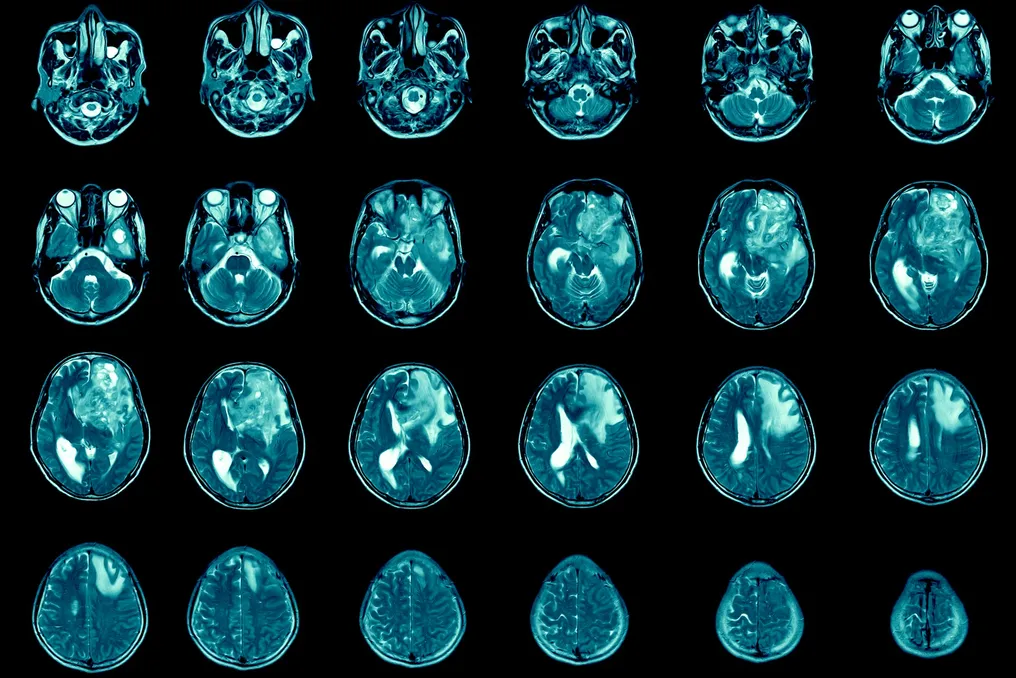
Melatonin, a substance often used by people to combat jet lag or improve sleep, is attracting the attention of scientists as a possible auxiliary agent in the fight against glioblastoma—one of the most dangerous types of brain cancer.
Glioblastoma is a primary malignant tumor of the brain, most often found in adults, and is one of the most difficult cancers to treat. Its characteristic feature is that it does not grow as a compact ball that can be surgically removed; instead, it resembles weed roots, penetrating between neurons and spreading microscopic branches into healthy tissue. Because of this, even after visible parts are removed by neurosurgeons, hidden cells almost always remain.
To combat these remaining cells after surgery, radiation therapy and the drug temozolomide are used, which has been recognized as the basis of treatment since 2005 due to a large clinical study. However, the tumor is prone to recurrence, meaning regrowth.
To understand the cause of recurrences, it is necessary to examine the mechanism of action of temozolomide. This drug acts on DNA, which serves as the instruction for cell division, by 'smudging' key words. If there are too many such 'smudges,' the cell cannot copy its instructions and dies. Nevertheless, many cancer cells possess their own 'corrector'—the enzyme O6-methylguanine-DNA methyltransferase (MGMT)—capable of eliminating the most harmful damage. When the gene coding for this protein is suppressed, the effectiveness of chemotherapy is higher; when it is active, much of the anti-tumor effect is lost.
Furthermore, the tumor is heterogeneous: among its cells are those with stem cell properties, meaning they can self-reproduce and create new, treatment-resistant cancer cells, like embers igniting a fire. This heterogeneity explains why treatment may destroy many cells but leave others capable of causing the disease to return. This also justifies interest in combining interventions: if a substance hinders the survival mechanisms of cancer cells, it can increase the effectiveness of the damage inflicted by chemotherapy. This is where melatonin comes in.
Our brain produces melatonin at dusk, using it as a biological clock signaling the body's need for rest. But its function is not limited to this. Simultaneously, it participates in inflammation processes, the body's defense mechanisms, and the regulation of cellular energy. Interestingly, melatonin acts differently in different locations. In healthy cells, it usually acts as a shield against oxidative damage. In some cancer cells, conversely, it disrupts the energy production mechanism. In a study with glioblastoma cells obtained from patients, it was observed that melatonin alters the energy production and metabolic regulation of these cells, leading to their death. Other studies suggest that it also modifies the interaction between the tumor and the immune system.
The reason for this dual nature lies in the fact that cancer cells exist at the limit of capabilities: they grow rapidly, consume a lot of energy, and depend on a fragile balance. A stimulus that a healthy cell absorbs without problems can destabilize a cancer cell. The idea of combining these two molecules is simple: while temozolomide damages the 'instructions' for cancer cell reproduction, melatonin prevents its defense and repair. Their combination is like a simultaneous strike on the building and its maintenance staff.
This idea is confirmed in laboratory settings. A 2025 study showed that in glioblastoma cell cultures, the combined effect exceeded the simple sum of the effects of each substance separately. The mixture suppressed signals that help the tumor survive and become inflamed, while also activating its self-destruction mechanisms. Furthermore, melatonin slowed tumor growth in mice. However, there is an important nuance: these tumors were implanted under the animal's skin, not in the brain. The brain is a fortress protected by a barrier that prevents many substances from entering. What works on the side of a mouse's brain may not work inside the skull.
Another study conducted in 2018 concerned residual cells with stem cell properties: melatonin made them more sensitive to temozolomide, although the effect varied greatly depending on the experimental model.
Treating a brain tumor is not just about eliminating it; it is crucial to preserve memory, mood, and the ability to lead a full life. Unfortunately, chemotherapy also negatively affects the healthy brain. In this regard, there is another promising path. In mice without tumors that received temozolomide, melatonin prevented depressive behavior and weakened changes in new neuron formation, although it did not prevent anxious behavior. This is an interesting result, but it needs to be proven in humans, and we must remember that protecting healthy tissue does not automatically mean protecting the tumor.
By this point, it is easy to think that since melatonin can be bought at the pharmacy, why not take it immediately? There are at least three reasons why this should not be done. Firstly, there is dosage. Many experiments use concentrations hundreds of thousands of times higher than the natural levels achieved by our body at night. It is unknown whether a pill can reach similar levels inside the brain tumor, and whether attempting this is safe.
Secondly, there is very little human data. The main clinical study was published in 1996: a small test with 30 patients showed that those who took melatonin along with radiation therapy had better survival rates after one year. This is a noteworthy fact, but it is based on a very small group of patients, predates the advent of temozolomide, and does not answer today's question.
Thirdly, adding any substance to oncological treatment can have unforeseen consequences. Therefore, patients undergoing treatment should not take melatonin for this purpose without prior consultation with the medical team and never as a substitute for prescribed therapies.
All this means that melatonin is false hope? No. It means that a good idea has reached the most difficult test. The next step is clinical trials, which will first determine the safe dose and penetration level into the tumor, and then compare standard treatment with treatment involving melatonin. And it will not be enough to measure patient lifespan; the quality of their life, including memory and emotional state, will need to be assessed. However, there is an additional obstacle. Since melatonin is a cheap and non-patented molecule, commercial incentives to fund these studies are minimal. In this case, independent research funded by public funds is necessary. Perhaps in a few years, the hormone that helps us sleep will also help chemotherapy work better. To find out, we need not just good results in cell cultures, but patients, rigor, and time.