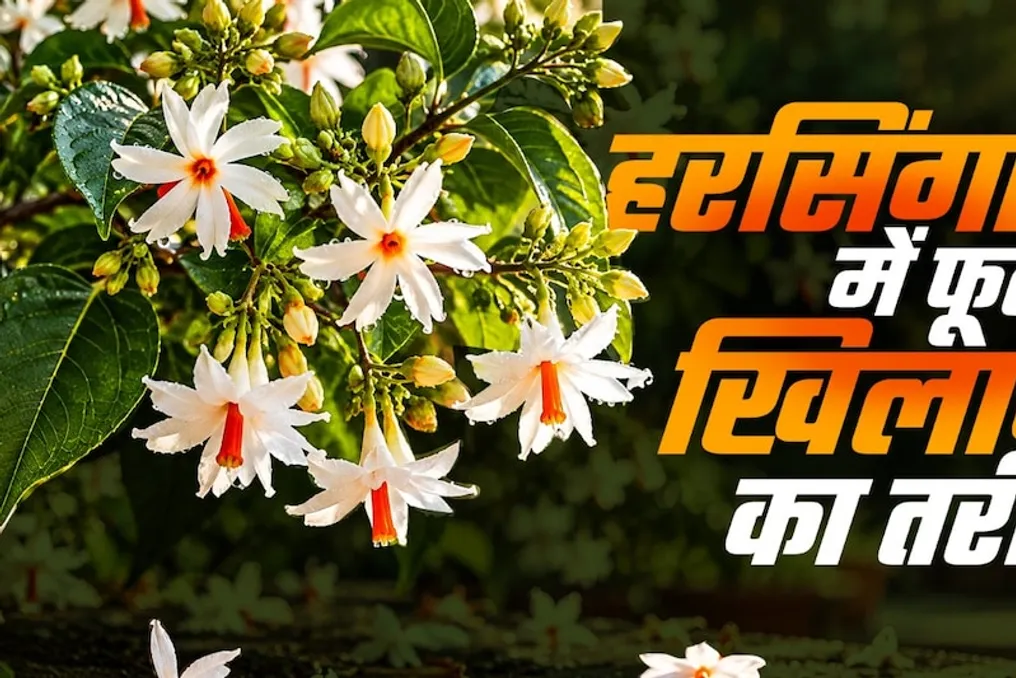
Reasons for lack of flowering in the Harsingar plant: three common care mistakes
Read more
Aaj Tak
www.aajtak.in

Reasons for lack of flowering in the Harsingar plant: three common care mistakes

Many people are currently engaged in gardening, and among them, growing Harsingar, also known as Parijat, is popular. When the Harsingar plant blooms with white-orange flowers, the entire yard fills with fragrance. Due to its beauty, people like to plant it on balconies, rooftops, and in gardens.

However, there are often complaints that the plant does not flower, even despite careful care. Sometimes the leaves begin to wilt, and sometimes the entire plant dies, and owners do not understand what exactly the problem is.

If you also have a Harsingar growing at home and it is not flowering, you might be unknowingly making mistakes during care. In fact, excessive sunlight, lack of nutrients, and waterlogging in the soil can negatively affect the plant's growth and flowering. The good news is that by paying attention to a few simple points, you can help your plant stay healthy.

Below are three important aspects of caring for the Harsingar plant that will help you achieve abundant flowering.

  1. Do not place the plant under too bright sun

    The Harsingar plant needs sunlight for good growth, but overly intense sun can damage its leaves and affect flowering. Therefore, the plant should be placed in soft morning sun. During peak heat hours when the sun becomes too strong, the pot should be moved to a place where there are fewer direct rays, but still good lighting.

  2. Do not forget to fertilize on time

    If Harsingar is not flowering, one of the reasons may be a lack of nutrients in the soil. To maintain the health of the plant, fertilizers must be applied regularly. Vermicompost or organic fertilizers can be used. Special attention should be paid to the plant's needs during the flowering period. Harsingar usually flowers from August to December, although this period may vary depending on the weather and the condition of the plant itself. It is important to apply fertilizer in moderate amounts, as an excess of fertilizer can also harm the plant.

  3. Do not allow waterlogging in the pot

    One of the most serious mistakes in plant care is watering with too much water. If water stagnates around the roots of the Harsingar for a long time, the roots can rot. This negatively affects the plant's health, causing leaf wilting. Before watering, always check the moisture level of the soil. If the soil is already moist, it is better to refrain from watering for some time. Furthermore, it is crucial that the pot has drainage holes to drain excess water so that moisture does not accumulate around the roots.

Other aspects to consider

To keep the Harsingar plant lush and green, it is not enough just to water and fertilize it. You must also monitor the type of soil, the level of light, and the space in which it grows. If the plant's leaves are constantly yellowing or its growth stops, you should first check the care methods. Instead of overwatering or fertilizing unnecessarily, you need to understand the plant's needs and make appropriate adjustments.
Similar stories

According to Vastu, there are five types of plants that are not recommended for indoor planting due to potential negative consequences
Read more
www.aajtak.in

According to Vastu, there are five types of plants that are not recommended for indoor planting due to potential negative consequences

People often use various plants to decorate and green residential premises because they can improve the appearance of the home and create a pleasant atmosphere thanks to their aroma and greenery. However, within the framework of Vastu Shastra, there is a recommendation to pay attention to plant selection, as some species are considered unfavorable for well-being and the atmosphere in the home.

In particular, special attention is paid to thorny plants, bonsai, and dry specimens.

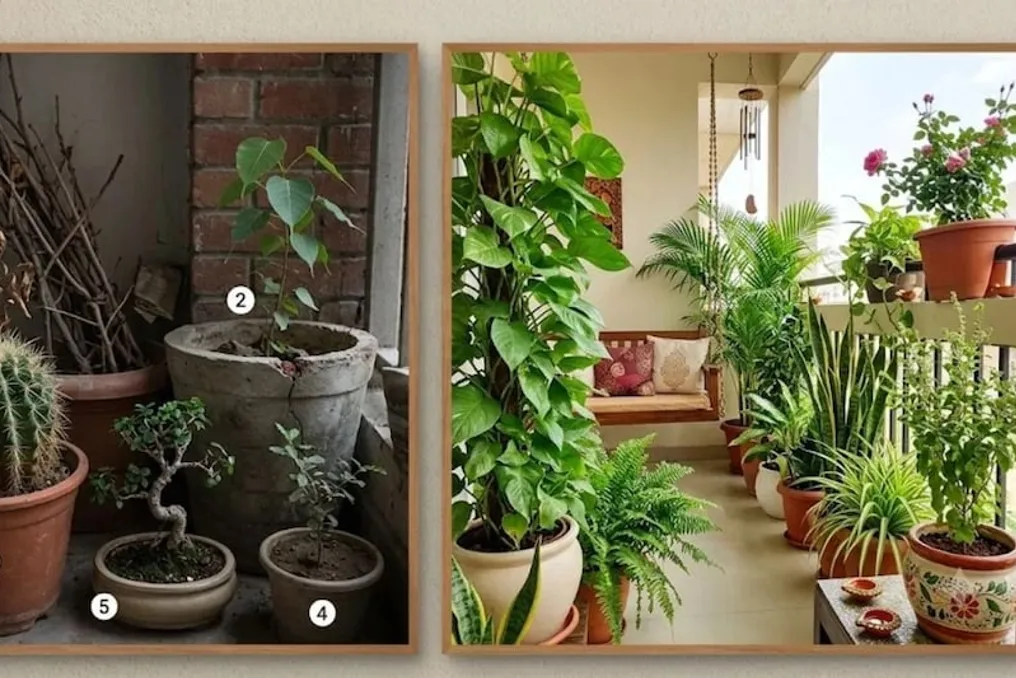
Firstly, the category of unacceptable plants includes thorny plants such as cactus and नागफनी (Nagphani). According to Vastu Shastra beliefs, the presence of sharp thorns symbolizes tension and disagreements among family members. It is noted, however, that there are differing opinions regarding rose bushes.

Secondly, although the peepal tree is revered and considered sacred in Hinduism, it is not recommended to grow it indoors in the context of Vastu. Since the peepal is a large tree with an extensive root system, its growth near the foundation or walls of a house can pose a practical threat.

Thirdly, Vastu practitioners do not approve of keeping withered or dry plants in the house. It is believed that lush greenery symbolizes freshness and positivity, whereas dry plants indicate stagnation. Therefore, it is necessary to care for plants regularly, and completely dried specimens should be removed to maintain cleanliness in the house and on the balcony.

The fourth plant that is undesirable to place in a dwelling or yard is basil (mehndi). Although basil is known for its traditional and medicinal properties, some Vastu principles suggest that it may negatively affect the positive energy of the home. It is important to remember that this is based on religious beliefs.

The fifth plant causing concern is bonsai. This decorative variety, which is grown in a miniature format and is externally attractive, according to some Vastu Shastra views, may hinder progress. This viewpoint is based on the fact that the natural growth of the tree is artificially restricted in bonsai.

When choosing plants for the home, it is crucial to consider their needs, lighting, available space, and maintenance requirements. Fallen leaves should be removed promptly, and overwatering should be avoided. Large trees should be placed at a sufficient distance from pipelines and the building's foundation. People who adhere to Vastu principles can make their choices based on their own beliefs.

Popular