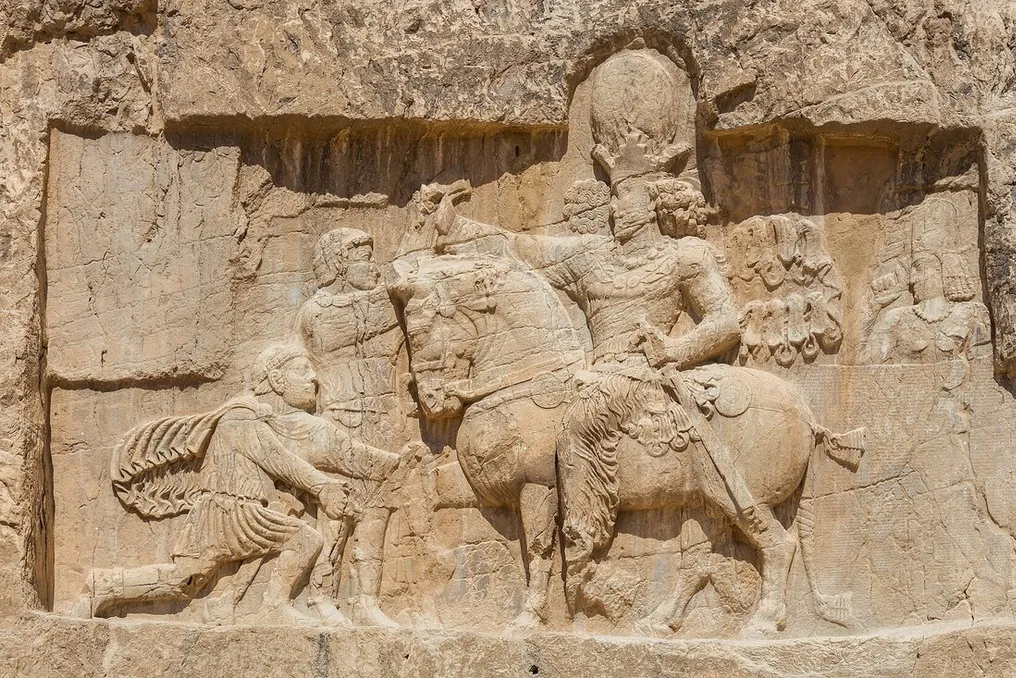
The restoration work on the Sasanian era bas-reliefs at Naqsh-e Rustam, one of Iran's most important archaeological sites, is nearing completion. These conservation efforts began back in the 1990s, and work continues on the bas-relief depicting Shapur II, an object employee reported.
Mostafa Rahshandehkhou, head of the Naqsh-e Rustam complex and curator of its conservation and restoration workshops, told the Iranian Students' News Agency (ISNA) that over many decades, more than eight Sasanian bas-reliefs have been restored to preserve their artistic and historical value.
The current work on the Shapur II bas-relief marks a decisive stage in this long-term project, bringing the restoration program to its final phase, according to Rahshandehkhou.
Rahshandehkhou emphasized that preserving historical monuments requires more than just physical intervention. This process includes detailed research, expert assessments, making informed decisions, and the careful application of appropriate conservation methods.
According to information provided to ISNA, 'the main goal is to preserve the authenticity of the monument, control destructive factors, and create conditions that will help ensure its long-term survival.'
He added that compiling a restoration plan tailored to the condition of the Shapur II bas-relief, as well as its review and approval by relevant authorities, was particularly important. The work, based on the approved plan and executed according to professional conservation standards, guarantees the adequacy of interventions to the specific circumstances of the monument.
The employee noted that the experience gained over decades at Naqsh-e Rustam has demonstrated the importance of continuous preservation efforts, technical expertise, and careful monitoring when protecting archaeological remains.
In his words, historical monuments are subject to various destructive influences over time, making long-term planning necessary for their preservation for future generations. He also stressed that the value of the project lies not only in the completion of the restoration work but also in the methods used, adherence to scientific principles, and responsibility towards cultural heritage.
Rahshandehkhou concluded that the acquired experience can serve as a model for other preservation projects, emphasizing that understanding the characteristics and condition of each monument and selecting suitable techniques are key to preventing unnecessary interventions and increasing the longevity of restoration work.
Naqsh-e Rustam, located in Fars province near Persepolis, contains monuments from various periods of ancient Iranian history. The site is particularly significant due to its Achaemenid rock-cut royal tombs and Sasanian bas-reliefs carved into the cliff face.
The Sasanian Empire, which ruled Iran from 224 to 651 AD, left behind a vast artistic and archaeological legacy. The bas-reliefs at Naqsh-e Rustam depict military victories, royal ceremonies, and scenes related to the power of Sasanian rulers, providing important information for studying the political history and artistic traditions of that period.
The rock monuments at this site are adjacent to tombs attributed to Achaemenid kings, making Naqsh-e Rustam an important archaeological landscape encompassing various eras of ancient Iranian civilization.
These bas-reliefs are not merely works of art; they serve as historical records, helping researchers study the royal representation, political power, and cultural traditions of the Sasanian period. The site's proximity to Persepolis, the ceremonial capital of the Achaemenid Empire and a UNESCO World Heritage site, further underscores its importance in Iran's archaeological heritage.