Central Servants Await Inflation Allowance Hike for Diwali; Updated Information
Read more
Aaj Tak
www.aajtak.in

Central Servants Await Inflation Allowance Hike for Diwali; Updated Information

Central servants and pensioners are expecting an increase in the Dearness Allowance (DA) and Dearness Relief (DR) from July 2026. Since Diwali is celebrated on November 8th, there is hope for the allowance to be increased before the festival, which could lead to an increase in monthly salaries for employees and pensions for pensioners.

In this regard, there is discussion about whether the central government will announce an increase in DA for 2026 before Diwali. Currently, there is no official announcement date.

To ease the burden of inflation for central servants and pensioners, the government usually revises the Dearness Allowance and Dearness Relief twice a year. The first revision is considered effective from January, and the second from July. Currently, an announcement of changes from July 2026 is expected, and employees hope the government will do so before Diwali.

However, a final announcement before Diwali is not guaranteed, as the government has previously announced the Dearness Allowance even after the festival. Nevertheless, in most cases, announcements of bonuses and allowances have occurred during Diwali.

Analysis of inflation data from previous months shows that a 3 percent increase in the Dearness Allowance is expected from July. In that case, the Dearness Allowance could reach 63 percent. Similarly, an increase in DR is possible.

If the Dearness Allowance is increased in October before Diwali, the allowance will be paid for all four months starting from July. This amount will be added to the October salary. For example, if the basic salary is 18000 rupees, the current DA is 10800 rupees. After a 3 percent increase in DA, it will increase by 500 rupees to 11340 rupees. Thus, 2000 rupees will be added to the salary above the DA amount for 4 months.

Similar stories

Rishikesh-Carnaprayag Railway Project Overview: 125 km, 12 Stations, and Complex Engineering Solutions in the Himalayas
Read more
www.aajtak.in

Rishikesh-Carnaprayag Railway Project Overview: 125 km, 12 Stations, and Complex Engineering Solutions in the Himalayas

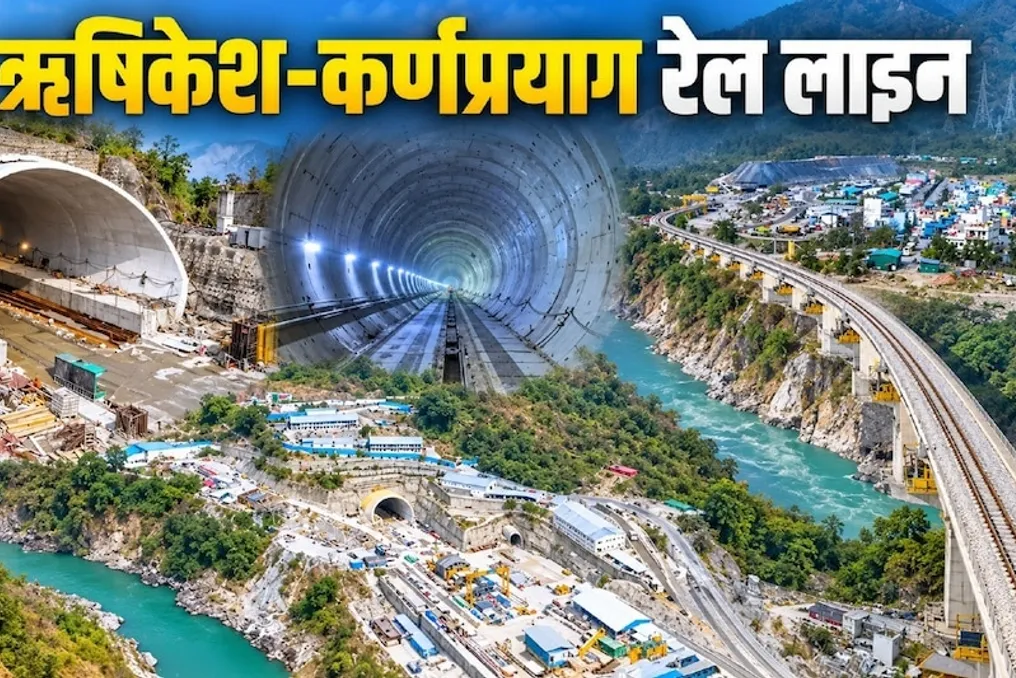
The Rishikesh-Carnaprayag railway line, being constructed in the Garhwal Himalayas of Uttarakhand state, is a significant project in terms of religious tourism and transport accessibility. This line, spanning approximately 125 kilometers, will connect Rishikesh with Carnaprayag. The project includes 12 stations, 28 main and emergency tunnels, and 57 bridges of various sizes. Notably, about 83 percent of the entire route will pass through tunnels.

The completion of this railway line construction will improve rail connectivity in the remote areas of the Garhwal Himalayas. This will reduce dependence on road transport and facilitate passenger movement, especially for those traveling to Kedarnath and Badrinath. Furthermore, the project will benefit local residents, workers, and trade turnover, contributing to the development of the regional economy and tourism business.

Railway Minister Ashwini Vaishnaw noted that constructing railway tracks in the difficult-to-reach mountainous regions of the Himalayas presents a complex challenge. As mentioned, about 83 percent of the project will pass through tunnels, including 28 main and evacuation (rescue) tunnels, as well as 57 bridges. The large number of tunnels and bridges indicates the necessity of applying special engineering solutions to create a railway path suitable for the mountain landscape, where high mountains, deep gorges, and complex geological conditions meet.

According to the minister, the geological structure of the Himalayas differs from plain regions. Here, rocks can be weak, fractured, or contain cracks, and groundwater is present in some places. Under such conditions, it is critically important to predict soil behavior during tunnel excavation and maintain its stability. In weak geological layers, the pressure from the surrounding soil can exert compression on the inner part of the tunnel, which in engineering is called 'compressible soil.' This can increase the load on the inner lining of the tunnel and require additional structural supports.

To overcome these difficulties, detailed geological surveys, continuous monitoring during construction, and the use of appropriate technologies are necessary. Modern technologies, including Tunnel Boring Machines (TBM), are used for tunneling. However, since the geological condition is not uniform across all parts of the Himalayas, the choice of technology and equipment must be made considering the specifics of each section. Construction requires extreme caution due to issues with weak rocks, groundwater, and soil stability. The ultimate goal is to create reliable and durable railway infrastructure capable of functioning in challenging mountain environments.

The Rishikesh-Carnaprayag railway should improve connectivity to the main religious sites of Uttarakhand. After arriving at Carnaprayag by train, passengers will have to continue their journey by road. Nevertheless, the railway connection can make part of the journey more convenient. The expected rise in tourism due to the project could potentially benefit businesses related to hotels, transport, and local trade. The actual impact of the project will depend on the commencement of railway operations, available amenities, and the condition of further road connections.

The importance of the Rishikesh-Carnaprayag railway line is also considered in the context of regional transport and strategic connectivity. According to available information, Carnaprayag is located approximately 123 kilometers from the India-China border. In conditions of complex geography and weather phenomena in the Himalayan regions, movement is often difficult. Thus, the development of infrastructure such as roads, bridges, and railways helps strengthen regional links. Although this line does not lead directly to the India-China border, its significance lies in improving the transport network in the Garhwal Himalayas and simplifying access to adjacent territories.

Improving rail connectivity will lead to an increase in tourist flow, which in turn will stimulate religious tourism and local business. Moreover, the construction process and associated activities will create new employment opportunities. In conclusion, the Rishikesh-Carnaprayag project covers 125 kilometers, includes 12 stations, 28 tunnels, and 57 bridges, and holds immense importance for religious tourism, regional transport, and strategic connectivity, despite the harsh geological conditions of the Himalayas.

PM Modi inaugurated RBI's new data center; know its benefits
Read more
www.aajtak.in

PM Modi inaugurated RBI's new data center; know its benefits

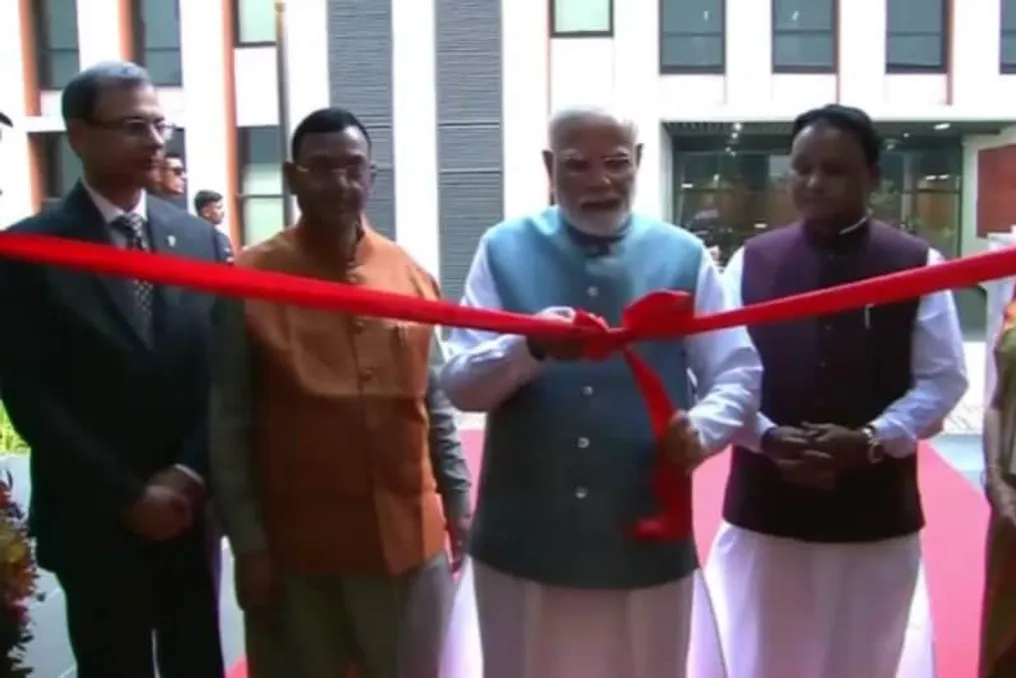
Prime Minister Narendra Modi inaugurated the Reserve Bank of India's (RBI) state-of-the-art Greenfield Data Center and Cyber Security Training Institute in Jatni, Odisha. This center is located in the InfoValley-II area near Bhubaneswar, with the primary objective of strengthening the country's banking system and enhancing digital data security.

The estimated cost for this project is around ₹169 to ₹170 crore, and the entire complex spans 18.55 acres of land. A total of four modern data centers have been built in this complex, which will be used to support essential digital systems and payment settlement functions of the RBI.

There is a rapid increase in the use of online banking and digital payments currently, which necessitates a robust technological infrastructure. The data center stores and processes data through large servers and networking systems. This new center by the RBI will support critical digital systems and also enhance the capability to keep services running continuously and restore systems during any technical failure or other issue.

This data center has received Tier IV certification from the Uptime Institute, which is considered the highest category for data centers. This implies that extremely robust arrangements are in place for backup and handling failures in power, cooling, and other essential systems. However, this certification does not guarantee that the center can never be subjected to a cyber attack; it primarily relates to the robustness of the data center's infrastructure and its capacity for continuous operation.

Along with the data center, an Enterprise Computing and Cyber Security Training Institute has also been established here. This institute will promote training and research related to subjects such as cybersecurity, Artificial Intelligence (AI), Quantum Computing, and other innovative technologies. While RBI already operates a major data center in Navi Mumbai, this new facility launched in Odisha can significantly contribute to strengthening the country's digital financial infrastructure. This is expected to improve the availability of essential digital systems and preparedness against cyber threats.

Popular