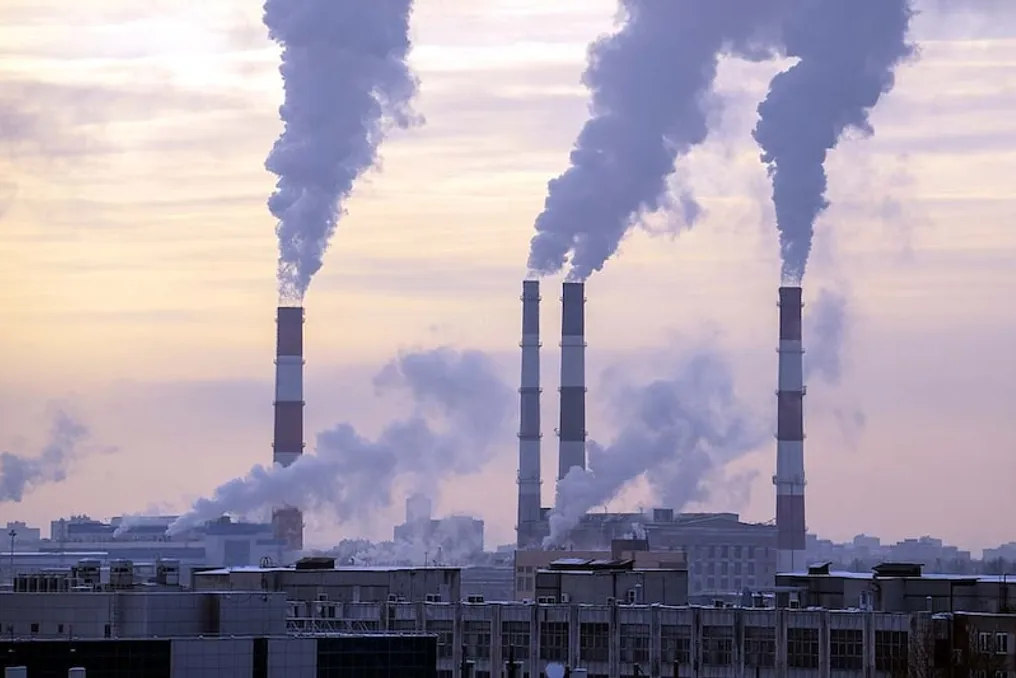
Scientists have shown in a new study that the evidence attributing global warming to human activities has become much more robust than before. Greenhouse gases emitted from burning fossil fuels such as coal, oil, and gas are raising the Earth's temperature, an effect clearly visible on land, atmosphere, and oceans.
This research was published in the scientific journal 'Earth's Future'. This review, led by a researcher from the University of East Anglia in Britain, analyzed research spanning over the last thirty years. Scientists believe there is now more concrete evidence than in 2009 to establish the significant role of human actions in global warming.
Scientists use a technique called 'climate fingerprinting' to determine the root cause of changes occurring in the Earth's climate. In simple terms, this method determines whether changes in temperature and weather are due to natural causes or anthropogenic activities.
The warming of the Earth's surface, the increase in ocean temperatures, and changes in temperature across different layers of the atmosphere are key indicators. Scientists observe all these data points; when statistics obtained from different locations show similar trends, it becomes easier to understand how much impact human activities are having on the climate.
According to the researchers, this method can now be used to detect human interference in many regions of the Earth, including changes from the upper atmosphere to the depths of the oceans.
The U.S. Environmental Protection Agency (EPA) made a significant decision in 2009, known as the 'Endangerment Finding'. This decision held that pollution from greenhouse gases poses a serious threat to human health and life. Based on this decision, several regulations were implemented in America to reduce these gases.
However, a report released by the U.S. Department of Energy (DOE) in July 2025 raised questions about some conclusions of climate science and the methodology of climate fingerprinting. The authors of the new study argue that the report did not give due weight to existing scientific evidence and recent research. Thus, the issue of global warming is not limited only to science, but also affects environmental laws and government policies.
According to the study, the rise in Earth's temperature since 2009 has been clearly observed, and the ten hottest years on record globally have been recorded during this period. Scientists believe that this temperature increase is extremely important for understanding global warming.
The warming of the Earth also directly affects public life; extreme heat can cause health problems, floods can damage homes and fields, and the risk of forest fires and crop failure increases.
Scientists are also investigating how much the probability of events like heatwaves, heavy rainfall, and floods has increased due to climate change, and to what extent these events are becoming more intense compared to before.
Scientists from the Massachusetts Institute of Technology (MIT) in the USA, Colorado State University, and the University of Edinburgh in Britain also contributed to this study. According to the researchers, the data on changes in different parts of the climate align with each other, which helps in understanding the extent of human involvement in global warming.
In summary, this study confirms that the Earth is warming due to human activities, and the scientific evidence for this is stronger than ever. Greenhouse gases released from burning coal, oil, and gas are changing the climate. Therefore, it is necessary to understand these changes and take appropriate steps to control them to mitigate the damage caused by rising global temperatures in the future.