Jiang Guanjun from the Qwen team presented a personal agent framework based on models, memory, and ecosystem
Read more
Pandaily
pandaily.com

Jiang Guanjun from the Qwen team presented a personal agent framework based on models, memory, and ecosystem

The Qwen team from Alibaba described the process of creating a personal agent, asserting that the next stage in the development of AI assistants depends on the coordinated operation of three components: the model, memory, and service ecosystem. Jiang Guanjun, Head of AI Algorithms Department in Qwen Alibaba's business unit, presented this concept on October 22 at the China National Computer Congress (CNCC) in Chengdu.

Jiang divided the evolution of AI applications into three stages: chat, agent, and assistant. In the chat stage, AI responds to user queries. In the agent stage, the system performs assigned tasks. The assistant, which he says is where the industry is heading, combines professional knowledge with the user's personal context, plans actions around the user's goals, and detects needs they have not noticed. He emphasized that a true personal agent must provide added value and offer proactive, individualized service.

He suggested that theoretically, a personal agent is capable of solving almost all daily problems in work, study, and personal life. However, the main obstacle is the system's ability to correlate its capabilities with the optimal path to solving each specific problem.

Model Development Approach

Regarding the model, Qwen focuses on stable task execution. The team developed what is called a user needs map covering over 30 major industries and detailed it down to more than 8000 atomic requirements for the model's capabilities. Industry experts were involved in evaluating and tuning the model.

Memory Mechanism

Jiang noted that a personal agent must ensure long-term understanding of the user, avoiding the simple accumulation of chat history, which increases noise and computational costs. Qwen constructs its memory based on the degree of event interconnectedness, storing and retrieving them at various levels. For example, an assistant that remembers an elderly user mentioned their pension can give more relevant advice when the same family later asks about finding a job for a child.

Role of the Ecosystem

Concerning the ecosystem, Jiang stated that as models and management methods improve, the ability to link and coordinate external services becomes crucial. Qwen creates a model-oriented open service ecosystem that integrates professional knowledge, tools, industry skills, and third-party agents, while also connecting to e-commerce, local services, healthcare, and education.

In his view, these three elements combine to provide proactive service: memory provides personal information, the model uses expert knowledge to determine needs and plan, and the ecosystem executes the work, such as tracking a patient's rehabilitation schedule or alerting to new financial risks for the user. This report represents the most detailed public description of the technical concept behind the Qwen Go! personal agent, which Alibaba opened for registration this month.

Similar stories

Apple's iPhone Duo: Review of the First Foldable Smartphone with App Optimization Issues
Read more
www.egyptindependent.com

Apple's iPhone Duo: Review of the First Foldable Smartphone with App Optimization Issues

Apple's iPhone Duo is positioned as one of the company's most interesting phones in recent years, but its use faces certain difficulties.

After getting used to viewing content, reading, and scrolling through the feed on a large screen format, returning to a small display becomes challenging. The main problem is that many applications are still designed for use on smaller screens.

This review focuses on using the iPhone Duo, Apple's first foldable iPhone, which will be released on October 23rd. Its starting price is $2000, comparable to Apple's latest 14-inch MacBook Pro.

This is a significant step for Apple, which rarely changes the successful formula that brought iPhones over $200 billion in revenue last year. However, after many years of gradual iPhone updates, the company has faced the need to prove its ability to continue attracting consumers.

The author had the opportunity to test the new foldable phone, provided by CNN for testing purposes. The iPhone Duo served as a device for watching Netflix, an alarm clock by the bed, an extra screen for Sunday football matches, a miniature monitor when connected to a Bluetooth keyboard, and a camera with a built-in tripod.

Nevertheless, there were as many moments of disappointment due to incorrect application performance because developers had not yet updated them. Despite Apple's 'it just works' approach, the iPhone Duo requires a period of adaptation. Although the iPhone Duo's software felt significantly smoother and more dynamic compared to Android alternatives, many of its core functions are already available on Samsung or Google phones.

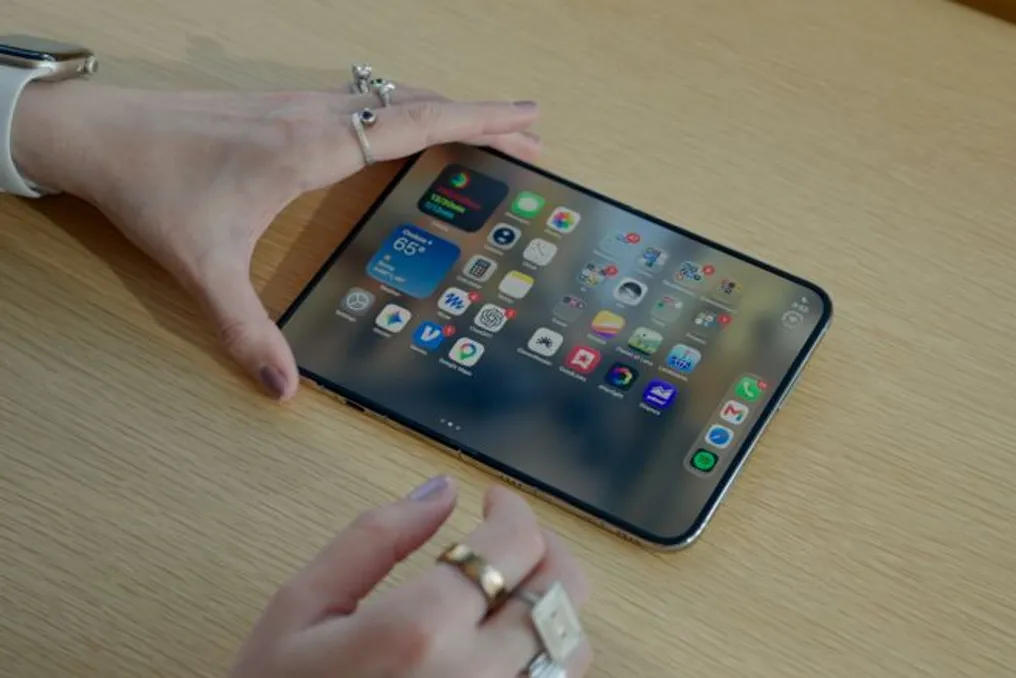
The iPhone Duo represents the biggest change Apple has made to the iPhone in almost 20 years of history. It features a 5.4-inch outer screen that unfolds to reveal a 7.6-inch inner display. In its closed state, the iPhone Duo resembles a passport, albeit thicker and heavier. When open, it looks more like a thinner and more compact iPad Mini.

One common question about the iPhone Duo is whether the crease is visible. Surprisingly, the answer is no. When using apps or scrolling the home screen, the crease is barely noticeable, and it is hardly felt when swiping across the display.

The unique form factor of the iPhone Duo allows for tasks that would be more difficult to accomplish on a standard phone. It can be set up like a tent or placed like a book while the screen is locked, turning the display into a desktop alarm clock, digital photo frame, or calendar. Some apps, such as the camera and Apple Fitness Plus, move to the top of the screen when partially folded, similar to a laptop, but this depends on whether developers have programmed their apps for this function.

When the phone is open, you can take selfies using the phone's rear cameras while previewing on the outer screen, which proved useful when filming videos for this review. The iPhone Duo is capable of running two applications simultaneously on the screen, which was convenient for looking up information or viewing content in multiple programs. For example, you can drag an image directly from the Photos app into a text message when both apps are active. The author also used split-screen mode to show a friend his Halloween costume and the movie it was based on at the same time.

While convenient, this is probably not the main reason to buy the iPhone Duo. The inner screen is best used when dedicating it entirely to one application, such as Netflix. Furthermore, the display has a matte finish, which reduces glare and does not smudge easily.

However, many popular applications, including Google Maps, Gmail, Call of Duty Mobile, and Uber, had not been updated for full utilization of the large screen during the Duo's pre-launch testing. Some apps appeared as floating windows in the center of the tablet screen. These apps can expand to take up most of the display, but they still do not fill the entire space. Other apps were updated to take up most of the screen but featured black bars on the sides. This happens when developers have not updated their apps using Apple's latest software development tools, as indicated on the company's website.

The good news is that even within a few days of ownership, more applications were updated, including Google, TikTok, Instagram, and Threads. But the uncertainty regarding how an app will look seems inconsistent and can be frustrating—this is an area where Android had an advantage.

Apps optimized for the Duo demonstrate potential. The author's current favorite app is the platformer puzzle game Planet of Lana, which looks magnificent and colorful on the larger Duo screen. Apple Books was also enjoyed for allowing page viewing on both sides of the screen when slightly folded, like a real book. Apple Messages and Mail apps also display the inbox on the left and messages on the right, allowing everything to be seen at once.

Considering the price, the iPhone Duo should handle all the tasks a regular phone can perform, and even more. The author's main concern was that the design might create a feeling of awkwardness when closed, but typing and swiping on the outer screen felt surprisingly natural and comfortable. The author even preferred Duo's wider keyboard over the keyboard on his iPhone 18 Pro.

Nevertheless, there was an initial learning curve. The author constantly accidentally pressed the side-mounted Siri button on the Duo instead of the volume buttons at the top. He also didn't realize that using split-screen mode required having an open application, rather than just opening a new app and dragging it from the home screen to one side of the display.

Battery life is acceptable and meets expectations for a new phone. The battery usually dropped to 35% or 46% when the author went to sleep, although this will always depend on the apps used and the frequency of using the tablet screen versus the outer display.

The cameras on the iPhone Duo are similar to those on the iPhone 18 Pro, but with one key difference: the telephoto lens is missing. This means that zoomed shots will not be as sharp or clear as those taken on the iPhone 18 Pro, although photos taken on both phones looked similar overall.

The biggest question asked about the iPhone Duo is whether it is worth its $2000. It is difficult to answer, considering it costs more than a month's rent for most Americans. The only reason to consider it is if you genuinely want a screen larger than any other phone, but one that still fits in your pocket.

Author's advice: wait until developers have more time to optimize their applications before making a decision. While the Duo is impressive, the apps still need to catch up.

Tehran and Bangkok Emphasize the Importance of Expanding ICT Cooperation
Read more
www.tehrantimes.com

Tehran and Bangkok Emphasize the Importance of Expanding ICT Cooperation

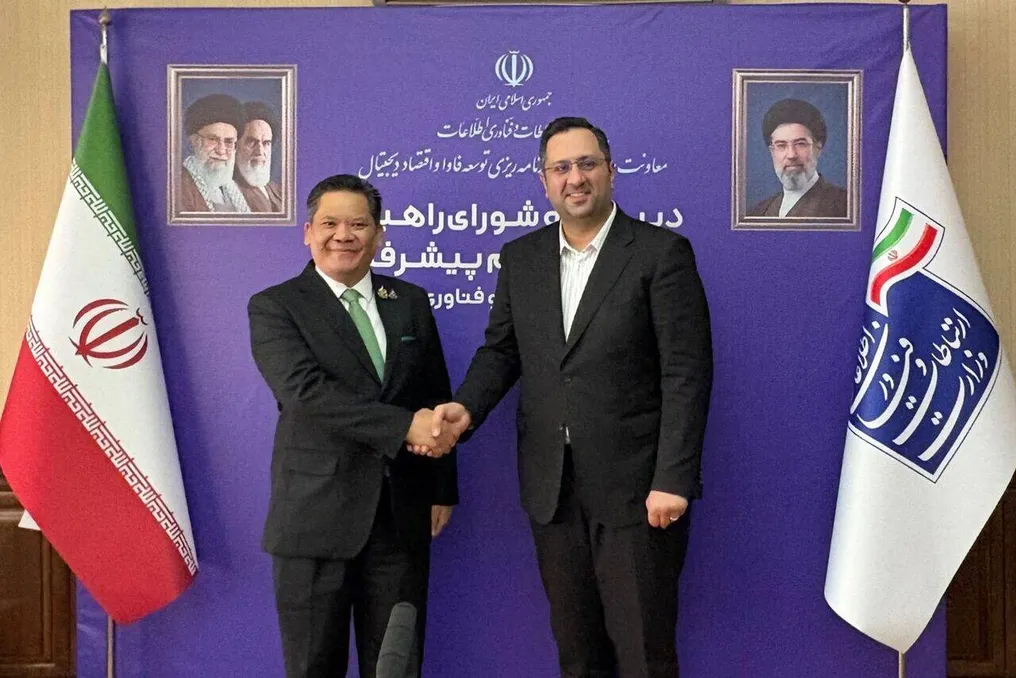
Officials from Iran and Thailand stressed the necessity of strengthening joint efforts in the field of information and communication technologies (ICT), which will promote regional and international interaction, as well as the signing of a memorandum of understanding between the two sides.

As reported by the IRNA agency, a meeting took place between Mohammad-Hafiz Hakimi, Deputy Minister of ICT, and Sake Noptaisong, the Thai Ambassador to Iran. Noptaisong, emphasizing the long-standing partnership between Iran and Thailand, called for the continuation of bilateral cooperation.

The Thai Ambassador noted that since his appointment in Tehran, he has shown interest in studying Iran's achievements and potential in various fields such as artificial intelligence, digital transformation, and new technologies.

For his part, Hakimi indicated that since the headquarters of the Asia-Pacific Telecommunity (APT) is in Bangkok, Thailand plays a significant role in enhancing technological cooperation in the region. He proposed utilizing the opportunities of both countries to develop interaction.

Both sides agreed that it is necessary to develop and sign a memorandum of understanding to stimulate technological and bilateral cooperation.

Global Innovation Index 2026: Tehran Enters Top 100 Science and Technology Clusters

According to a report published by the World Intellectual Property Organization of the UN (WIPO), Tehran ranked 65th among the world's largest science and technology (S&T) clusters this year. Annually, the GII identifies and ranks the 100 leading innovation clusters globally.

This index uses a data-driven, bottom-up approach that transcends administrative and political borders, identifying geographical areas with a high concentration of inventors, scientific authors, and venture capital (VC). These clusters often cover multiple municipalities or subnational regions and sometimes extend across two or more countries.

Three criteria determine the composition of the top 100: the location of inventors listed in patent applications filed under the WIPO Patent Cooperation Treaty (PCT); the affiliation of authors of published scientific articles; and the location of companies receiving venture capital funding.

The GII 2026, themed 'Supporting Entrepreneurs at the Forefront of Science,' analyzes how scientific breakthroughs are turning into deep science startups and spin-offs.

Besides China and India, six other middle-income economies have clusters in the top 100, including Brazil (1 cluster), Islamic Republic of Iran (1), Egypt (1), Malaysia (2), Mexico (1), and Turkey (1).

Tehran is the only cluster in Iran to make the top 100 innovation clusters in 2026. In 2026, Tehran filed 405 PCT applications, had 58,732 scientific publications, and 107 venture capital deals, with global PCT application share at 0.0%, global scientific publication share at 0.7%, and global venture capital deal share at 0.0%. This allowed it to rank 65th among the largest innovation clusters and 88th in innovation intensity, which is lower than in 2025 (63rd and 85th, respectively).

According to IRNA, the estimated population of the city cluster is 7,852,733 people, with a PCT application rate per capita of 52, and a scientific publication rate per capita of 7,497. The pre-round venture deal metric per capita is estimated at approximately 14, and the overall innovation intensity per capita is 0.097.

In patent registrations, medical technologies ranked first (with a share of 19%), followed by computer technologies, civil engineering, and pharmaceuticals.

Among the leading publishing organizations in Tehran, Tehran University stands out with 5,232 articles, Islamic Azad University with 4,081 articles, and Iran University of Science and Technology with 3,725 articles. Most published works relate to engineering fields.

In the recent StartupBlink Global Ranking 2026, Tehran's position improved by 20 places, rising to 348th among the most innovative cities in the world.

Tehran is home to 96 startups, accounting for 81% of the total number of startups in the country. The city has about one startup per 100,000 people. In 2025, the ecosystem demonstrated annual growth of over 36%. Currently, the city ranks 1st in the strength of the startup ecosystem in Iran, maintaining this position since 2025. Regionally, Tehran ranks 11th in West Asia, moving up 2 positions from 2025.

According to Iran Innovation Zone, this success is attributed to the strengthening of innovative infrastructure and the development of links between various sectors operating in the knowledge-based economy, as reported by the Mehr agency.

The StartupBlink report highlighted the role of Pardis Technology Park, the country's largest technology and innovation center, as one of the driving forces of Iran's knowledge-based economy. The park hosts hundreds of technology and knowledge companies, creating infrastructure for business development and providing a platform to improve collaboration between startups, investors, major industries, and institutions.

Furthermore, the annual hosting of the International Exhibition of Innovations and Technologies (INOTEX) by Pardis Technology Park plays a key role in establishing contacts and uniting experts in the innovation ecosystem. According to the report, thanks to the capabilities of Pardis Technology Parks, Iran's startup ecosystem ranks 95th globally.

Other key players contributing to the development of Iran's innovation ecosystem include the Innovation Fund and MCI (Hamrah Aval – Iran's first mobile operator) Ventures. Iran ranks 58th globally in the 'Corporate Interaction' indicator, which reflects effective interaction between large industry and innovative and technological companies.

Fintech, a leading industry in Iran, ranks 72nd globally and 5th in the Middle East, indicating the country's high potential in developing financial technologies. The Iranian fintech industry comprises 23 startups, making up 19% of all startups in Iran.

In the Global Startup Ecosystem Index 2026, Iran's startup ecosystem ranked 103rd globally, remaining at the same level compared to the previous year. The Iranian startup ecosystem ranks 10th in West Asia, consistently holding this position since 2025. It follows Oman and surpasses Iraq.

There are 118 registered startups in the country, accounting for one percent of all startups in the Middle East. This is equivalent to approximately one startup per 100,000 people. Over the last year, the ecosystem grew by 54.4%.

Iran and Indonesia aim to strengthen scientific and technological cooperation
Read more
www.tehrantimes.com

Iran and Indonesia aim to strengthen scientific and technological cooperation

Iran and Indonesia have explored opportunities to expand scientific and technological interaction, with a particular focus on establishing science and technology parks, as well as strengthening academic and research ties.

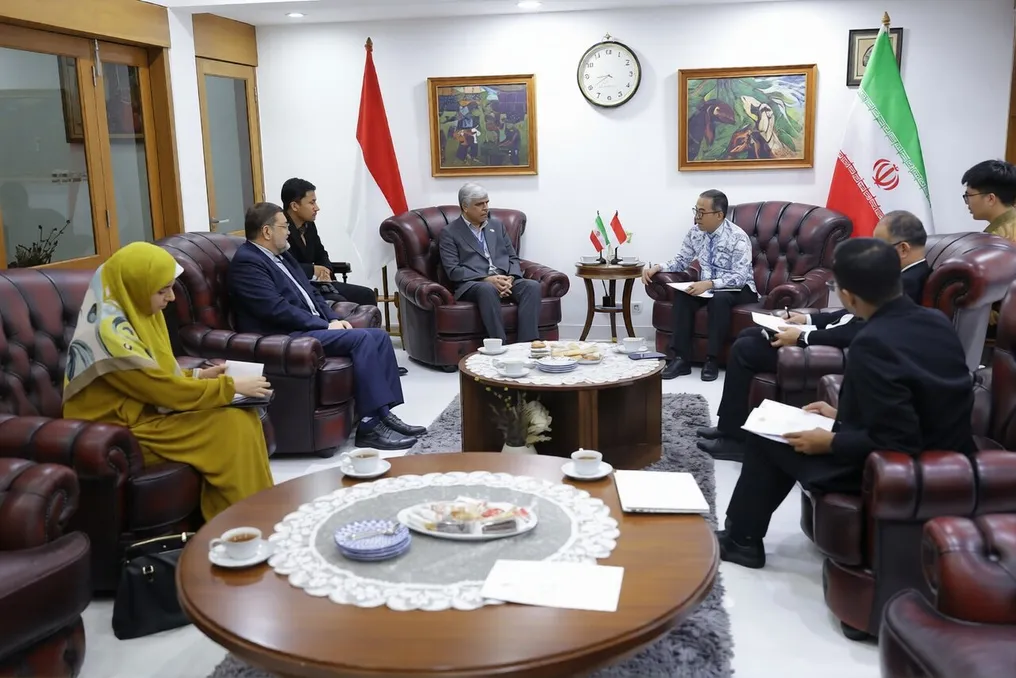
A meeting took place in Jakarta on October 23 between Esfandiar Ekhtiarari, Deputy Minister of Science, Research, and Technology of Iran, and Brian Yuliarto, Minister of Higher Education, Science, and Technology of Indonesia. The goal of the negotiations was to discuss cooperation through the exchange of teachers and students, as well as the more active utilization of the scientific and research potential of both countries, according to Mehr News Agency.

Ekhtiarari presented Iran's achievements in science, describing the country's infrastructure, including the Artificial Intelligence Center at Sharif University of Technology, the Institute of Laser and Plasma Research at Shahid Beheshti University, the satellite monitoring center at the Iranian University of Science and Technology, the quantum laboratory at Isfahan University of Technology, IT centers in other universities, and the Pasteur Institute of Iran.

He noted that these facilities were subjected to attacks during what he termed the US war against Iran, condemning these attacks and asserting that they were aimed at undermining the country's scientific and technological progress. Furthermore, the official representative announced Iran's readiness to provide and transfer expertise for the creation of science and technology parks that would support the development of Indonesia's innovation ecosystem.

For his part, Yuliarto condemned the attacks on scientific institutions, emphasizing that Indonesia rejects any form of aggression and colonialism. He stated that the partnership between the two sides is aimed at strengthening national technological potential and inter-academic research ecosystems.

According to Yuliarto, 'we are very pleased to have the opportunity to invite leading professors from Iran to work as visiting professors in Indonesian universities. This step is expected to significantly accelerate and improve the quality of scientific and technological cooperation between Indonesia and Iran,' quotes topik.id Yuliarto.

Addressing Iran's capabilities in science and technology sectors, the official stressed the importance of exchanging technological experience and expanding scientific contacts. The partnership also includes the commercialization and further development of research results. The sides also discussed the creation and development of high-tech startups in the fields of renewable energy and aerospace.

Both countries agreed to move the outcomes of the initial dialogue to technical discussions. The next step will be the development and signing of a Memorandum of Understanding (MOU) between the ministries responsible for higher education in both countries. This document is intended to serve as the legal basis and operational framework for faculty and student exchanges, student mobility, and joint research funding, involving leading universities in Indonesia and Iran.

Expansion of Scientific Cooperation

In August, Sharif University of Technology and Bandung Institute of Technology (Indonesia) signed a memorandum of understanding to deepen scientific, research, and educational cooperation, exchange of faculty, researchers, and students, and implementation of joint research projects. This memorandum aims to strengthen scientific and academic interaction between the two universities, explore the potential for technological cooperation and technology commercialization, as reported by IRNA. Accordingly, the faculties and faculty members of both universities can identify areas of common research interest and cooperate in implementing specific projects.

The agreement focuses on the exchange of scientific resources and information, conducting joint conferences, educational seminars, and symposiums, carrying out short-term scientific visits, as well as developing joint educational programs and curricula. Additionally, the agreement provides postgraduate students with the opportunity to study abroad, use library resources of partner universities, and conduct field research.

On the sidelines of the 13th BRICS Ministers of Education meeting, held from August 5 to 7 in Odisha, India, Masoud Shams-Bakhsh, Acting Minister of Science, Research, and Technology of Iran, and Yuliarto held a meeting to explore ways to develop scientific and technological cooperation. Both sides discussed ways to develop scientific collaborations, especially in the field of new technologies.

During this meeting, Yuliarto detailed Indonesia's scientific capabilities, particularly in the fields of science, technology, engineering, and mathematics, expressing Jakarta's readiness to implement joint research projects, exchange faculty and postgraduate students, provide unpaid leave, and organize short-term courses in cooperation with Tehran. The Indonesian official invited Minister of Science, Research, and Technology Hossein Simai-Sarraf and Shams-Bakhsh to visit Indonesia.

In turn, Shams-Bakhsh emphasized that the long-standing cultural, historical, and religious ties between the two countries have laid a natural, deep, and strong foundation for expanding educational and research cooperation. Key areas of discussion included increasing the number of scholarships, expanding scholarship exchanges, developing joint educational courses, conducting research on climate change, food security, renewable energy, and agriculture.

The sides also discussed including more Iranian universities in the BRICS University Network, based on Indonesia's experience. They noted the signing of a memorandum of understanding for the prompt implementation of the agreements reached.

On July 15, the Iranian National Science Foundation (INSF) and the Indonesian National Research and Innovation Agency (BRIN) held a joint webinar titled 'Promoting Scientific Research Cooperation between Iran and Indonesia: Strategic Opportunities Ahead' on Wednesday. The event was organized to explore ways to expand scientific and research interaction between scientists and scientific institutions of the two countries. The webinar began with opening remarks by INSF President Morteza Hormozinejad and Vice Chairman for Research and Innovation Promotion Agus Haryno.

Experts and professors from both countries in the health, water security, and environment sectors also gave lectures. This event served as an excellent opportunity to promote scientific ties, expand research cooperation, and develop joint projects between Iran and Indonesia.

In December 2025, Rolliansya Sumirat, the Indonesian Ambassador to Tehran, stated that the new Indonesian government intends to develop scientific and technological ties with Iran, highlighting Iran's extensive capabilities in science and technology. According to him, 'the administration expects to expand international cooperation, especially in the field of science and technology, which opens up new opportunities for interaction between the two countries. The main focus of the interaction will be on technology and new development exchange, as well as stimulating technological cooperation,' quotes IRNA Sumirat.

Popular