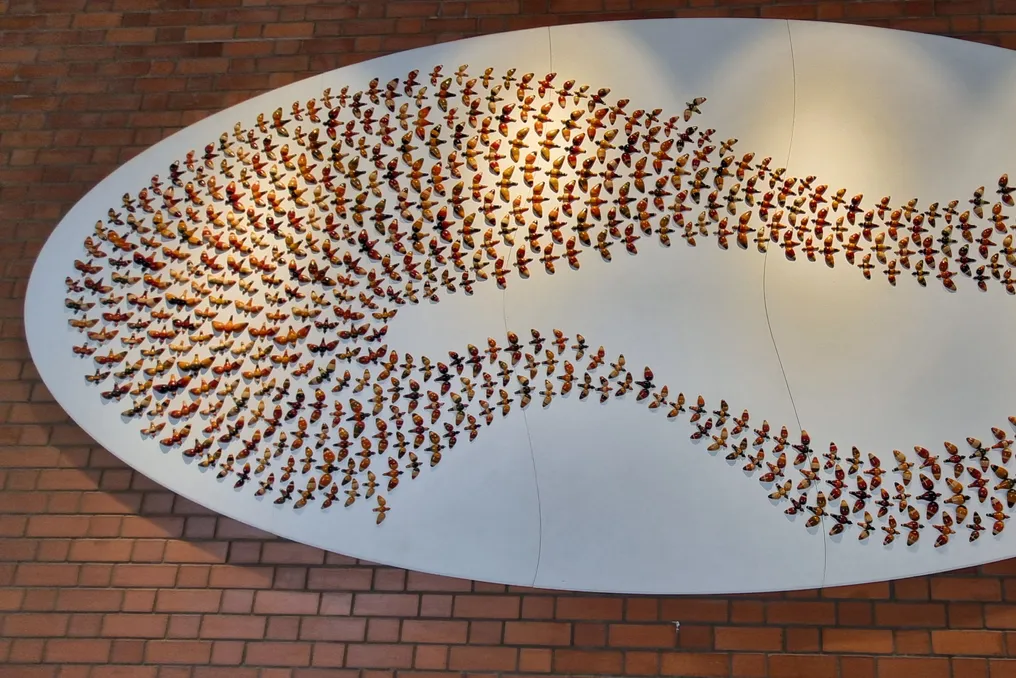
Terminal 2 at Kempegowda International Airport in Bengaluru has gained widespread recognition for its eco-conscious design, which is based on lush garden architecture. This year, it entered the Top 5 of Skytrax's global rankings in the 'Best Art in an Airport' category.
This achievement highlights the airport's systemic approach to integrating art into its operational and architectural structure. The created works are not viewed as separate exhibits but are an integral part of the entire passenger journey.
The airport also positions itself as a living museum, paying special attention to showcasing local Karnataka art. The fusion of cultural narratives and spatial design creates a deep and engaging experience for travelers.
Yamini Telkar, advisor for the art program at Bangalore International Airport Limited (BIAL), noted that 'art and culture were conceived as an integral part of the four pillars of design, alongside the Garden Terminal, Sustainability, and Technology.' The art program serves as a cultural bridge for the seamless integration of art into the infrastructure.
She added that this forms an immersive passenger journey focused on two main themes: the rich heritage and culture of Karnataka, and the concept of Navarasa, or nine emotions from Bharata's Natyashastra.
Formally, the Art Program was launched on September 8, 2023. Currently, over 300 artworks by more than one hundred artists are displayed in both domestic and international terminal arrival and departure areas of the airport.
Among the featured artists are Vivek Matthew, Ganesh Shankar, Dinesh Manir, LN Tallur, Madhvi Subrahmanyam, Yayati Godbole, Sakshi Gupta, and many others. Their diverse works include paintings, installations, mixed media, sculptures, and digital displays.
Telkar explained that 'over 90% of the artworks were commissioned specifically for the Art Program. Institutional partners include the Department of Archaeology Museums and Heritage, as well as the Museum of Art and Photography.'
Airports function not only as transport hubs but also as the first and last impression of a destination. However, for many passengers, the airport experience is often defined by queues, navigation issues, crowded spaces, uncertainty, and long waits.
Art and design have the power to transform an airport from a transit point into a place that welcomes, inspires, and connects people, as shown in the photo essay. Integrating creativity into the airport environment makes journeys more memorable and engaging.
Human-centric design, clear navigation, intuitive layouts, and accessible signage can ease passenger movement. Even the flight information displays in Terminal 2 offer passengers recommendations for visiting art installations based on available time.
The use of natural materials, biophilic design, natural light, greenery, and calming color palettes helps make terminals less stressful. Art, immersive installations, and the sound of running water soften the tension in a busy setting.
The integration of local art, crafts, architecture, materials, stories, and cultural references gives passengers an authentic sense of place. Terminals can become cultural showcases, offering visitors a meaningful introduction to the region and instilling pride in local residents.
For example, the Bengaluru airport hosts live performances during festivals. This week marked the six-day cultural celebration of Nadahabba Dasara with live music, dance, traditional crafts, games, and culinary experiences.
The artworks throughout the airport can create unforgettable moments throughout the passenger's journey, making the airport experience unique and contributing to organic word-of-mouth promotion.
It is important, however, to ensure that the creativity enhances usability rather than distracting from important passenger information. This balance was carefully considered in the design of Terminal 2.
For BIAL, the overall architecture and interior design were curated by Skidmore, Owings & Merrill (SOM). However, as Telkar explains, the schematic planning and placement of artworks were carried out by the team of artists.
The identity of Bengaluru is reflected even in the entrance concepts. 'They showcase the lush greenery of Bengaluru and Karnataka in the form of backlit photographs that were specially commissioned,' she describes.
Inspired by the Natyashastra's Navarasa, the airport's Art Program interprets nine fundamental human emotions through various artistic expressions: love, laughter, sorrow, anger, heroism, fear, disgust, wonder, and tranquility.
The collection of works was formed through open competitions, partnerships, loan programs, patronage, commissions, and art events. This multi-layered approach allows the program to unite diverse artistic voices and practices.
The artistic experience extends beyond the airport. In the arrivals area, passengers enjoy an impressive installation titled 'Soul of Bengaluru' by the renowned Catalan artist Jaume Plensa. This sculpture consists of intertwined figures that symbolize the collective human capital that contributes to Bengaluru's growth as a global technology and innovation hub—individual personalities united by a common goal, imagination, and pursuit.
In conclusion, art and design are not just aesthetic additions; they are strategic tools for enhancing efficiency and differentiating the airport. They improve the entire travel process and even encourage passengers to choose specific terminals and airlines for their trips.