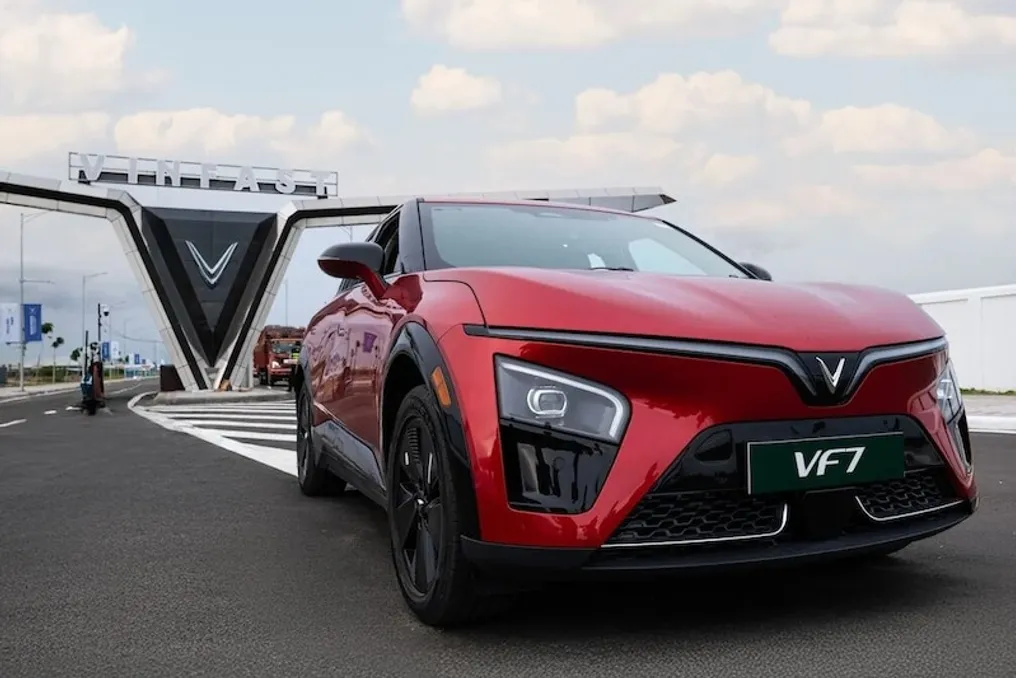
VinFast sales in India increased by 392.8% in September thanks to the success of new models
Read more
Aaj Tak
www.aajtak.in

VinFast sales in India increased by 392.8% in September thanks to the success of new models

September 2026 proved to be a very successful month for VinFast. Compared to September of last year, the company sold significantly more vehicles in the Indian market. If only 376 units were sold in September 2025, the company delivered 1,853 units this September.

This growth amounted to 392.8% year-on-year. Regarding specific figures, 1,477 more cars were sold in September this year than in September of last year. The most popular model in the company's portfolio is the Limo Green, although this vehicle is not sold to the general public.

Instead, Limo Green is acquired by SM Green, which acts as a taxi provider for VinFast. According to the Auto पंडित्ज report, the company sold 850 Limo Green vehicles in September. The next best-selling model was the VinFast VF 7, which was sold in quantity of 625 units in September. Last year, only 158 such cars were sold, demonstrating a sales increase of 295.6% year-on-year. These two models accounted for 79.6% of the company's total sales volume.

The VF-6 model also showed growth. In September of last year, 218 units were delivered, whereas this September the company delivered 323 units, corresponding to an increase of 48.2% year-on-year. The MPV 7 model sold only 55 units in September and is the newest product in the company's portfolio. This car starts from 20.39 lakh rupees with an ex-showroom price and is equipped with a battery capacity of 60.13 kWh. The MPV's claimed range is 517 kilometers, and the company claims that charging from 10 to 70 percent takes only 30 minutes.

As for the second best-selling model, it is the VinFast VF 7. This five-seater SUV has an ex-showroom price of 22.99 lakh rupees and is equipped with a 70 kWh battery, providing a claimed range of 532 kilometers. VinFast's sales growth is also driven by the inclusion of two new models—Limo Green and MPV 7. Even excluding these two models, the company sold 948 units of VF 6 and VF 7 in September this year, representing a growth of 152.1% compared to the 376 units sold last year.

Similar stories

Karnataka Chief Minister DK Shivakumar warned of measures against companies ignoring Kannadigas
Read more
timesofindia.indiatimes.com

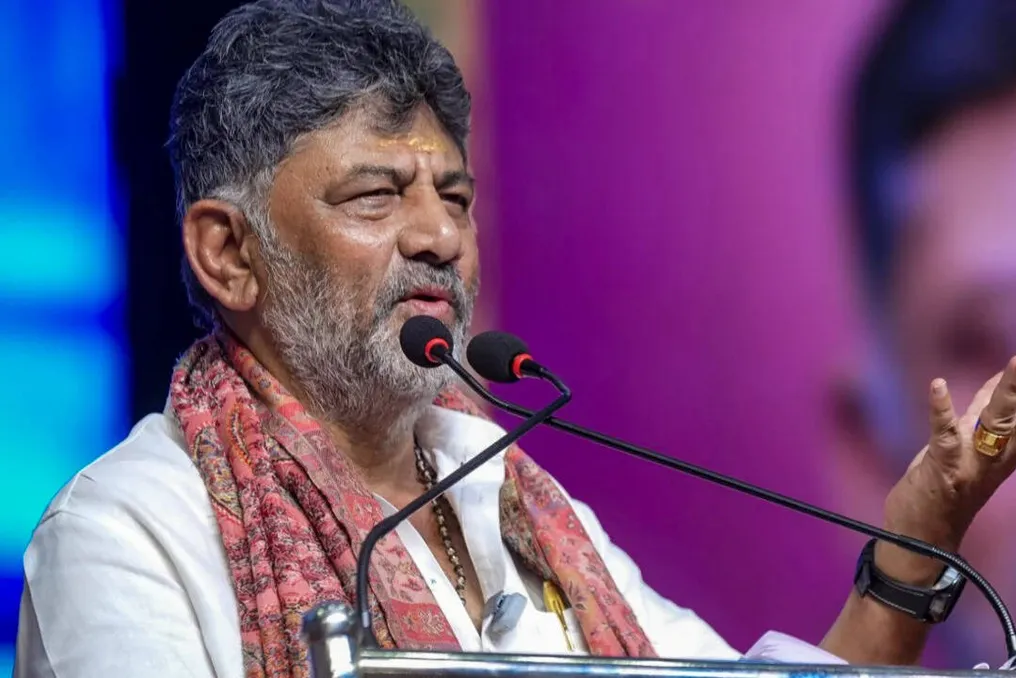
Karnataka Chief Minister DK Shivakumar warned of measures against companies ignoring Kannadigas

Karnataka Chief Minister DK Shivakumar stated that the state government will take appropriate steps against private institutions that deliberately put Kannadigas at a disadvantage.

He warned that government agencies would take action against IT companies found to be consciously limiting opportunities for Kannadigas when providing employment.

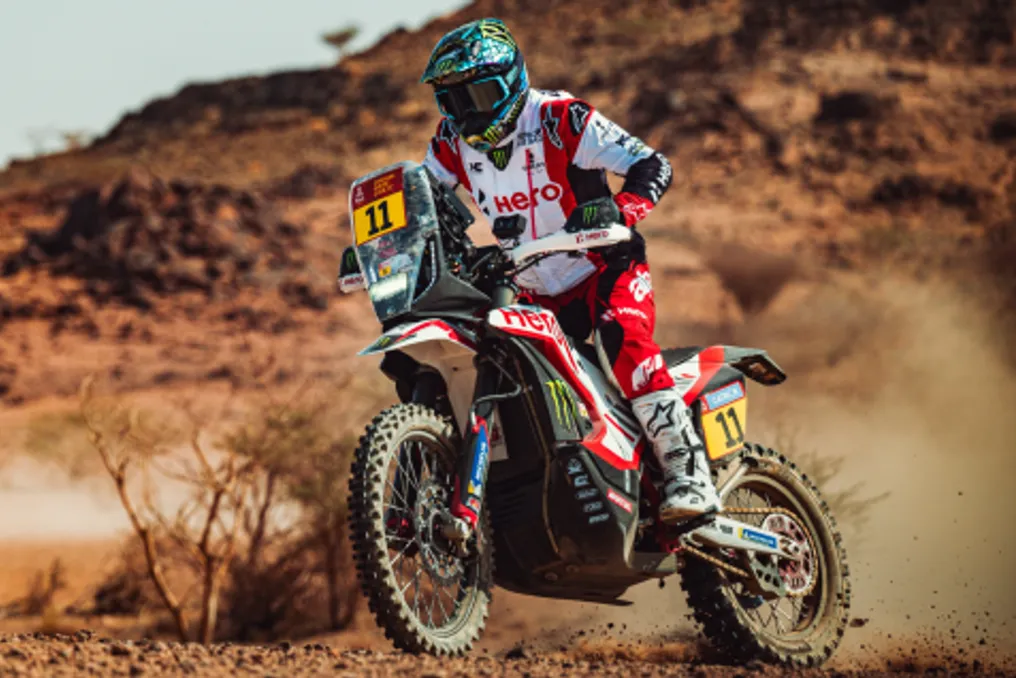
Hero, the world's second-largest motorcycle manufacturer, plans to enter the Brazilian market with a factory in Manaus
Read more
autopapo.com.br

Hero, the world's second-largest motorcycle manufacturer, plans to enter the Brazilian market with a factory in Manaus

Hero, recognized as the second-largest motorcycle manufacturer globally, although often unknown to the Brazilian public, has announced plans to establish operations in the country. The Indian company produces a volume of motorcycles exceeding the total registered in the Brazilian market over three years, reaching 6.25 million units in 2025, trailing only Honda.

Despite its large production volume, Hero lacks stores in Brazil and easily recognizable models for consumers, leading it to be considered possibly the largest 'anonymous' manufacturer on the planet. Sales figures vary slightly depending on the source, with compilations from Motorcycles Data indicating 5.9 million units in 2025, compared to 20.2 million from Honda, while other surveys reach 6.1 million.

Historically, Hero's anonymity dates back to its creation in January 1984 as Hero Honda Motors, a partnership between the Indian Hero Cycles and Honda. The first model, the CD 100, was launched in 1985, and the Splendor consolidated the brand in 1994, becoming the best-selling two-wheeler globally in 2000.

For over two decades, Hero expanded by marketing Japanese projects under its Indian brand. Since 2001, the company has positioned itself as the largest manufacturer of motorcycles and scooters by volume, although this classification depends on the counting methodology, coexisting with Honda's leadership in global rankings.

The relationship with Honda ended at the end of 2010 when the Japanese automaker sold its 26% stake to the Munjal family for over 6.4 thousand crore rupees. This disagreement resulted from the Japanese reluctance to widely share technology and the dissatisfaction of the Indian partner with royalty costs.

In 2011, the company was renamed Hero MotoCorp and had to prove its autonomy. The first model without Honda technology was the Impulse, launched that same year, followed by the Splendor iSmart 110 in 2016, fully developed in-house. In 2022, Vida, the brand's electric division, was established.

Currently, Hero's strategy combines proprietary development with strategic collaborations. The company maintains agreements with Harley-Davidson and Zero Motorcycles and holds a stake in Ather Energy, where it invested in 2016. Furthermore, it has Research and Development centers and a Technical Center in Germany, responsible for developing models such as the Mavrick 440 and the Xtreme 125R.

Hero's operation covers eight factories—five in India and others in Bangladesh, Colombia, and Kenya—operating in nearly 50 countries. Most of its sales volume comes from the domestic Indian market, where it dominates low displacement. This demonstrates that, despite being a giant in volume, its presence outside India lacks the brand recognition or after-sales network of Honda.

In this scenario of international expansion, Brazil emerged as a focus of interest. In August 2024, the company informed shareholders of its intention to operate in the national market. Subsequently, in May 2025, brand representatives presented a project for a factory in the Manaus Free Trade Zone (Suframa) to the Superintendency of the Manaus Free Trade Zone, intended initially for producing electric and combustion models for the domestic market.

The choice of Manaus aims to leverage the tax incentives offered by the Free Trade Zone, a path already taken by other manufacturers. The bureaucratic process has advanced significantly: Hero has had a registered CNPJ in Brazil since April 2025 and obtained approval to produce in Manaus at the 321st meeting of the Suframa Board of Directors, in early December. This authorization covers mopeds and motorcycles with engine capacities between 100 cm³ and 450 cm³.

The projected production capacity is approximately 7,000 units in the first year, 12,000 in the second, and 28,000 in the third. For comparison, Brazil registered 2.19 million registrations in 2025, a historical record with a 17.1% increase compared to 2024, according to Abraciclo data. The 28,000 motorcycles planned for the third year represent just over 1% of this total volume.

Although Hero has not disclosed the exact line that will be launched in Manaus, the up to 450 cm³ range is the only confirmed detail. The portal MOTOO suggests the Mavrick 440 and XPulse 210 as potential highlights. The Xpulse 210, with a 210 cm³ DOHC four-valve liquid-cooled engine, offers 24.6 hp at 9,250 rpm and features a six-speed gearbox with assisted and slipper clutch. This model arrived in the Indian market in January 2025, based on the Karizma XMR 210.

Meanwhile, the Mavrick 440, equipped with a 440 cm³ two-valve SOHC air and oil-cooled single-cylinder engine, generates 27.3 hp at 6,000 rpm. Its powertrain is the TorqX, identical to that used in the Harley-Davidson X440. With a weight of 191 kg and a 13.5-liter tank, this model would be the top of the permitted range in Manaus and a direct response to Royal Enfield's 350 cm³ models. Suframa predicted the start of production for early 2026, but Hero has not yet provided an official date.
Small train in Darjeeling earned 1.41 crore rupees in 21 days at a speed of 15 km/h
Read more
www.aajtak.in

Small train in Darjeeling earned 1.41 crore rupees in 21 days at a speed of 15 km/h

A small train operating in Darjeeling demonstrated impressive results, bringing significant revenue to the state and allowing thousands of passengers to enjoy picturesque landscapes. This success was achieved between October 1 and October 21, 2026.

The famous Darjeeling tourist train has once again attracted public attention. During the Durga Puja festival, there was a huge influx of tourists, and between October 1 and October 21, 2026, about 12 thousand passengers traveled on this historic transport. As a result of this period, the Darjeeling Himalayan Railway earned revenue exceeding 1.41 crore rupees.

The famous Darjeeling tourist train has turned its historical appeal into significant tourism revenue. According to railway officials, this railway, which is a UNESCO World Heritage site, earned 1.41 crore rupees for the period from October 1 to October 21. In three weeks, approximately 12,000 passengers used this historic railway, proving that slow-paced travel can also attract tourists.

People visiting Darjeeling for vacation feel their trip is incomplete if they do not take a ride on this train. Although the train's speed is only between 10 and 15 kilometers per hour, its specialty is that it passes through magnificent valleys. It is popular among tourists precisely because of its low speed, as it allows them to enjoy the beautiful hills.

There are several ways to experience a ride on this famous tourist train. Given the growing number of visitors, the Darjeeling Himalayan Railway has started offering special tourist train trips between Darjeeling and Ghoom. Additionally, two-way services are available between Kurseong and Mahanadi.

This route makes the journey special due to the natural beauty, misty hills, and the whistle of the steam engine. The Darjeeling Himalayan Railway is included in the UNESCO World Heritage list.

Special 'Joy Ride' trips have also been organized between Kurseong and Mahanadi, in addition to Darjeeling. On this route, one service operated on a steam engine, and the other on a diesel engine. This allowed passengers to experience two types of historic railway journeys in one mountain region.

Popular