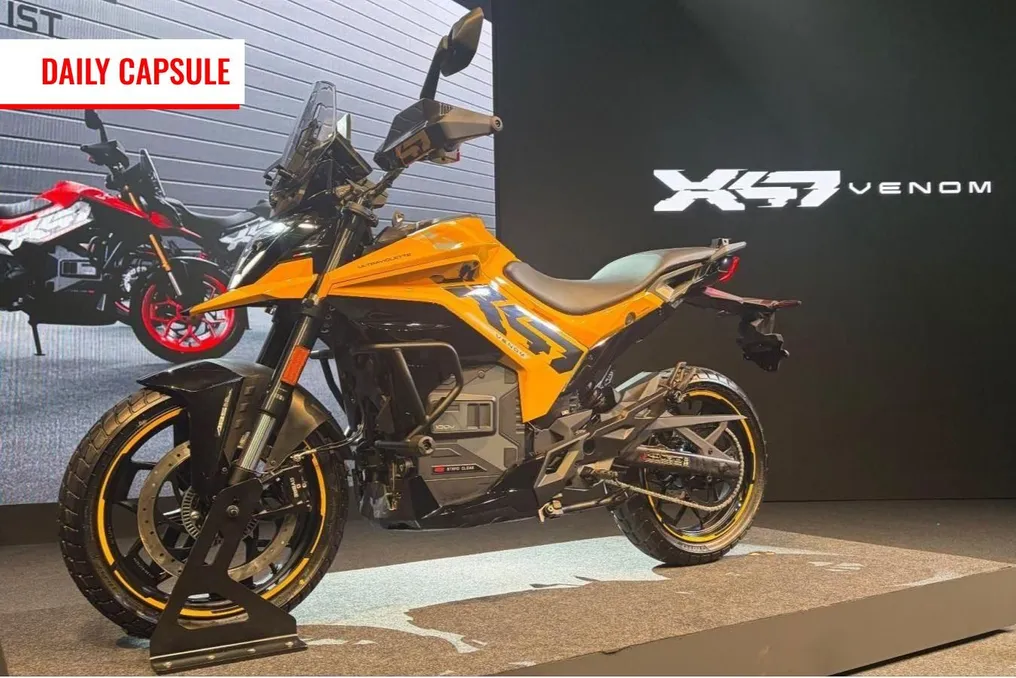
Amid the global microchip shortage, Ultraviolette, a Bangalore-based company producing high-performance electric motorcycles, announced that it will not pass increased costs on to end consumers and is exploring alternative ways to overcome this situation.
Microchips are a vital component for electric vehicles as they are used for data storage, launching control software, and managing real-time operations in critical systems.
Concurrently, in the field of artificial intelligence, Nvidia's role as the main financial driver of global development faces its first serious tests due to tightening credit markets for its partners. CEO Jensen Huang has expanded the company's scope, using its own capital and debt assistance to finance AI model creators, data center operators, and 'neo-cloud' providers, thereby directly subsidizing the infrastructure needed to implement advanced systems, reports CNBC.
Commerce Minister Piyush Goyal stated that the Ministry of Commerce is identifying professions that are 'AI-proof,' where artificial intelligence enhances efficiency rather than replacing workers. Addressing Indian researchers and students in Germany, Goyal emphasized that maintaining employment amidst technological shifts requires focusing on sectors based on human creativity and traditional skills, such as culinary arts, tourism, hand weaving, and handicrafts.
At the TechSparks 2026 conference, industry leaders, including Dr. Gittu Mandjunath (Niramai), Debraj Banerjee (Fundamentum Frontier Advisors), and Shekhar Sivasubramanian (Wadhwani AI), highlighted three main obstacles slowing the widespread adoption of medical technologies: adhering to strict clinical trial standards, integration into the outdated public healthcare system, and ensuring long-term patient capital needed to navigate India's diverse medical ecosystem.
Furthermore, Professor Satya Chakrabarti, a faculty member at IIT Madras' aerospace department and founder of eVTOL developer The ePlane Company, noted that the most difficult challenge for deep tech founders is avoiding the 'technology trap.' Entrepreneurs must critically assess real demand and ask whether anyone is truly interested in the product, instead of getting stuck in complex physics and personal technical interest.