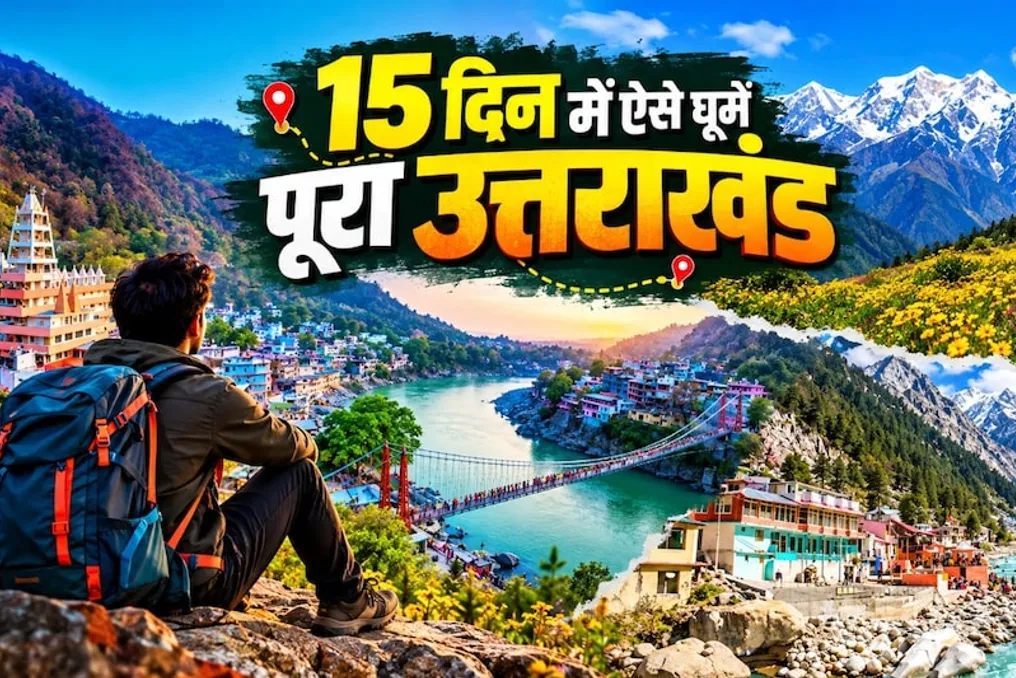
15-Day Uttarakhand Travel Plan: A Route from Haridwar to Nainital
Read more
Aaj Tak
www.aajtak.in

15-Day Uttarakhand Travel Plan: A Route from Haridwar to Nainital

If you wish to escape the daily hustle and bustle and spend time in the mountains, you can plan a trip to Uttarakhand. Here, you will find high mountain ranges, lush forests, picturesque lakes, flowing rivers, and ancient temples. A distinctive feature of the region is the diversity of places to visit: adventure lovers can engage in trekking and rafting, while those seeking a peaceful retreat can enjoy nature by the lakes and in the mountains. With fifteen days, you can visit many beautiful spots in both Garhwal and Kumaon. Below is a plan on how to organize a 15-day trip to Uttarakhand and which attractions to include in your list.

15-Day Uttarakhand Travel Itinerary

The journey can begin in Haridwar, where you can watch the Ganga Aarti at Har Ki Pauri and visit nearby shrines. Afterward, you should proceed to Rishikesh to spend time on the banks of the Ganges, stroll through Ram Jhula area, and relax in a cafe. If the weather permits and you love adrenaline, you can also go rafting on the river here.

Days three and four are planned for visiting Mussoorie. Spending two days in Mussoorie allows you to walk along Mall Road, visit Company Garden, and see Kempty Falls. The city also has cafes and markets amidst the mountains that are worth exploring; it is recommended to arrive early in the morning to avoid crowds.

The fifth day is dedicated to traveling from Mussoorie to Dhanaulti and Kanatal. These places are famous for their green forests, mountains, and tranquil atmosphere, making them ideal for nature lovers. It is important to book a hotel or guesthouse in advance for accommodation.

Next, days six and seven are dedicated to Chopta and Tungnath. Chopta is considered one of the most beautiful mountain locations in Uttarakhand, offering magnificent views of mountains and green fields. Depending on the weather and physical fitness level, you can plan a trek to the Tungnath temple. Before hiking, you must consult local guides and study information about the route and weather.

From the eighth to the tenth day, a trip is planned from Chopta to Joshimath, and then to Auli and Badrinath. Joshimath serves as the starting point for visiting Auli, known for its snow-capped peaks and beautiful mountain scenery; on a clear day, you can see the high Himalayan peaks. The next day, considering the time and road conditions, you can travel to Badrinath Dham and Mana village. In this region, you should proceed slowly due to the altitude and mountain roads.

Eleventh day is allocated for travel and rest after continuous mountain excursions. On this day, you can stay in a town like Karnaprayag or Rudraprayag located along the route. This will allow you to recover from the long journey and facilitate further travel.

On the twelfth and thirteenth days, tourists head to the Kumaon region, visiting Nainital. In Nainital, you can take a boat ride on Naini Lake, walk along Mall Road, and make a pilgrimage to Naina Devi Temple. It is also worth enjoying the local markets and surrounding hills; at Nainital, you should allocate at least one full day.

Fourteenth day is reserved for visiting Bhimtal and Sattal, located near Nainital. These places offer greenery and a quiet environment around the lakes, which is perfect for those who want to avoid crowds. In the evening, you can return to Nainital or stay in a neighboring town.

The last, fifteenth day, is dedicated to preparing for the return. If time permits, you can stop at a local market or a favorite spot on the way. Remember that traveling through mountainous areas can take more time, so you need to allow sufficient time for the return according to the train or bus schedule.

Important Things to Keep in Mind Before Visiting Uttarakhand

For a 15-day trip to Uttarakhand, it is best to choose the period from early April to June or from September to October. During these months, you can plan visits to Mussoorie, Rishikesh, Nainital, and other mountain areas. However, you must check the opening dates of temples such as Badrinath. In July and August, trips may be difficult due to heavy rains and landslides, so be sure to check the weather and road conditions before leaving.

Note: This 15-day itinerary is only a suggestion, including many places in both Garhwal and Kumaon. The journey from Joshimath to Nainital can take a significant amount of time, so you should research the route and estimated travel time before departure. Furthermore, before visiting the Char Dhams, high-altitude areas, and trekking spots, you need to learn about local rules, road conditions, and weather forecasts.
Similar stories

Digvijay Singh begins 950 km foot journey from Ujjain to Ayodhya
Read more
www.aajtak.in

Digvijay Singh begins 950 km foot journey from Ujjain to Ayodhya

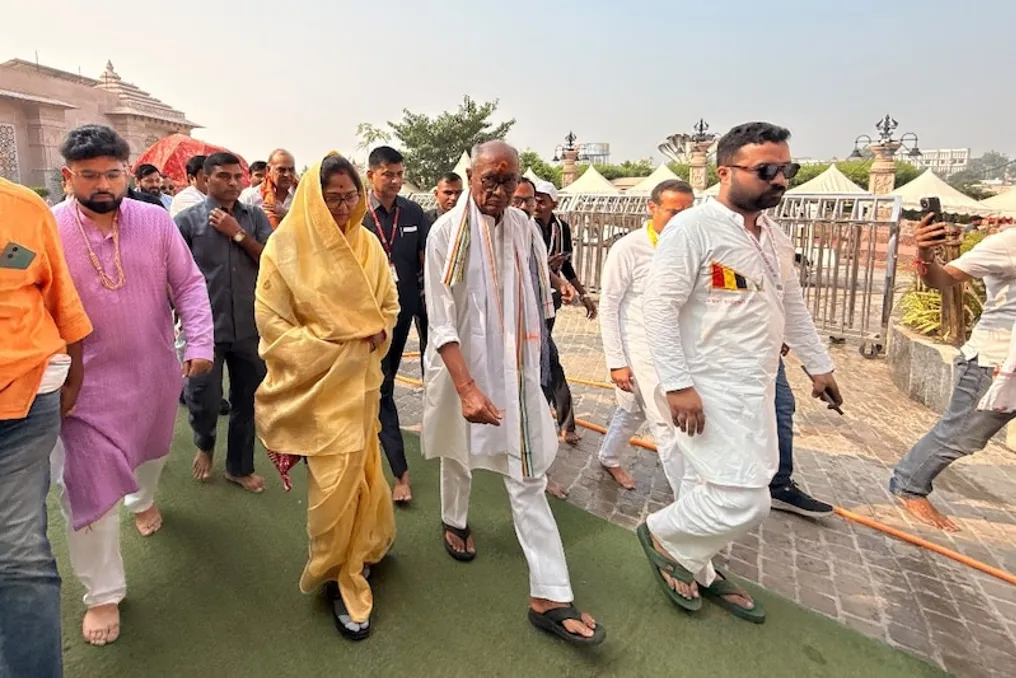
The start of the journey by Digvijay Singh, former Chief Minister of Madhya Pradesh, was shown, which began on October 20 in Ujjain. This foot expedition, named 'Satya Sanatana Swabhiman,' aims to cover a distance of about 950 kilometers and reach the Rama temple in Ayodhya in approximately 70 days. On the first day of the journey, various aspects of religion, faith, and politics were evident.

After visiting the Mahakal temple, creating a party Shivling, the presence of saints, the Devi cult, and holding charitable feasts, the procession continued to the sound of hymns, drums, and religious processions.

On the morning of October 20 in Ujjain, the journey started with a visit to the Mahakal temple. Then, Digvijay Singh and his wife Amrita Singh visited the Chintaman Ganesh temple. After this, upon arriving at Balaji Garden, the participants saw a large number of saints and organized the creation of party Shivlings. The area had many representatives of the religious community who collectively engaged in creating these Shivlings, while others prepared for rituals. The atmosphere was religious, accompanied by melodies of hymns dedicated to Rama and Shiva.

Digvijay Singh's son and Congress leader Jayvardhan Singh actively participated in organizing the event. After the completion of creating the party Shivlings and conducting worship, the Devi cult took place, followed by an organized feast. After all religious rituals were completed, the caravan set off from the venue onto the streets. Around noon, the official movement began for the long journey from Ujjain to Ayodhya.

In the caravan, a procession of Shiva-Parvati led the way, along with mobile vans equipped with LEDs, DJs, singing groups, and drummers. In addition to the national flag, religious banners were also visible. A group of sadhus and saints also participated in the procession. People walked carrying a portrait of Lord Rama and water from five rivers: Shipra, Narmada, Yamuna, Ganga, and Saru.

Behind the religious carriage, Digvijay Singh walked on foot with his wife Amrita Singh, hundreds of saints, and supporters. As the caravan moved through the streets, it was accompanied by the sounds of hymns and drums. This caravan, adorned with religious symbols, demonstrated the stated purpose of the trip: it is not just a path from Ujjain to Ayodhya, but also an opportunity to raise issues regarding the transparency of donations in temples and the accountability of religious institution management.

Digvijay Singh's journey name, 'Satya Sanatana Swabhiman,' reflects his stated themes, including the demand for transparency in temple donations and accountability in the management of religious institutions. He raises questions regarding the donation system in Ram Mandir and alleged misappropriation of funds. Furthermore, he touches upon the issue of vote theft. Although the journey began with religious events, such as visiting Mahakala and creating party Shivlings, it is also connected to issues concerning the functioning of temples.

Digvijay Singh intends to bring these issues to the public arena through this journey. However, accusations of irregularities in the collection or distribution of donations cannot be considered proven facts until appropriate evidence emerges. Therefore, the reaction of the relevant authorities to the issues raised during the journey will be significant.

The religious aspect in Digvijay Singh's politics is not new. His critics have often labeled him as an anti-Sanatan figure. On the other hand, his participation in religious events, such as the pilgrimage to Narmada and the visit to Lord Vitthal in Pandharpur, has also been part of his public life. Now, the 'Satya Sanatana Swabhiman' journey from Ujjain to Ayodhya has once again placed him at the center of the discussion surrounding religion and politics.

Questions arise as to whether this is an expression of religious faith, an attempt to draw attention to the transparency of temple management, or if there is a political message embedded within it. On the first day of the journey in Ujjain, all these facets were evident against the backdrop of religious events and the presence of saints. However, the true impact of the journey will become clear as it progresses and as the issues are raised in subsequent stages.

Digvijay Singh's plan involves covering a distance of about 950 kilometers in approximately 70 days to reach Ram Mandir in Ayodhya. During this journey, he will have the opportunity to interact with people at various stops and voice his concerns. In Ujjain, the journey began with a distinctly religious character: from visiting Mahakala to creating party Shivlings, the Devi cult, charitable feasts, and singing hymns; the first day was dedicated to various forms of faith. Along with this...

IRCTC offers 8-day air tour of Rajasthan visiting Khatushyam
Read more
www.aajtak.in

IRCTC offers 8-day air tour of Rajasthan visiting Khatushyam

IRCTC announces a special offer for travelers planning a trip at the end of November, offering an 8-day air tour of Rajasthan titled 'Royal Rajasthan with Khatushyam Ji'. This tour will be organized by the IRCTC regional office in Lucknow.

The trip is scheduled from November 24, 2026, to December 1, 2026. This 7-night, 8-day tour allows tourists to visit key locations such as Jaipur, Khatushyam Ji, Pushkar, Jodhpur, and Jaisalmer. In addition to visiting religious sites, participants will have the opportunity to experience the rich culture, historical heritage, forts, palaces, and famous tourist attractions of Rajasthan.

The IRCTC air tour package includes flights from Lucknow, accommodation in comfortable hotels, breakfast, and dinner. Furthermore, it provides air-conditioned local transportation, excursions to planned locations, and guidance from experienced guides, ensuring a convenient and memorable journey.

The package cost depends on the accommodation conditions. For one person, the price is 74,300 rupees; for two people, it is 57,800 rupees; and for three people, it is 55,100 rupees. For children aged 5 to 11, the cost with accommodation is set at 48,100 rupees, and without accommodation at 43,700 rupees. Children aged 2 to 5 can avail the service without accommodation for 27,100 rupees.

Ajit Kumar Sinha, Chief Regional Manager of IRCTC North Region, stated that booking for this tour will be on a 'first come, first served' basis. Interested passengers can make a reservation through the IRCTC office located at Tourism Bhawan, Gomti Nagar, Lucknow, or via the official IRCTC website at www.irctc.com. For more information about the tour and to make a booking, contact the following numbers: 9305111765, 9236391911, 9236391909, 8287930912, and 8287930902. Before booking, it is recommended to obtain complete information regarding included services, itinerary, and applicable terms directly from IRCTC.

Popular