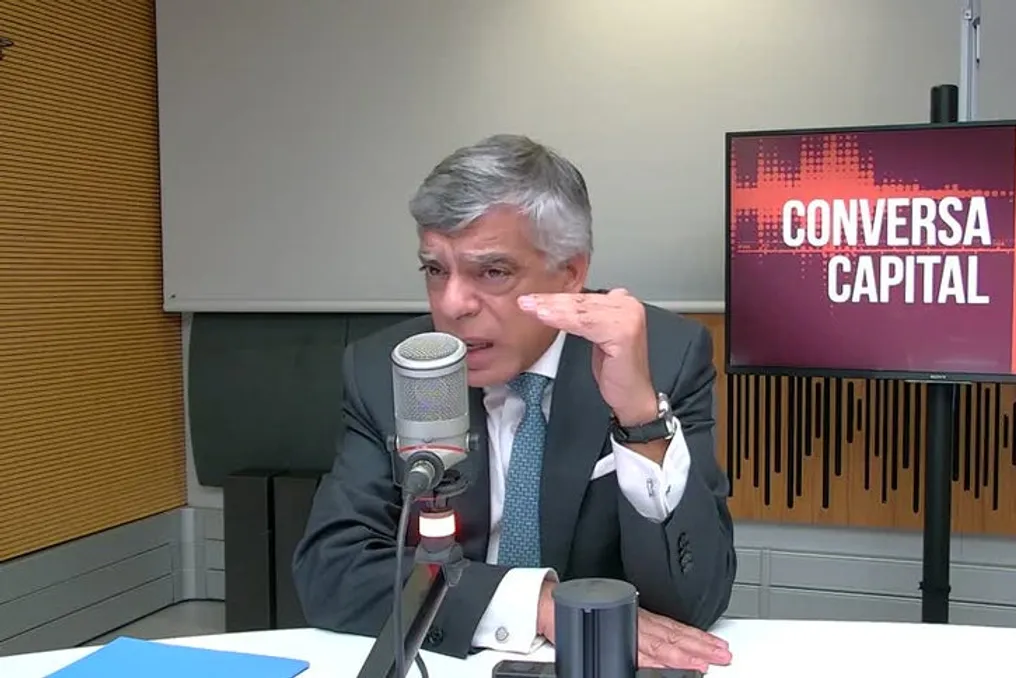
The Confederation of Portuguese Business (CIP) states that achieving a 10% growth in private investment, as stipulated in the State Budget for 2027 (OE27), is impossible.
Armindo Monteiro, representing CIP, notes that the current situation is characterized by a series of demonstrations and strikes. He calls for a compromise, pointing out that discussions often boil down merely to 'establishing a client base.' In his opinion, the problem extends to social dialogue, as there is neither constructive building nor cooperation.
Monteiro believes that tensions are higher than in the past due to the absence of a governing coalition. This leads to significant changes getting caught up in partisan politics and not moving forward. He cites labor legislation that has not been adopted and asserts that CIP does not have the conditions for its further advancement. Admitting himself to be an optimist, he adds: 'I am an optimist, but I am not sure about it.'
Regarding the income agreement, Armindo Monteiro believes it should be rejected by employers. He explains this by saying that without expected productivity, most companies will face difficulties in indexing the minimum wage. Furthermore, the president of CIP states that the amount exceeding 970 euros planned for 2027 is unrealistic.
Concerning the fifteenth-month measure, which is maintained next year, Monteiro regrets the legislative obstacles to its application. He believes that the number of beneficiaries could increase tenfold if these blockages were absent. Regarding housing protests, he views them as a reflection of societal division 'between a noisy minority and a reserved majority.'
He emphasizes the need to realize what is happening, as the situation is not resolved simply by wish, like a Christmas list: 'we formulate wishes, and they happen.' Therefore, Armindo Monteiro advocates for changes in construction methods and in land law.