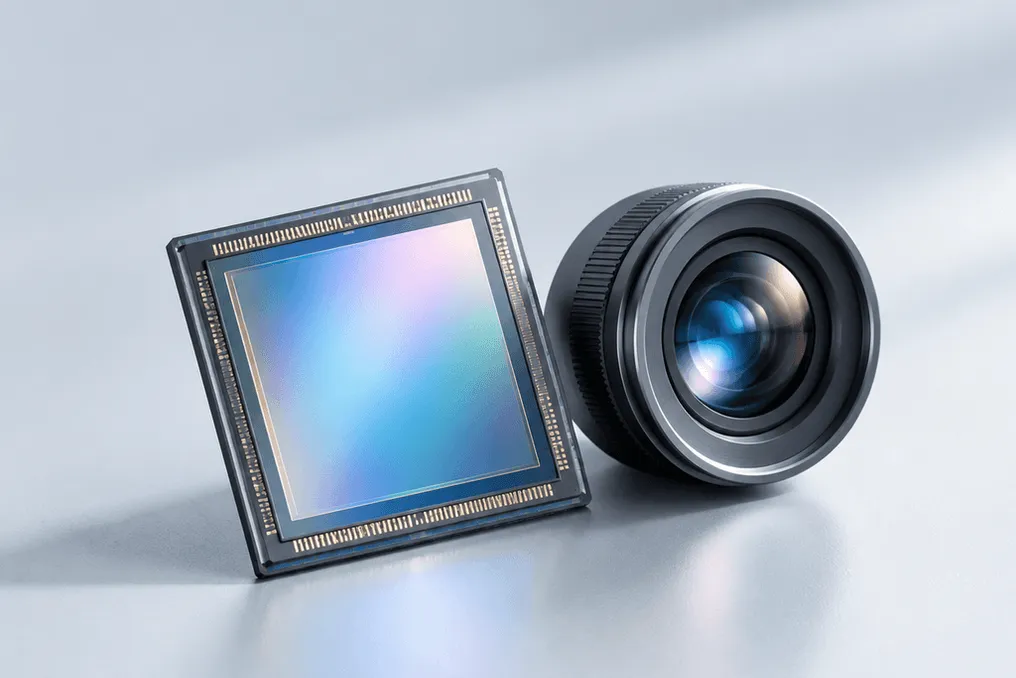
Huawei announced that the XMAGE Z10 camera module is equipped with an image sensor developed in-house by the HiSilicon chip design division. This information was presented during the Kirin 2026 media briefing, held at the company's research center in Lianqiu Lake, Shanghai, on October 13. At the event, Su Songyu, Head of Wireless Terminal Chip Product Management in Huawei's semiconductor business, provided more detailed information about the Kirin 9050 series beyond the previously shown architectural diagram.
According to a report by IT Home on site, the Kirin 9050 series is designed for close integration with the new generation of self-developed CMOS image sensors, fully customized optics, and a professional Image Signal Processor (ISP) for image processing. This allows Huawei to customize the entire chain independently, from the sensor and lens to the processing on the chip. Su stated that the XMAGE Z10 uses a 50-megapixel 1-inch RYYB sensor developed by HiSilicon. Previous coverage of this module mentioned the sensor's size and color filter but did not specify the developer.
The XMAGE Z10 was released on October 1 along with the Mate 90 series. It attaches via Huawei's HyperClick mount, available in H1 and H2 versions for the Mate 90 Pro Max and Mate 90 RS collector editions, supporting quick attachment without screws. The module features its own optical image stabilization system that works in conjunction with the Kirin chip, and it is priced at 5,999 yuan, or 19,499 yuan in the collector's bundle.
Regarding security, Huawei stated that the Kirin 9050 series is among the first mobile SoCs to undergo official testing for quantum attack resistance, including support for post-quantum cryptography. The company also named it the first SoC platform with chip-level protection: the mobile security processor interacts with a dedicated security chip to protect boot, data, privacy, and communications.
In terms of audio and video, the chip integrates heterogeneous DSP and NPU computing with low-latency FFTS scheduling and H.266 hardware video decoding. Huawei noted that this improves call clarity and sound processing, as well as making video playback smoother and more energy-efficient with weak network connections. However, Huawei did not disclose the name of the body that conducted the anti-quantum attack certification nor provide additional technical specifications for the new sensor.