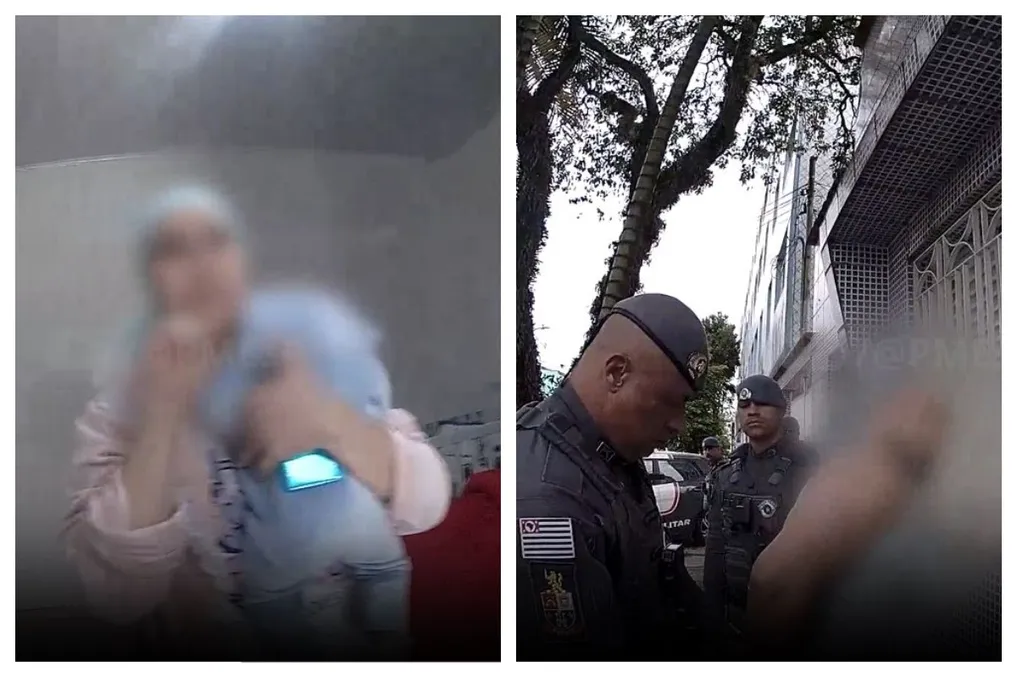
A Moroccan woman of descent, who is part of a refugee family accepted in Brazil, was freed by the Military Police (PM) along with her child after she sent an international silent distress signal from her home in the Vila Maria neighborhood, Northwest São Paulo. The incident occurred on Friday (the 23rd) and was recorded on the body camera of one of the officers who arrived at the scene.
According to the Department of Public Security (SSP), the report of the incident was made by the son's daughter, who is accused of domestic violence against his wife. The 13-year-old teenager called 190. Simultaneously, a United Nations (UN) employee supporting refugees also contacted the authorities after receiving a plea for help from the victim.
What is an international distress signal
When the police arrived at the address and entered the house, the woman demonstrated an international distress signal—a gesture recognized worldwide for silent requests for help in situations of violence. This gesture involves showing the palm, bending the thumb inwards, and closing the other fingers over it.
Body camera footage shows the moment one agent noticed the request for help from the woman holding a child. The woman stated, 'Eu não entender o português' (I do not understand Portuguese), and the police officer informed his colleagues that 'Ela fez sinal' (She signaled).
After confirming that the woman needed help, the officers led her and the child out of the residence. According to the SSP, the man was agitated and was separated from the victim to ensure her safety. The video also shows how the husband was subdued and detained during the incident.
After stabilizing the situation, the police began communicating with the woman using a mobile translation application. Since she did not speak Portuguese, the tool translated the agents' messages into Arabic and translated the victim's responses into Portuguese. One PM attempted to calm her, saying on the phone for the message to be translated: 'Pode ficar tranquila. Hoje você não vai voltar. Fica tranquila' (You can stay calm. You will not return today. Stay calm).
Thanks to this tool, the victim was able to recount what happened in the house. The team remained on site, providing support to the woman and her family. The UN employee also accompanied the assistance and helped with communication. The incident was forwarded to the 4th Department of Women's Protection (DDM) for investigation.
The report asked the SSP whether the man remained in custody after the incident was registered and if he had been charged with domestic violence. No answer was received at the time of the last update.
The gesture used by the Moroccan woman is internationally recognized as a request for silent help in violent situations. It was created to allow victims to warn third parties without attracting the aggressor's attention. In the case of Vila Maria, the immediate recognition of the signal by the police proved decisive in allowing the victim to ask for help, even without knowing Portuguese.