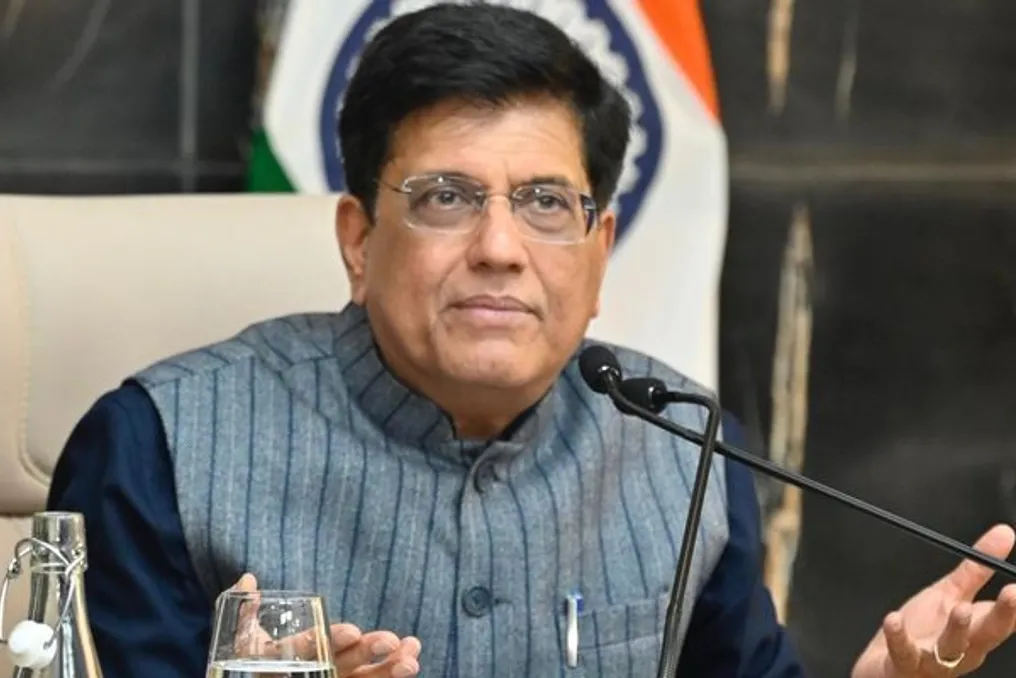
The commerce ministry is currently identifying professions that are less susceptible to artificial intelligence (AI) to prepare for rapid technological changes and capitalize on opportunities for India to become a global leader, according to Union Minister Piyush Goyal.
The minister stated that the strategy will concentrate on industries where AI can boost efficiency without necessitating the replacement of human employees, while utilizing India's substantial reservoir of skilled personnel, young demographic, and established traditional competencies.
Speaking to Indian science and technology researchers and students in Germany on Friday, the minister explained that his ministry has begun work on determining these AI-proof professions. He emphasized the necessity of national planning for the millions of citizens, focusing on sectors where AI can enhance efficiency rather than substitute the human workforce.
When questioned about the goals of this initiative, Goyal mentioned that India possesses the potential to assume global leadership in several fields, such as tourism, handicrafts, handloom, and culinary arts, by leveraging its large pool of skilled individuals and youthful population. He stressed that in these specific sectors, human creativity and traditional skills retain significant value.
He added that no amount of AI can replicate the value of Indian handicrafts and handloom, noting that there are numerous areas where India holds unique strengths that will be prioritized and simultaneously developed to improve the quality of life for its 1.4 billion residents in the future.
Regarding governmental support, Goyal indicated that assistance would be provided where needed, though incentives would not be mandatory for every single activity. He described the approach as a combination of various efforts, including those driven by the government, the private sector, individuals, and market opportunities, with the overarching aim being to bolster India's inherent strengths and generate opportunities that benefit its 1.4 billion people.
Furthermore, Goyal discussed methods to encourage Indian researchers, engineers, and scientists working overseas to return and contribute to the nation's progress. He requested that the researchers and students present in Germany advise on their needs and how the country can better support young researchers and its talented engineering and scientific communities to come and serve in India.
Goyal observed that his conversations revealed that attracting talent is not solely dependent on financial rewards, but critically relies on establishing a supportive environment for innovation and research. He plans to consult with government colleagues, educational bodies (both public and private), academia, and leading research institutions and industries in India to establish robust partnerships among industry, academia, and researchers.
Looking ahead at global economic trends, Goyal noted that developed nations will increasingly need to collaborate with emerging economies across Asia, Africa, and Latin America, as these regions are expected to be the drivers of future growth.
He concluded by mentioning the presence of approximately 330,000 people of Indian descent in Germany, alongside nearly 60,000 to 70,000 students. Goyal shared that this enthusiastic Indian student community appears eager to bring their knowledge back to India, shifting their focus from merely seeking employment in Germany to contributing to India's growth narrative, as he sees the primary action occurring there.