Study reveals that plants divert roots from decomposing organisms to avoid toxins
Read more
Super Abril
super.abril.com.br

Study reveals that plants divert roots from decomposing organisms to avoid toxins

Plants demonstrate that they are not entirely inactive; they grow and adjust the direction of this development in response to various stimuli, a process known as tropism. Some species direct their shoots towards the sun (heliotropism), while others follow or resist the force of gravity (gravitropism), and many tend to lead their roots to areas of soil with greater water availability (hydrotropism).

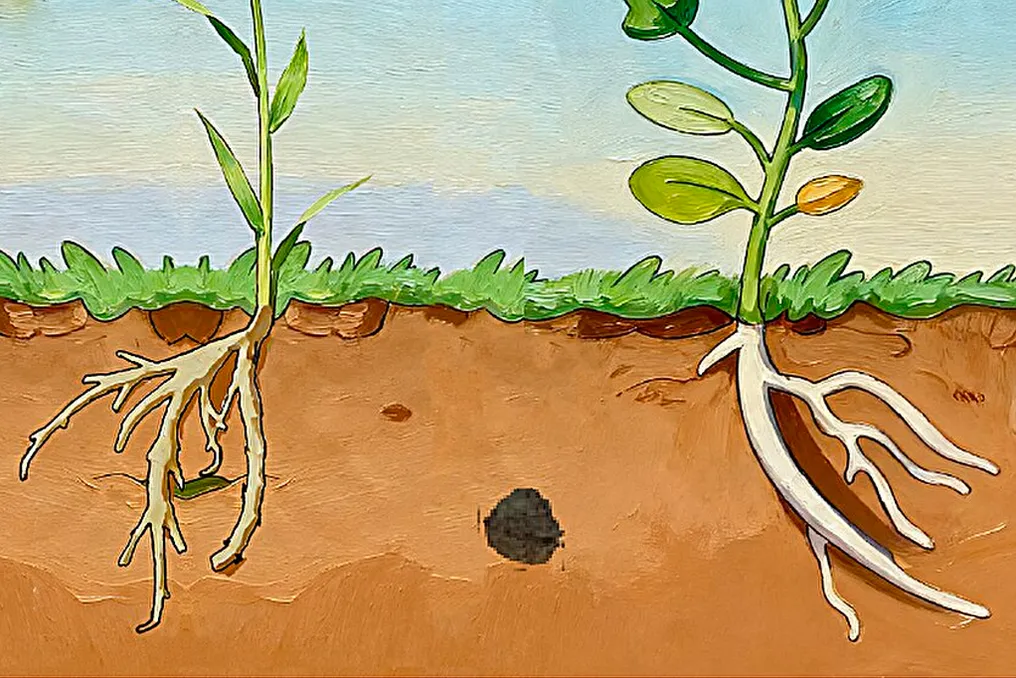
Furthermore, plants use this restricted movement to protect themselves from harmful substances. In a recent study published in the journal Science, Chinese and Austrian scientists discovered a new type of tropism: plants curve their roots away from dead or decaying matter. This phenomenon has been named 'saprotropism', using the prefix sapro, derived from Greek for 'rotted' or 'decayed.'

This movement allows plants to avoid absorbing toxins released by microbes during decomposition in contaminated parts of the soil. Biologist Yuzhou Zhang, co-author and originator of the study, commented that 'animals instinctively avoid spoiled food because it often harbors harmful microorganisms,' questioning whether plants, despite lacking mobility, could have developed a similar tactic underground.

The investigation originated from an unsuccessful experiment conducted by Zhang in a laboratory in Austria. While trying to understand the reaction of plants to gravity, he noticed that an agar plate had been contaminated by airborne microbes. This chance observation led to the finding that all the roots of the samples curved away from the contaminated areas, prompting a more detailed analysis.

In the tests, researchers planted seedlings of the species Arabidopsis thaliana in containers containing various decomposing organic materials, such as wood sawdust, leaves, or apple slices. As predicted, the roots diverted from the 'decomposition zones' where the putrefying material contaminated the surrounding soil. Notably, the roots exhibited different behavior when the organic material was of animal origin, such as pieces of chicken meat.

The same effect was observed in other crops, including wheat, tomato, and canola, suggesting that this reaction may be a common characteristic in the plant kingdom. A key factor distinguishing this phenomenon from other tropisms is that, while most previous tropisms were linked to non-biological (abiotic) stimuli—such as light, water, or gravity—in the case of saprotropism, growth is influenced by living soil microorganisms.

The mechanism behind this reaction also differs from other tropisms. While in phototropism the plant uses auxin redistribution, a growth hormone, to orient itself towards light, in saprotropism, the direction is determined by abscisic acid (ABA), a plant hormone sensitive to soil pH. Fungi act as signalers: by decomposing dead plant tissues, they release acidic metabolites (such as organic and phenolic acids) into the soil, creating zones of higher acidity. Plants detect this increase in acidity and concentrate abscisic acid on the side of the root closest to the decomposing material, forcing growth in the opposite direction and thus diverting from the contaminated area.

The experiments demonstrated that when the organic matter completes its decomposition and integrates into the soil, the plant returns to its normal growth. Zhang stated that 'when the plant material had almost completely decomposed, the acidic warning signal disappeared, and the roots stopped curving away.'
Similar stories

Banana extinction threat: the impact of diseases, climate change, and genetic diversity
Read more
super.abril.com.br

Banana extinction threat: the impact of diseases, climate change, and genetic diversity

Until the mid-1950s, consumers ate a completely different type of banana than the one known today. The dominant variety on supermarket shelves was Gros Michel—sweeter, creamier, and more fragrant than modern varieties. However, this type of banana no longer exists because it was destroyed by the Fusarium disease, widely known as Panama disease.

This fungal infection kills the plant by occupying its vascular system and blocking the transport of water and minerals necessary for banana survival. The fungus Fusarium oxysporum is highly resistant and can persist in plantation soil for over 20 years; currently, there is no chemical treatment or effective method to eliminate the fungus after an area has been infected.

As an alternative for global consumption, the Cavendish variety emerged (known as nanica in Brazil). Today, this is the most common variety on the market, developed as a response to the disease that wiped out Gros Michel. For about 40 years, Cavendish thrived on plantations supplying much of the world's market due to its resistance to the initial strain of the fungus.

However, the situation began to change in 1990. An aggressive strain of the fungus, known as Tropical Race 4 (R4T), started to develop, which began destroying the Cavendish group. Since then, R4T has spread and attacks banana plantations in many parts of the world. In Brazil, it is currently considered absent, although it is classified as a pest posing an economic and ecological threat.

In addition to the aggressiveness of R4T, there is another problem: bananas are propagated through cloning, which leads to low genetic diversity among different types. While this ensures uniformity of fruit, it also means they are susceptible to the same diseases—if a disease affects one plant, it can affect the entire population of that variety.

Climate change also contributes to the extinction threat. Rising temperatures, extreme weather events, and climate-related pests negatively affect banana-producing countries, which report crop reductions and loss of agricultural land across the region.

This is because bananas, especially the Cavendish variety, are sensitive fruits. They require a temperature range of 15°C to 35°C for normal development, as well as sufficient water. They are also vulnerable to storms, which can lead to the loss of banana leaves and hinder the plant's photosynthesis process.

According to the Going Bananas report, by 2080, 60% of the best areas for growing bananas could be lost due to climate change. Currently, Asia is the world's largest banana producer, followed by the Americas and Africa—some of the regions most vulnerable to climatic events.

Nevertheless, according to new research, hope for saving bananas still exists. This month, the Yelloway initiative announced the development of a fully fertile Cavendish banana. This means that new, commercially viable, and disease-resistant banana varieties can be created through crossbreeding.

Various approaches also exist worldwide. For example, researchers at the Queensland University of Technology in Australia have created a genetically modified Cavendish variety that provides resistance to TR4. This result, named QCAV-4 variant, has been approved for human consumption in Australia and New Zealand.

5 simple ways to care for balcony pots to protect plants from frost
Read more
www.aajtak.in

5 simple ways to care for balcony pots to protect plants from frost

As winter begins, people start feeling the need for warm clothes and blankets, but plants kept on the home balcony also require special care. Especially the cold night winds and morning frost can damage plant leaves. This results in wilting plants, slowed growth, and sometimes negative effects on the roots.

If you have decorated your balcony with lush green plants, you should not leave them alone in winter. The good news is that you do not need to buy expensive covers or special gardening products to protect plants from the cold. Here are five easy ways to protect balcony plants from the cold while also reducing expenses.

Strong cold winds at night can be harmful to plants kept on the balcony, so it is essential to protect the plants from this cold air. To shield plants from direct blasts of cold air, place the pots near the wall of the balcony where the airflow is less direct. Choosing a spot that receives sunlight during the day will be more suitable, although it is important to ensure that the plants receive adequate light as needed.

It is better to keep the pots grouped together rather than keeping them separate. Grouping plants together can provide them with some protection from the cold wind. Doing this, especially at night, creates a safe area around the plants. It is important to note that the pots should not be placed so close that the air circulation is completely stopped.

The tile or cement floor can be quite cold in winter. In this situation, the pots can be placed on wooden pallets, pot stands, or any high and sturdy surface. Doing this reduces the direct contact of the pot with the floor. Ensure that water does not accumulate under the pot.

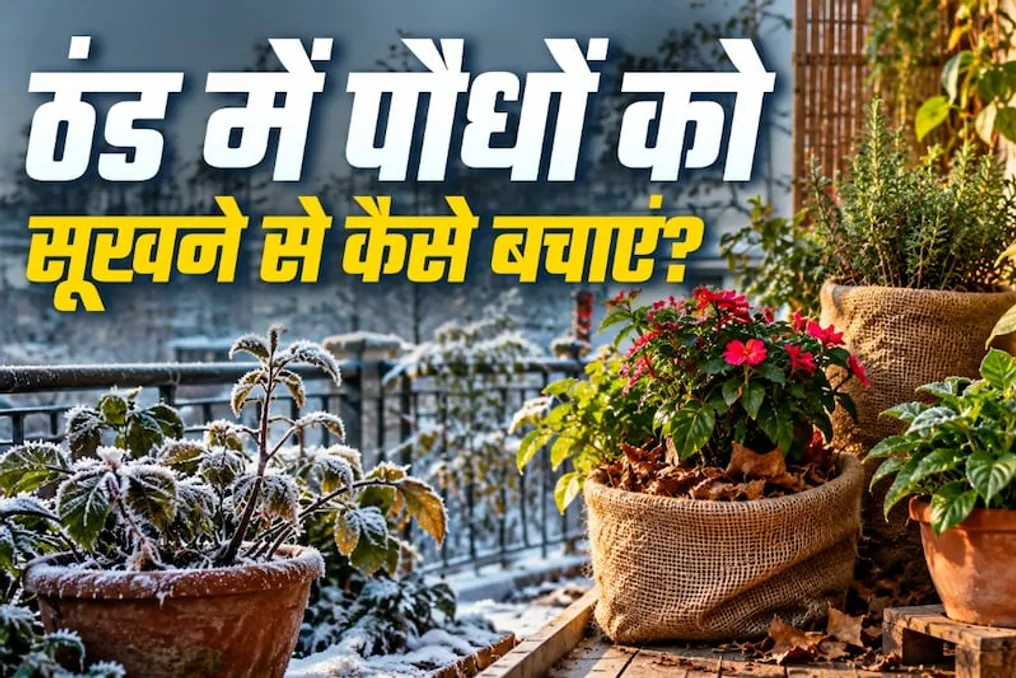
Often, the roots of the plants are more susceptible to sudden cold than their leaves. To deal with this problem, jute sacks or old cloth can be wrapped around the outer part of the pot. This can help control rapid changes in soil temperature. If bubble wrap is used, it should only be placed outside the pot. Also, remember that the drainage holes at the bottom of the pot should not be blocked and water should not accumulate in the soil.

The process of laying a light layer of dry leaves, straw, or coconut husks over the soil of the plants is called mulching. This helps retain moisture in the soil and reduce sudden changes in temperature. A layer about 1 to 2 inches thick can be spread over the pot's soil. It is important to note that the mulch should not be placed directly against the plant stem and should not allow the soil to become excessively wet.

How to create a mini-garden from a broken flower pot: a budget-friendly and beautiful option for the balcony
Read more
www.aajtak.in

How to create a mini-garden from a broken flower pot: a budget-friendly and beautiful option for the balcony

You do not need to spend money on expensive pots, decorative plants, or interior items to decorate your home. Often, old things lying around the house can add beauty to your living space. People who enjoy gardening are constantly forced to buy new pots, which can be expensive. If one of them breaks, many people do not want to throw it away.

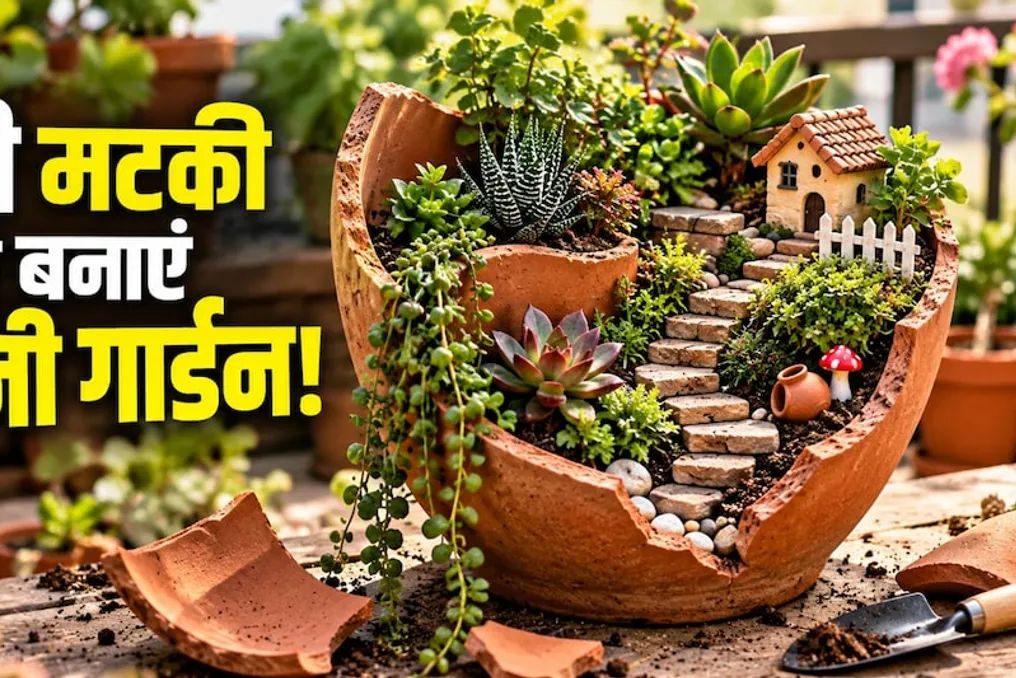
If you have a broken clay pot or an old jug at home, do not throw it away. You can turn it into a mini-garden by decorating it with small plants, colorful stones, and beautiful steps, which looks very effective.

The feature of this garden is that its creation does not require buying a new pot or taking up much space. It can be placed on a balcony, roof, near a window, or in any bright corner of the house. It will resemble a small hilly area or a fairy-tale cottage.

Most materials for creating this DIY project can be found at home. You will need the following items.

First, thoroughly clean the broken vase or clay pot from dirt, moss, or soil. Then separate all the fragments. It is important not to throw away all parts of the vase, as they will be used to create small steps and different levels in the garden. You must also ensure that the bottom of the pot has drainage holes so that water does not stagnate and damage the plant roots.

Next, fill the lower part of the vase with soil that does not retain water. For this, you can mix regular garden soil with coconut substrate, vermicompost, and fine gravel.

After that, slightly tilt the largest fragment of the vase into the soil; it will serve as a small wall. Then, using small pieces of clay, create steps higher and further away from this wall. Compact them thoroughly into the soil so that they do not shift.

You can make the steps indirect, slightly curved, so that the garden looks like a mountain path. At the same time, make sure that the arrangement of the fragments does not completely block the path for water and soil drainage.

Now it's time to fill the garden with greenery. Choose small plants that do not require much watering. Succulents, such as geraniums, sedums, and echeverias, are excellent for such mini-gardens.

Plant plants that require more light on the upper part of the vase. Small plants can be placed between the steps and along the edges to add beauty to the place. When planting, do not damage the roots and gently press down the soil.

An important point is that the water and sunlight needs of all plants are different. Therefore, in one vase, you should plant plants whose care requirements are similar. You should avoid combining succulents with plants that prefer high moisture.

When the mini-garden is ready, it is time to decorate it. Sprinkle fine white gravel around the steps. You can also create a small path from fine sand, imitating a path through the mountain.

A small toy house can be placed on the top of the garden using an old toy. Placing small stones among the plants will make the composition more attractive.

If you want to give the garden a different look, you can decorate the exterior of the vase with natural flowers. However, before fully painting the clay pot, make sure that the color used is safe for plants and soil.

Creating a mini-garden is only half the battle; proper care is also necessary. Place it in a spot where the plants receive the necessary amount of light. Succulents should be protected from intense midday sun, especially if they are not accustomed to direct light exposure.

Before watering, check the soil moisture by touching it with your hand. If the soil is moist, watering is not required. Overwatering succulents can lead to root rot. When watering, use a sprayer or a small bottle so as not to disturb the paths made of soil and gravel.

Popular