Known as the Holy Inquisition, it was an institution established by the courts of the Catholic Church with the goal of persecuting, trying, and punishing individuals accused of deviating from the norms of Christian faith. This activity took place in two main stages: the medieval period, in the 13th and 14th centuries, and the brutal modern Inquisition, which dominated Portugal and Spain from the 15th to the 19th century.
Its origins date back to 1231, when Pope Gregory IX, concerned about the spread of religious sects, established a body to investigate those suspected of heresy.
Any religious practice different from that recognized by the Church was classified as heresy. Operating in Italy, France, Germany, and Portugal, the medieval Inquisition applied milder punishments, the most common of which was excommunication. Nevertheless, as early as 1252, torture was permitted for obtaining confessions.
The second phase of the Inquisition gained full force in Spain in 1478. The main focus during this period was on Jews and newly converted Christians, who were often accused of secretly maintaining Judaism. Officially, this was justified by the need to control the loyalty of these converts, but in reality, these groups constituted a powerful urban bourgeoisie whose interests conflicted with those of the nobility and the higher clergy.
With the support of monarchs, the Holy Inquisition expanded its powers, beginning to consider any insult to faith and customs as heresy. Acts such as using clean towels on Saturday or refusing to eat pork could lead to accusations of Judaism. The list of those persecuted expanded to include Protestants, Enlightenment thinkers, homosexuals, and polygamous individuals, sharply increasing the scope of religious persecution.
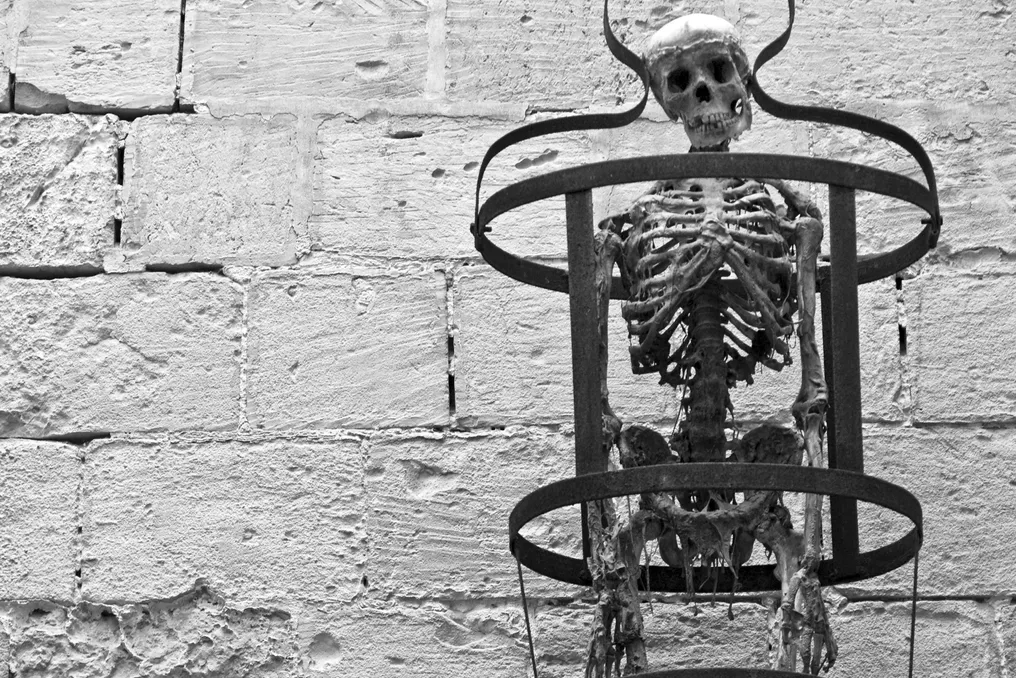
Punishments became significantly harsher, including burning at the stake, life imprisonment, and confiscation of property, turning the Inquisition into a highly profitable enterprise for the Church's treasury. The cruelty of the inquisitors was so extreme that the Pope himself intervened, calling on the Spanish people to stop this bloodbath.
The migration of Jews expelled from Spain to Portugal in 1492 triggered the creation of the Portuguese Holy Inquisition in 1536. Although Brazil never had its own tribunal, Inquisition emissaries operated in the colony from 1591 to 1769. It is estimated that 400 Brazilians were condemned, of whom 21 were burned in Lisbon. Overall, Portuguese inquisitors were victims of about 40,000 people, of whom 1,200 died by fire, whereas in Spain, until the abolition of the Holy Inquisition in 1834, about 150,000 people were condemned, and 3,000 to 5,000 were executed.
The fanatical, cruel, and intolerant Franciscan Thomas de Torquemada (1420–1498) is considered the harshest inquisitor of all time. As the organizer of the Spanish Holy Inquisition, he served as confessor and advisor to Kings Ferdinand and Isabella. In 1483, he was appointed Chief Inquisitor, responsible for trials in Spain and its colonies. He regulated torture, expanded the list of heresies, and pressured the kings to persecute Jews and new converts. By the end of his reign, between 40,000 and 200,000 Jews had been expelled from Spain, and 1,200 people were burned at the stake, leaving a legacy of horror and religious violence.