Fight against banana disease in Costa Rica offers lessons for South African agricultural producers
Read more
Food For Mzansi
foodformzansi.co.za

Fight against banana disease in Costa Rica offers lessons for South African agricultural producers

The global banana industry in Costa Rica is facing changes in weather and constant fungal pressure, which recently led to a decrease in annual export volume and highlighted global production risks.

Journalists from Food For Mzansi participated in the IFAJ Exposure-4-Development press tour in Costa Rica from October 18 to 26, 2026. This program was designed to give journalists direct insight into global farming systems, climate challenges, and research achievements. During the tour, the country's agricultural sector, farming methods, and advanced innovations were studied.

As a tropical country operating in two different seasons—dry and rainy—Costa Rica has long been a major fruit producer globally. To protect crops from increasing heat, heavy rains, and black sigatoka disease, the Central American country is implementing an adaptation strategy based on gene editing, biological soil control, and drone monitoring, providing valuable practical lessons for South African farmers.

The first part of the tour took place at the Earth University, a private institution located on a vast area that was formerly a commercial banana plantation acquired in the late 1980s with financial support from the W.K. Kellogg Foundation. Today, this operation continues to provide commercial banana production but faces growing environmental pressure as fields are increasingly affected by global climate shifts.

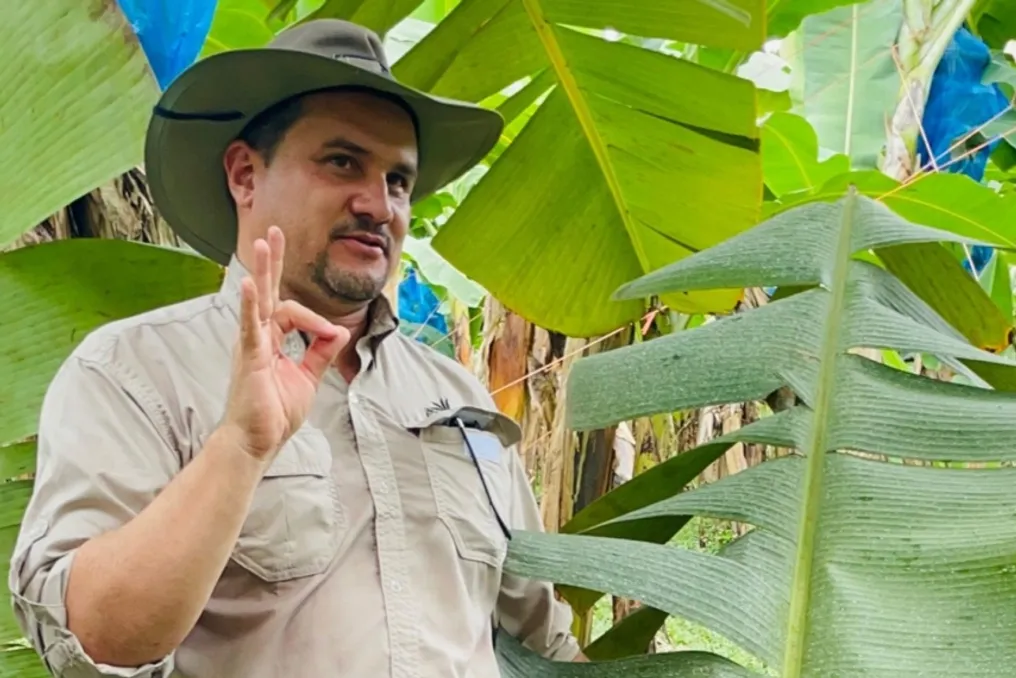
Adrian Jimenez Suniga explained that heavy rainfall creates drainage problems in the fields. He noted: 'There is more rain, and heavy downpours create many puddles that sometimes overflow and become too burdensome for the plant and roots. This also causes deficiency.' Suniga emphasized that waterlogged and moist conditions promote the development of fungi such as black sigatoka (also known as black leaf stripe, a destructive fungal disease of banana leaves), making the protection of plant physiology and root health extremely important.

The impact of climate stress often depends on local microclimates and the presence of surrounding forest cover. Fernando Arce Argredas, who has worked on the university farm for five years, observed that location plays a significant role in how crops cope. He stated: 'The situation varies greatly because in some regions there are fewer forests, so they suffer less from climate change and excessive rain. But where they exist, they suffer because the plants are damaged.'

Yecis Miranda, a university farm worker for four years, shared that while fruit harvesting is manageable, crop protection requires constant effort. She said: 'Putting bags on the fruits is hard work.'

For short-term control of fungal outbreaks, farm managers apply targeted spraying while also studying sustainable packaging, such as eco-friendly corn-based plastic. However, long-term sustainability depends on plant breeding and modern technologies. Suniga pointed out that introducing wild, resistant varieties like Cavendish is difficult because commercial bananas do not produce seeds. To overcome this obstacle, research companies from the UK are turning to gene editing to develop resistant traits.

Strengthening these biosecurity and adaptation efforts at the field level, the delegation visited the Costa Rican National Banana Corporation (Corbana). As a non-governmental public entity, Corbana provides technical assistance, laboratory services, and scientific research to strengthen national production.

Data provided by Corbana during the visit revealed the recent impact of climate. Total precipitation of 1500 mm recorded in just three months at the end of 2024 contributed to an 11% drop in exports in the first half of 2025 compared to 2024. Consequently, total exports in 2025 reached 110.4 million boxes compared to 125.7 million in 2024.

To build long-term sustainability, Corbana focuses its scientific efforts in five key areas: plant protection (controlling black sigatoka and insect pests through integrated fungicide programs, alternative biorational products, citronella, and forecasting tools); molecular biology and physiology (studying the genetic diversity of Mycosphaerella fijiensis (P. fijiensis) and developing Cavendish-type hybrids resistant to both black sigatoka and late blight (Foc R4T)); biological control (using beneficial soil microorganisms, particularly Bacillus and Trichoderma, to suppress soil-borne diseases and improve soil health); soil health and precision technology (improving root health, fertilizer efficiency, and foliar nutrition during climate stress, as well as using drone monitoring to detect black sigatoka before critical stages).

Since South African banana producers face their own changing climatic conditions, the combination of practical field management, biological research, and strict biosecurity presented by Costa Rica offers a clear roadmap for protecting future harvests.


Similar stories

Young Scientist Works on Crop Protection and Food Security in Mzansi
Read more
foodformzansi.co.za

Young Scientist Works on Crop Protection and Food Security in Mzansi

Asande Humalo, who grew up in the rural area of Nkomazi, Mpumalanga province, faced limited access to career counseling. Nevertheless, his parents valued education and encouraged him to look beyond his immediate surroundings. It was this curiosity that ultimately led him to study plant pathology.

Humalo explains to Food For Mzansi that plant pathology is akin to medical practice, but applied to plants. Like humans, plants can become diseased due to fungi, bacteria, viruses, and other microorganisms. He clarifies: 'My job as a phytopathologist is to study the causes of plant diseases, how the disease spreads, and how we can prevent or cure it.'

According to Humalo, plant diseases affect farmers of all production scales—from small-scale maize growers to commercial sugarcane operations. He emphasizes that an outbreak of disease can destroy an entire harvest, negatively impacting food production and agricultural supply.

After finishing school in 2021, he enrolled in an undergraduate agriculture program at the University of KwaZulu-Natal, specializing in plant pathology. In 2024, he completed his master's level studies in the same field and is currently pursuing his master's degree.

The research Humalo is conducting as part of his master's program focuses on utilizing spent mycelial substrate—material left over from mushroom production. He is investigating the possibility of reusing this substrate as a growing medium and its ability to suppress soil-borne diseases using beneficial biological agents such as species of Trichoderma and Bacillus. 'Mushroom farms usually throw away these waste products, and they can become a pollution problem,' he notes. Humalo explains that the discarded material can still contain nutrients and beneficial microorganisms. His research tests whether these properties can support plant growth and help manage soil diseases, including competition between beneficial and pathogenic microorganisms.

Currently, Humalo works at the university as a laboratory demonstrator, assisting junior students during practical sessions. He says this experience has helped him develop as both a scientist and a mentor.

In childhood, Humalo often heard people discuss the potential profitability of agriculture. Amidst a growing population and demand for food, he began seriously considering a career that could provide him long-term security. He recalls: 'I told myself that if you couldn't find a job, you could create one yourself by becoming a farmer.' However, at the time, he was unsure which path to choose within agriculture. Options included botany, soil science, agronomy, and plant pathology, but he knew little about the content of each field.

A high school graduate, Given Khoza, helped him discover plant science. Humalo remembers how the teacher used scientific terminology that captured his attention and introduced him to professions he had never heard of. He quotes: 'He didn't just teach us from the textbook; he told me about the world of science, about professions I had never heard of, such as botany and zoology, and gave me websites so I could learn new things about plants and how they survive among diseases.'

Thus, Humalo became interested in plant pathology. His university experience also broadened his understanding of agriculture. He learned that this field extends beyond simple farming and encompasses science, technology, and innovation. Humalo also realized how microscopic organisms can inflict serious damage on crops, while others can help protect plants from diseases.

Although Humalo has not yet worked officially in the agricultural sector, his studies have provided him with practical research experience. He states: 'Along the way, I realized that agriculture is a science. I learned to isolate pathogens, identify beneficial microorganisms, work in a laboratory and greenhouse, and understand how tiny organisms can either destroy or save a harvest.' He believes this knowledge can help researchers in understanding and managing plant disease outbreaks. 'We are currently experiencing extremely high temperatures due to global warming and climate change. Plant pathology provides the knowledge that will help us protect plant health.'

Despite still working towards his goals, the young researcher plans to officially establish Kun’s Enterprise. This company will focus on developing affordable, eco-friendly growing media and biological control agents for smallholder farmers, with plans to expand to commercial farmers in the future.

Banana extinction threat: the impact of diseases, climate change, and genetic diversity
Read more
super.abril.com.br

Banana extinction threat: the impact of diseases, climate change, and genetic diversity

Until the mid-1950s, consumers ate a completely different type of banana than the one known today. The dominant variety on supermarket shelves was Gros Michel—sweeter, creamier, and more fragrant than modern varieties. However, this type of banana no longer exists because it was destroyed by the Fusarium disease, widely known as Panama disease.

This fungal infection kills the plant by occupying its vascular system and blocking the transport of water and minerals necessary for banana survival. The fungus Fusarium oxysporum is highly resistant and can persist in plantation soil for over 20 years; currently, there is no chemical treatment or effective method to eliminate the fungus after an area has been infected.

As an alternative for global consumption, the Cavendish variety emerged (known as nanica in Brazil). Today, this is the most common variety on the market, developed as a response to the disease that wiped out Gros Michel. For about 40 years, Cavendish thrived on plantations supplying much of the world's market due to its resistance to the initial strain of the fungus.

However, the situation began to change in 1990. An aggressive strain of the fungus, known as Tropical Race 4 (R4T), started to develop, which began destroying the Cavendish group. Since then, R4T has spread and attacks banana plantations in many parts of the world. In Brazil, it is currently considered absent, although it is classified as a pest posing an economic and ecological threat.

In addition to the aggressiveness of R4T, there is another problem: bananas are propagated through cloning, which leads to low genetic diversity among different types. While this ensures uniformity of fruit, it also means they are susceptible to the same diseases—if a disease affects one plant, it can affect the entire population of that variety.

Climate change also contributes to the extinction threat. Rising temperatures, extreme weather events, and climate-related pests negatively affect banana-producing countries, which report crop reductions and loss of agricultural land across the region.

This is because bananas, especially the Cavendish variety, are sensitive fruits. They require a temperature range of 15°C to 35°C for normal development, as well as sufficient water. They are also vulnerable to storms, which can lead to the loss of banana leaves and hinder the plant's photosynthesis process.

According to the Going Bananas report, by 2080, 60% of the best areas for growing bananas could be lost due to climate change. Currently, Asia is the world's largest banana producer, followed by the Americas and Africa—some of the regions most vulnerable to climatic events.

Nevertheless, according to new research, hope for saving bananas still exists. This month, the Yelloway initiative announced the development of a fully fertile Cavendish banana. This means that new, commercially viable, and disease-resistant banana varieties can be created through crossbreeding.

Various approaches also exist worldwide. For example, researchers at the Queensland University of Technology in Australia have created a genetically modified Cavendish variety that provides resistance to TR4. This result, named QCAV-4 variant, has been approved for human consumption in Australia and New Zealand.

Popular