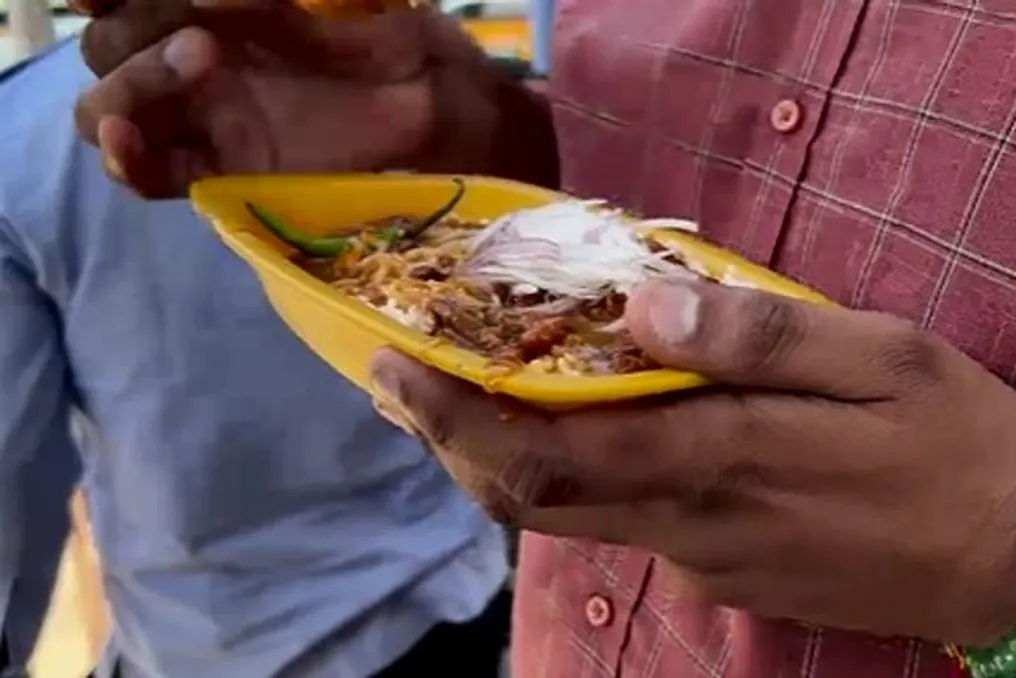
The restaurant, dhaba, and online food delivery business is rapidly expanding in Delhi. Whether customers eat on-site or order through platforms like Swiggy and Zomato, their main requirement is that the food is prepared in a clean environment and meets food safety standards. However, the question arises: is having a food business license a guarantee of compliance with all necessary kitchen standards?
To answer this question, our team conducted an undercover inspection at several dining establishments in Delhi. During the inspection, questions were asked regarding kitchen cleanliness, food storage methods, staff medical examinations, use of head coverings, insect protection, and inspection systems. Video recordings and dialogues raised many questions about the oversight of food safety standards and the licensing process.
During our inspection, dishes and food items left on the floor were observed in some places. In one kitchen, an employee was recorded sitting on the ground while preparing food. In another establishment, footage showed damp walls and construction debris falling from the ceiling. In some places, food preparation staff were not wearing head coverings.
The inspection also captured the cleaning of an open drain near one of the establishments. This activity took place close to the food preparation area, which calls into question measures to protect food from dust, dirt, and potential contamination in such an environment.
Nevertheless, the discovery of dirt itself is not proof that the prepared food was contaminated or that a customer became ill. Food sample analyses and other evidence are required for this. However, the recorded scenes undoubtedly call into question the effectiveness of hygiene standard control in the respective establishments.
At Punjabi Dhaba, located on Arakshan Road in Paharganj, our team spoke with manager Sachin. During the conversation, questions were asked about staff wearing head coverings and adhering to rules during inspections. In the recorded conversation, the manager stated that employees wear head coverings on inspection days. He also suggested that there is an exchange of money between officials and that expenses need to be covered during the inspection.
When asked about staff medical examinations, mentions of payments and official expenses appeared in the conversation. These statements raise the question of whether food safety regulations are followed regularly, or if procedures are only tidied up during inspections.
It is important to emphasize that independent confirmation of the manager's statements is required. No official or department can be declared corrupt based solely on one person's testimony.
During this same inspection, scenes around Royal Flavours were recorded. The video shows the cleaning of an open drain near the dining establishment. Cleanliness around food preparation areas and safe disposal of wastewater are crucial from a food safety perspective.
The issue here is not just the presence of dirt near the shop, but also what measures have been taken to protect food from external dirt and potential contamination. Inspection reports and departmental responses are needed to determine the actual state of compliance of the establishment.