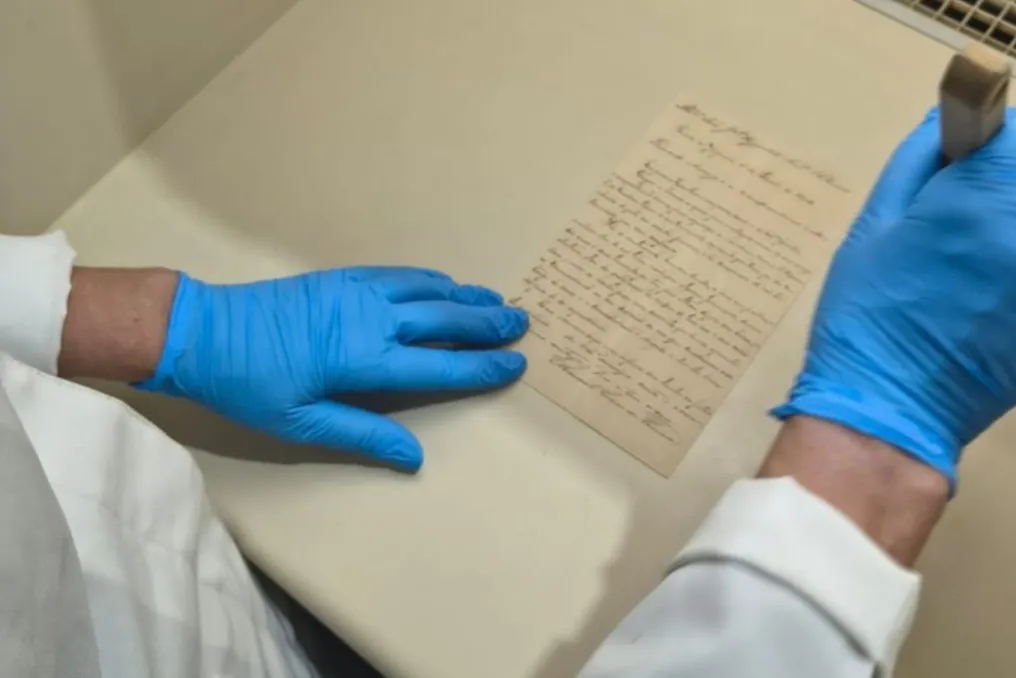
A collection consisting of approximately three thousand historical documents, including a letter dating back more than 150 years, was donated to the Julio de Castilhos History Museum, located in Porto Alegre. This material belonged to General Hipólito Pinto Ribeiro, one of the prominent leaders during the Paraguayan War (1864-1870).
The collection was under the custody of Júlia Ribeiro, the military man's great-granddaughter, who resides in Rio de Janeiro (RJ). A total of 18 file boxes were transported to Rio Grande do Sul with specialized technical supervision.
The content is recognized for its great historical value. Among the items, the letter addressed to his wife, Emília, stands out, in which the general describes the conditions of the intense combat experienced during the Paraguayan War.
How the collection will be treated
Doris Couto, museum curator and director of the museum, informed that the collection will undergo a careful treatment process. She explained that, aiming for preventive conservation against threats such as fungi, humidity, and moths, the material will be sanitized, digitized, and organized to fulfill its scientific and social functions.
This organization work is scheduled to last four months. Once completed, the manuscripts will be accessible on the Tainacan virtual platform, allowing access to both researchers and the general public.
The new documents will be exhibited alongside another piece belonging to the general already preserved by the institution: a scabbardless sword, whose body features a stamp in gold metal and gold. On the back of this weapon, there is the inscription 'To the Legendary General Hipólito Ribeiro.' This sword was donated in 1962 by Colonel Hipólito Ribeiro Júnior, the military man's son and Júlia's great-grandfather.
Who the general was
Hipólito Pinto Ribeiro was born in 1824 in the municipality of Canguçu, in the south of the state. He belonged to a family with a military tradition and began his career as a combatant in the Farrapos War (1835-1845). After the end of this conflict, he voluntarily enlisted in the Brazilian Army.
The general demonstrated remarkable skill in battles and rose to the rank of honorary brigadier in the Army. He died in 1904 in the city of Uruguaiana. His body was carried by his wife and buried in a mausoleum located in São Gabriel.