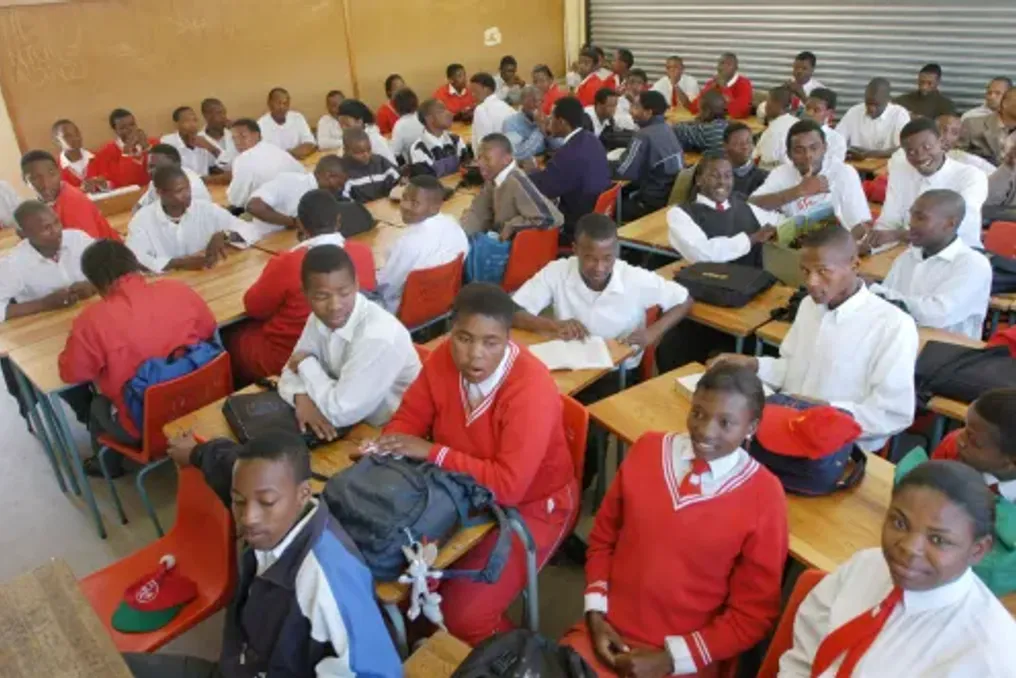
Minister of Basic Education Sivive Gwarube is accused of failing to comply with the legally binding, court-mandated deadline to address overcrowding in schools. Human rights educational organizations Equal Education (EE) and Equal Education Law Centre (EELC) have demanded that Gwarube explain the delay and provide a precise date for the publication of the final School Capacity Norms, noting that three years have passed since the High Court of Gauteng ordered her to publish these norms.
The situation arose after the court ruled on October 10, 2023, that the Department of Basic Education (DBE) must develop and publish school capacity regulations within three years following a lawsuit by the South African Teachers' Union (Satu).
The union filed the lawsuit to compel the government to resolve the issue of chronic overcrowding in public schools, which, they claim, severely deteriorates working conditions for teachers and reduces the quality of education. The union also pointed out that the absence of strict, legally binding capacity standards prevents school management bodies and education departments from accurately determining when a school is truly overcrowded, leading to an uncontrolled influx of students without adequate infrastructure or resources.
However, the deadline expired on October 9, 2026. The organizations stated that until these crucial rules are published, students continue to face consequences such as overcrowded classrooms, limited individual attention from teachers, the conversion of mobile classrooms into permanent structures, and an ongoing school admission crisis.
Gwarube's representative, Lukanyo Vangka, reported that the draft school capacity and admission rules were put out for public comment and submitted and approved by the National Economic Development and Labour Council (Nedlac). Vangka added that the rules are currently being processed by the Department of Planning, Monitoring and Evaluation (DPME), and that 'the final rules will be published soon.'
The human rights groups noted that the comments received during public hearings and workshops were compiled into a submission for the DBE and sent in December 2025. Their submission highlighted several critical gaps, including the lack of a definition of overcrowding, clear implementation timelines, and clarity in the roles and responsibilities of various stakeholders.
Furthermore, the organizations expressed concern over the discrepancy between the proposed classroom capacity calculation formula and the teacher-to-student ratio indicated in the draft. EE also developed alternative capacity norms considering the realities of already overcrowded and under-resourced schools and attempted to present these proposals to the DBE, but the promised response never arrived.
School overcrowding in South Africa represents a serious and deepening crisis, particularly in rapidly growing urban areas and settlements, placing strain on infrastructure and affecting academic outcomes. The national student-to-teacher ratio (LER) averages 33:1, significantly higher than the OECD average of 16:1, and often rises to 50:1 or 70:1 (or more than 80–100 students in extreme cases in provinces like the Eastern Cape and Gauteng).
According to the Gauteng Department of Education (GDE), the total number of students in provincial public schools has doubled from 1.4 million in 1995 to over 2.8 million in 2026, driven by rapid urbanization and internal migration. Minister of Education MEC Lebogang Mabile declared a state of crisis, stating that nearly half (48%) of public schools in Gauteng operate above their established capacity, with an immediate deficit of at least 200 new schools and over 5500 classrooms needed to stabilize the system.
The South African Human Rights Commission (SAHRC) also recorded that KwaZulu-Natal has the highest average class loads in South Africa, with a ratio of 39 students per 1 teacher (compared to the national average of 31:1). Inspections by the Basic Education Committee revealed extreme cases, such as Grade R classes with 48 students, and other classes ranging from 58 to 77 students in districts like Ugu.
Earlier this year, the GOOD party also discovered that schools in the Cape Winelands municipality are facing a worsening crisis of overcrowded classrooms, some of which are forced to accommodate 50–60 students in rooms designed for only 30.
A primary school teacher in Evaton, south of Joburg, confirmed this situation, stating that overcrowding is a serious problem that needs urgent resolution. She said: 'In my class there are 52 students, which makes it incredibly difficult to give attention to everyone. This is especially hard for children who learn slower.'
Another teacher called on the government to hire more teachers and build more schools to resolve the situation.
Education activist Hendrik Makaneta stated that the court order is not a recommendation that the executive branch can implement at its discretion. He emphasized that the minister and her department should have notified if they encountered real obstacles and resolved them through legal means before the deadline. He added that the department must immediately provide a public explanation, define incomplete administrative or legal processes, and commit to a clear publication date, as continued silence will undermine public trust in the department's commitment to the rule of law. He concluded that while the department conducted technical work and consultations on school capacity rules, consultations cannot serve as an excuse for missing the court-set deadline while students suffer in overcrowded classrooms.