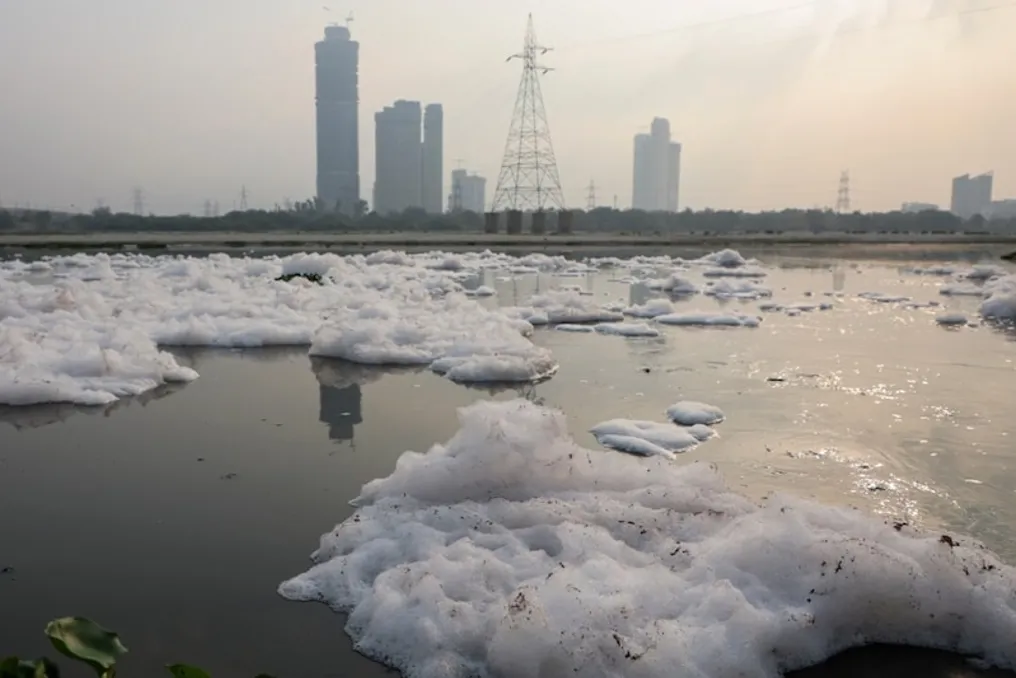
Air pollution in Delhi and NCR exceeds 250; toxic foam observed on Yamuna River
Read more
Aaj Tak
www.aajtak.in

Air pollution in Delhi and NCR exceeds 250; toxic foam observed on Yamuna River

In the Alipur area of Delhi, the Air Quality Index (AQI) surpassed the mark of 250. According to data from the Central Pollution Control Board (CPCB), an AQI of 258 was recorded in Alipur. The reading at Delhi Technical University (DTU) was 251, at IIT Delhi it was 227, in Burari it was 181, and in Anand Vihar it was 175. Furthermore, in Noida, Sector-62 registered an AQI of 270, while Sector-125 showed 212.

According to CPCB standards, an AQI from 0 to 50 is considered 'good', 51 to 100 is 'satisfactory', 101 to 200 is 'moderate', 201 to 300 is 'poor', 301 to 400 is 'very poor', and 401 to 500 is 'hazardous'. Meanwhile, on Saturday morning, toxic foam was spotted on the surface of the Yamuna River in Kalindi Kunj.

Regarding the weather in Delhi-NCR, partly cloudy skies are expected. According to the India Meteorological Department (IMD), the maximum temperature in Delhi will range from 32°C to 34°C, with a minimum temperature between 18°C and 20°C. In most areas of Delhi, the minimum temperature will be above normal, while the maximum may remain around normal.

Wind movement is expected from the east in the morning at speeds up to 12 km/h. During the day, wind speed will increase to 20 km/h and blow from the northeast. In the evening and night, wind speed will decrease to 16 km/h, blowing from the east.

According to IMD forecasts, partly cloudy skies will also be observed on Sunday. Delhi is expected to have a maximum temperature between 32°C–34°C, and a minimum temperature of 17°C to 19°C.
Similar stories

Introduction of the first stage of the Air Pollution Response Plan (GRAP-1) in Delhi-NCR with threat of fines
Read more
www.aajtak.in

Introduction of the first stage of the Air Pollution Response Plan (GRAP-1) in Delhi-NCR with threat of fines

Due to the rising level of air pollution in the Delhi-NCR region, including Noida and Greater Noida, the government has intensified its measures. The Air Quality Index (AQI) in Noida and Greater Noida exceeded the mark of 200, leading to the introduction of the first stage of the Graded Response Action Plan (GRAP-1) in Delhi-NCR.

The Commission for Air Quality Management (CAQM) issued directives for implementing the measures established under GRAP-1 in the NCR areas covering Delhi, Uttar Pradesh, Haryana, and Rajasthan, and instructed relevant officials to continuously monitor the situation.

Following the implementation of GRAP-1, monitoring of polluting activities has been strengthened. Restrictions have been imposed on the use of coal and wood in tandoors at hotels, restaurants, and street food stalls. Furthermore, burning of garbage, plastic, and dry leaves is prohibited.

Methods such as mechanical street sweeping, water spraying, and the use of anti-smog cannons are actively being employed. Ritesh Tiwari, an official from the Uttar Pradesh Pollution Control Board (UPPCB) in the Noida area, reported that department teams are conducting constant on-site checks to control pollution.

Over the period from October to November, about 30 establishments were inspected, 17 of which were found to be in violation. A fine of approximately 75 lakh rupees has been recommended for these cases. According to Tiwari, information about the measures taken by the department is disseminated through the media and social networks to raise public awareness and ensure compliance with established norms in construction work and other activities.

The regional office official also noted that control is being tightened over Ready Mix Concrete (RMC) and hot mix concrete plants operating near Pust Road. A fine of approximately 1.28 crore rupees was imposed for pollution incidents at these facilities. The department emphasizes that regular inspections and actions will continue to curb pollution-increasing activities.

An additional problem is the dust raised from poor roads in the Noida area, which also exacerbates the pollution issue. Ritesh Tiwari stated that he has personally discussed this matter repeatedly with officials from the Board and the Irrigation Department, and has sent official requests for road improvement. He added that information has been received regarding the allocation of funds to the Irrigation Department for road construction, and the department has promised prompt resolution of the issue. UPPCB staff maintain constant contact with the Irrigation Department for quick resolution of road problems.

The Pollution Control Department asserts that field inspections and actions against violators have been enhanced since the introduction of GRAP-1. Department teams conduct continuous surveillance to control the rising level of pollution.

Popular