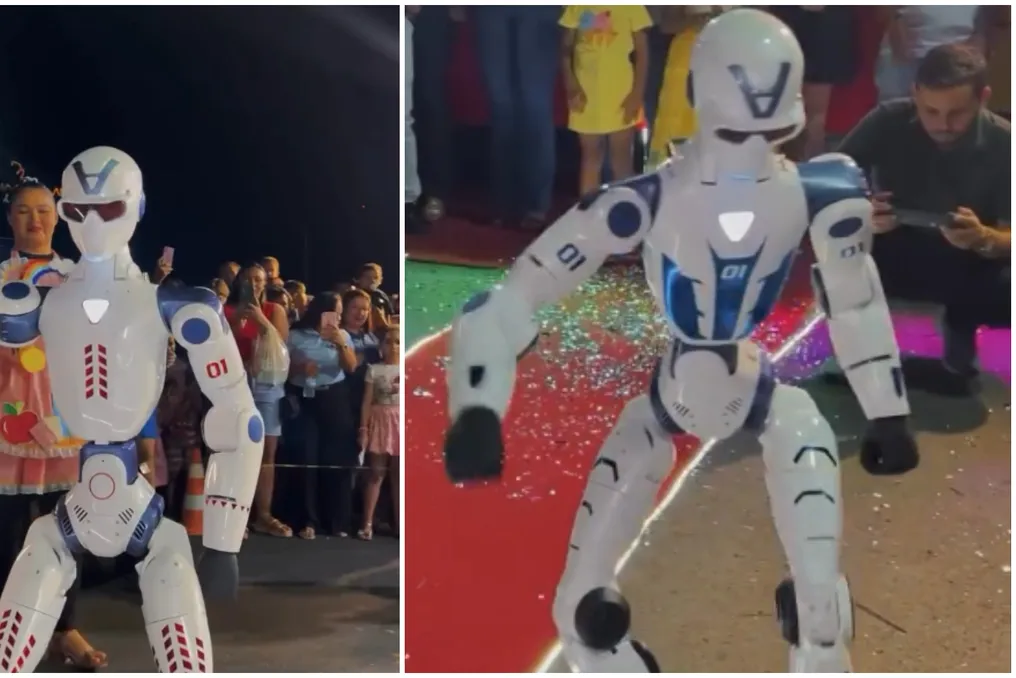
The City Hall of Ararendá, a municipality located in the semi-arid region of Ceará with just over 11 thousand inhabitants, purchased two humanoid robots for the amount of R$ 277 thousand. This investment was funded by resources from the Fund for Maintenance and Development of Basic Education and Valorization of Education Professionals (Fundeb).
According to the municipal administration, the purpose of this acquisition is to improve students' learning process, focusing specifically on the areas of artificial intelligence (AI) and robotics. The purchase notice stipulated that the objective was to 'stimulate interactive and technological learning to meet the city's school units.'
Ararendá has 14 educational institutions, ranging from nurseries to regular schools, but it was not clear how these robots will be distributed among them. The acquired robots are model R1, manufactured by the Chinese company Unitree, measuring approximately 1.2 meters high and weighing less than 30 kilograms, with a battery autonomy of about one hour. These machines have functionalities such as jumping, dancing, and performing somersaults.
The robotic duo served as a central attraction during Children's Day celebrations held by the city hall on October 16 and 17 in different neighborhoods. The mayor, Aristeu Eduardo (PT), celebrated the arrival of the machines, declaring his commitment to robotic education. He justified this initiative by saying: 'We are in a technological world where robotics is gaining more and more space, and we cannot be left behind this contemporary world' in a video released on social media.
The purchase process was formalized with the publication of the notice in the State Official Gazette on June 31, with the online bidding taking place on August 17. The winning company for the tender was Solar's CE, based in the municipality of Cratéus, near Ararendá, and specializes in solar energy.
Although Unitree, the manufacturer of the R1 model, does not sell the robot directly in Brazil, its international models range between 4,900 and 5,900 dollars. In the Brazilian market, after import procedures, costs can vary between R$ 97 thousand and R$ 139 thousand.
The acquisition was made through an electronic bidding process, intended for the purchase of material goods. The notice provided for the acquisition of two robots, each valued at R$ 138,499.00, totaling R$ 276,998.00. The resources used come from Fundeb, which is the main funding source for municipal basic education in the country, and the items were classified as permanent material for elementary education activities.
In the terms of reference, the document that underpins the opening of the tender, the Ararendá Education Secretariat alleged that the introduction of these equipment aims to increase student engagement and 'directly works on reducing school dropout rates.' The Secretariat stated that the municipality of Ararendá, located in the interior of Ceará, seeks to train its youth for a global economy highly dependent on Technology and Artificial Intelligence, positioning local education at the forefront of state technology.
Additionally, the document indicated that students would have the opportunity to program commands, movements, and responses in the robots, which would help strengthen knowledge in logic, physics, mathematics, and languages, in addition to benefiting the development of students with Autism Spectrum Disorder (ASD). The terms of reference also mentioned that the National Common Curricular Base (BNCC) recommends the use of technological resources in schools, and the machines would allow for optimizing the use of human resources by fostering the theoretical and practical continuing education of teachers.
Despite the justifications presented in the municipal documents analyzed by g1, there is no clear information on how the robots will be effectively implemented in the school units, whether in complementary activities or inside the classroom.