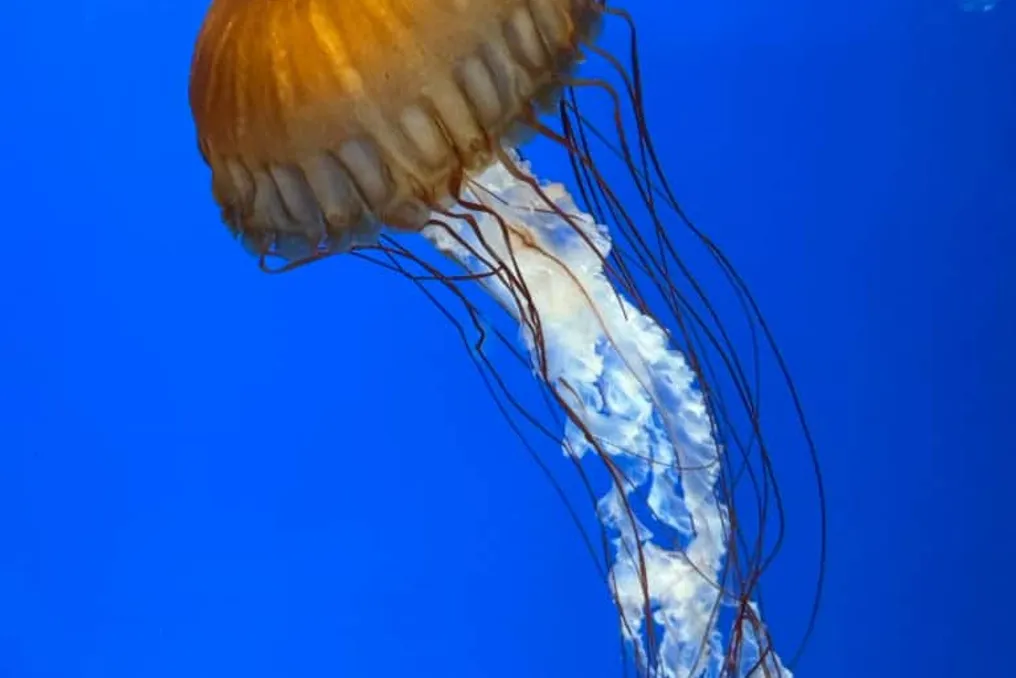
The jellyfish Turritopsis dohrnii is capable of reversing its life cycle, returning to a juvenile stage. Scientists are studying the genetic mechanisms behind this ability to determine if they can be used in treating age-related diseases.
The research aims to understand whether this process can contribute to the regeneration of human tissues, which could potentially be applied to repairing damage and treating degenerative diseases.
When faced with adverse conditions, Turritopsis dohrnii can halt its development and transform into a cellular mass. After one to three days, a polyp appears—the initial stage that grows and forms a colony capable of producing new adult jellyfish.
This phenomenon attracted researchers' attention in 1992 when an Italian scientist discovered polyps in a container where he had left the animals without food over the weekend. This discovery prompted scientists to study how the species is able to revert to a previous developmental stage.
One explanation is transdifferentiation. In this process, certain adult cells lose their specialized characteristics and take on other functions, allowing the polyp to form.
Marine biologist Maria Miglietta from Texas A&M University in Galveston explains: 'From the jellyfish that does not die, you get this colony that can form hundreds of others.'
Despite the nickname 'immortal jellyfish,' this species is not invulnerable. Predators, lack of food, and other environmental factors can lead to its death.
Researchers are also trying to understand the role of DNA in this mechanism. A 2022 study compared the genetic material of Turritopsis dohrnii with that of a related species that, as far as is known, does not possess the same rejuvenation ability.
The analysis revealed more copies of genes associated with DNA repair and telomere maintenance—structures that protect the ends of chromosomes. Since telomeres tend to shorten with age, their maintenance may explain part of the species' longevity.
Studies from 2019 and 2021 also found increased activity of genes related to these mechanisms. However, the results obtained do not yet provide a complete explanation of the rejuvenation process.
Among the main unresolved questions are the following:
Oncologist-pediatrician Michael Kolodovsky from Johns Hopkins University is collaborating with Miglietta to investigate whether similar processes can be induced in human cells.
These findings are expected in the future to help accelerate the recovery of damaged tissues after strokes or heart attacks. There is also interest in studying potential applications against age-related vision impairment and neurodegeneration caused by Alzheimer's disease.
Kolodovsky states: 'The holy grail of such development, I think, is regenerative biology: the attempt to reverse degeneration or relative degradation associated with aging.'
Nevertheless, the path to these treatments remains long. Scientists have already managed to induce rejuvenation-like processes in mammalian cells, but applying these methods to human tissues is still challenging.
The jellyfish itself imposes limitations on research. It is unknown whether rejuvenating individuals can repeat this process infinitely, and keeping them in the laboratory for extended periods is a difficult task.
Therefore, scientific interest is focused on identifying the mechanisms that make this reversal possible and determining if any of them can be safely used in human medicine.