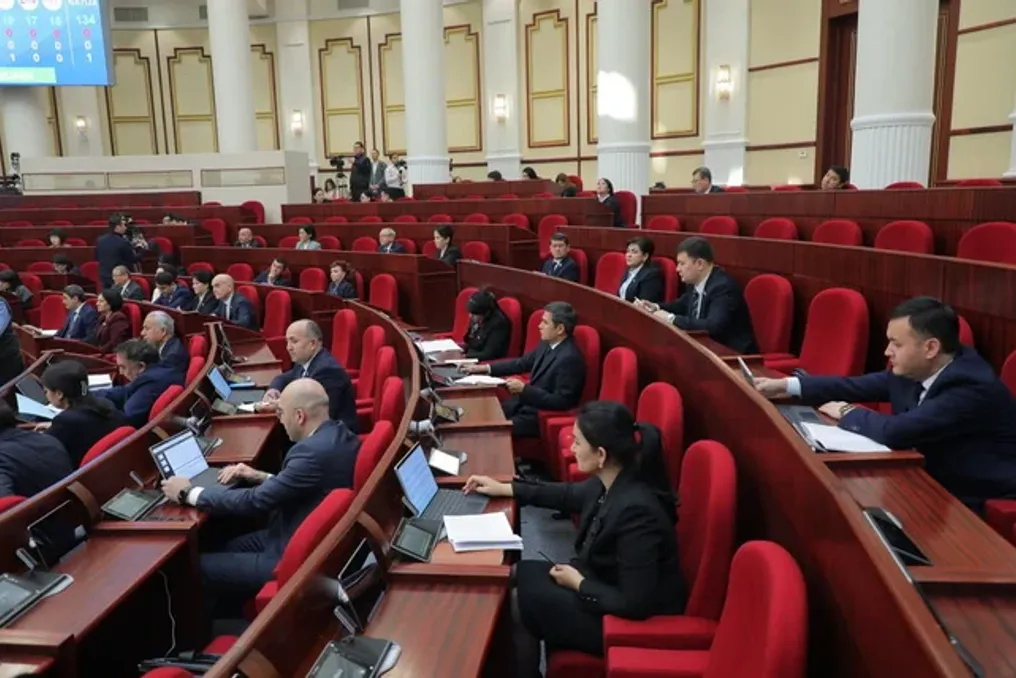
The legislative body of Uzbekistan, the Oliy Majlis, approved the revised version of the Waste Law during the first reading. This bill provides for updating the rules for waste collection, transportation, sorting, recycling, and disposal, and also tightens control over waste movement and handling of hazardous materials.
This version of the law appears 24 years after the adoption of current legislation. During this period, production and consumption have increased, the range of waste types has expanded, new recycling technologies have emerged, and private operators and public-private partnership projects have become more significant.
Nevertheless, the sector continues to face problems related to waste sorting and recycling, timely collection, calculation of service fees, and processing consumer complaints. Furthermore, additional regulation is required for the collection, transportation, and storage of construction, industrial, and medical waste.
Waste Classification and Government Responsibilities
The proposed bill introduces clearer definitions of waste types and their hazard levels. It establishes legal concepts for waste sorting, waste reduction, circular economy, and transboundary waste transport. A unified waste catalog is also planned, which classifies them into five hazard classes: from Class I to Class V.
The document clarifies the powers of state bodies and local administrations regarding waste accounting, sector digitalization, licensing, and attracting investment. It also divides the areas of responsibility for agencies monitoring medical, construction, mining, and radioactive waste. Local administrations bear increased responsibility for organizing sanitary services and ensuring their effectiveness.
Control over Waste Transportation and Handling
One of the key changes is the strengthening of supervision over waste transportation. The bill stipulates the need to obtain a license for waste transportation activities and introduces specific requirements and certification procedures for vehicles used to transport hazardous waste.
The waste tracking system from the point of generation to the final destination will also be improved, along with more detailed accounting of waste volumes and types. Separate rules are proposed for construction and medical waste. Construction projects must anticipate expected waste volumes, collection points, and removal costs in advance.
Requirements for the separate collection, storage, transportation, and treatment of medical and biological waste will also be strengthened. In addition, the bill provides for the use of low-waste technologies and the rehabilitation of closed landfills, restoring territories after their cessation of operation.
New Requirements for Landfills
The bill proposes classifying landfills by type, indicating which categories of waste they can accept, and establishing safety requirements. It also proposes banning the privatization of municipal solid waste landfills and requiring their registration in the state cadastre.
The proposed legislation also specifies that waste transfer stations must be located at a distance of at least 300 meters from residential buildings. Such facilities will also be subject to project assessments and waste accounting requirements.
It is expected that the new provisions will strengthen supervision over waste management, stimulate recycling, improve environmental safety and the quality of waste collection and removal services, and reduce the number of legal violations.