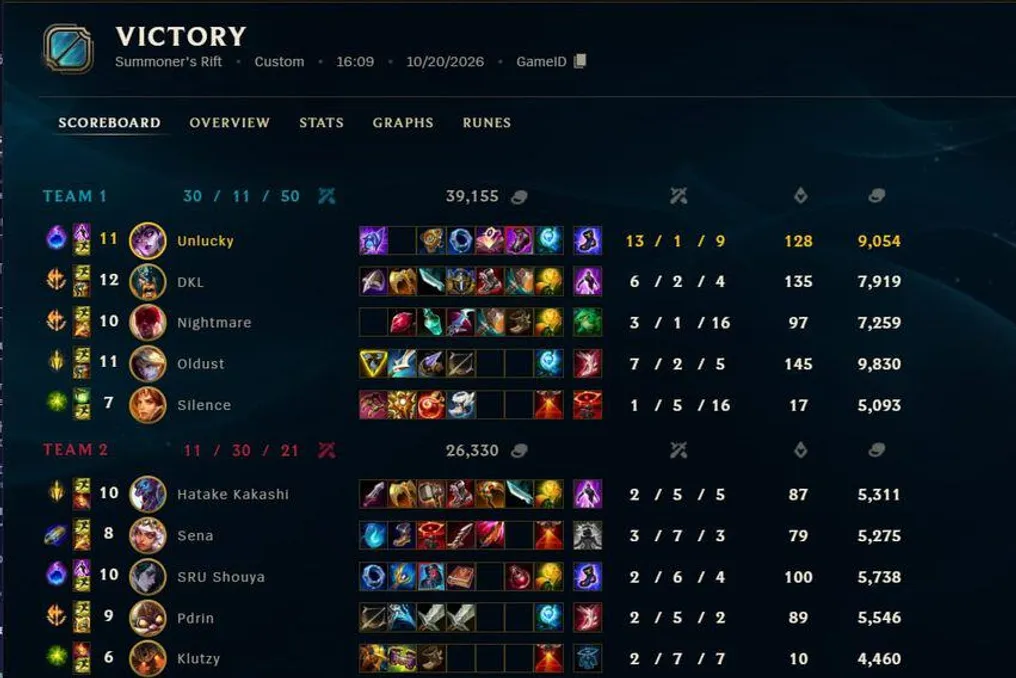
For those who follow professional League of Legends (LoL) matches, the final results—such as kills, objectives achieved, and strategies applied—are visible on screen, but the public rarely witnesses the extensive work done before players access the server.
Behind every competitive confrontation are countless hours dedicated to training, performance analysis, meetings, and tactic testing. A crucial element in this preparation is what are called scrims.
The term 'scrim' derives from the English word 'scrimmage' and refers to practice matches between teams. In the esports scene, these sessions allow athletes to simulate an official competition environment, focusing, however, on learning.
Coach Night Wing was consulted by Olhar Digital to elucidate the behind-the-scenes of competitive preparation and the challenges inherent in player development, especially in grassroots categories.
According to Night Wing, scrims are typically structured in Best-of-Three (Bo3) or Best-of-Five (Bo5) formats. This implies that teams compete in a sequence of games, using each match to test approaches, identify flaws, and refine collective collaboration.
The coach clarifies: 'They are blocks of Bo5 or Bo3, where teams face each other simulating real situations.' The selection of opponents is also part of the strategic planning. Night Wing emphasizes the importance of facing teams from different levels, mixing usual training partners with adversaries who present new challenges.
Training against similarly leveled teams helps monitor evolution over time, while duels against distinct opponents help understand how the team adapts to various playstyles. Organizing these encounters often happens through scrim groups, where team representatives agree on schedules and matchups. With increasing professionalism, calendar management can be delegated to the technical commission, aiming to prevent unproductive training sessions.
The routine of a competitive team does not consist of playing matches all day. In the ideal schedule defined by Night Wing, players start the day dedicating themselves to personal care and physical health. After lunch, the team gathers to review the plan and set training goals. The first block of scrims usually starts between 1 PM and 2 PM.
During breaks between games, coaches and players debate specific adjustments, seeking to correct problems without excessively disrupting the training rhythm. In the evening, the team may conduct a shorter second block or dedicate that time to detailed analysis of previously detected difficulties.
There is a vital distinction between playing casually and training in a structured manner. In ranked mode, known as solo queue, where players seek matches individually or in pairs, the focus tends to be on improving individual skills. Night Wing explains that repetition serves to automate positive habits, allowing certain decisions to be made with less mental expenditure.
In contrast, in scrims, communication assumes a central role. The purpose is to ensure that five players, each with distinct roles and responsibilities, can make coordinated decisions during the match. One of the biggest differences between scrims and championships lies in the interpretation of the result. During training, victory does not need to be the primary focus.
Night Wing states that 'Winning is much more a consequence than a goal, both in scrims and in championships.' He adds that teams can use these games to test champion combinations, improve objective execution, or learn to react both in moments of advantage and disadvantage.
In certain contexts, training may focus only on a specific phase of the game. Night Wing mentions so-called turbo scrims, used in Latin American competitions, where games can last about 15 minutes to specifically work on the early game, meaning the initial moments of the match. This type of exercise allows for the repetition of crucial situations without the need to contest a full game.
The coach also stresses that losing several scrims does not necessarily imply that the preparation has been a failure. When asked about the possibility of a team losing all its weekly training sessions and still being better prepared for an official match, he answered affirmatively. He argues that learning occurs when players begin to better understand the ramifications of their choices. For example, a player who insists on a risky incursion during training can learn to recognize when such an option is inappropriate, which may influence their decision in an official match.
Night Wing recounted experiences of difficult training weeks followed by recoveries in competitions, including situations where his own team managed to reverse a deficit in a series. For him, the quality of the environment and the ability to absorb knowledge are more relevant than the isolated score of the scrims.
After a scrim ends, the technical staff's work continues. An essential tool in this process is VOD review, which consists of analyzing match recordings. The goal is to identify decisions that impacted the outcome, understand both individual and collective errors, and discover paths for performance improvement.
Night Wing prefers brief comments between matches, reserving deeper discussions for the end of the training block, thus allowing the team to make adjustments without losing momentum. The coach emphasizes the importance of investigating the roots of problems, rather than just observing their consequences. A player struggling to accumulate resources in the laning phase, for instance, might be being excessively passive or making aggressive plays at the wrong time.
Although statistics help identify the problem, they do not always reveal its origin. Therefore, analyzing recordings and actively listening to players are complementary steps. Night Wing emphasizes: 'Listening to the player always brings answers to the questions the coach has.'
In League of Legends, five players need to exchange information and decide in seconds. Thus, effective communication can be as vital as individual skill. Night Wing warns against a misinterpretation of shotcalling, the term used to describe the transmission of strategic decisions during the game. According to him, concentrating all responsibility on a single player can cause overload. The ideal is for all five members to participate in communication constantly, clearly, and objectively.
To detect flaws, the coach advises recording not only the matches but also the team's communication. This allows reviewing moments when a wrong decision occurred due to lack of information, excessive talking, or divergent interpretations of the same situation. This work also strengthens mutual trust among athletes.
The performance achieved in scrims is not always replicated in official matches. One reason cited by Night Wing is the pressure inherent in competition. In training, players tend to feel more comfortable experimenting with tactics and taking risks. However, in championships, the responsibility for the result can alter the team's behavior. He observes: 'There are many teams that play rigidly in the championship, feeling the pressure to perform.'
The reverse can also happen. A team that went through a bad training week might enter an official match with lower expectations and deliver a better performance than anticipated. For Night Wing, each athlete's reaction to pressure is unique, and psychological support can aid in this process.
Another relevant aspect is knowing when overtraining begins to harm performance. The coach explains that decreased concentration and changes in communication can signal fatigue or frustration. In these scenarios, forcing more matches can make training unproductive. Therefore, he advocates for breaks and off-game activities. He states: 'Balancing IRL and online is essential to become a good athlete,' referring to real life.
The reality of grassroots teams differs from that found in large professional organizations. Many teams lack analysts, psychologists, or complete technical commissions, and in some cases, the coach himself is starting his journey. For Night Wing, this situation imposes an extra challenge, as developing professionals need to guide players who are also learning the fundamentals of competitive play. He points out that the work can be arduous and poorly paid, if there is payment.
Nevertheless, some practices can optimize training productivity. The coach suggests establishing focus periods during scrims, promoting meetings, and creating an environment where players feel safe to learn. He also considers it valuable for teams composed of players with different experience levels to watch games together. This collective analysis helps standardize the understanding of the game among athletes, facilitating the creation of shared strategies.
For those who wish to start more professional training, Night Wing offers three guidelines. The coach emphasizes that players do not need to be friends, but they must maintain mutual respect as teammates. Competitions like CELOL Série A, promoted by Liga GG, provide a stage for grassroots teams to apply what they have developed in training. However, the result of a championship represents only a fraction of the process.
Before every confrontation, there are meticulously analyzed decisions, tested strategies, corrected errors, and conversations that rarely reach the public eye. Scrims integrate this work because they allow players to experience competitive situations and learn from them before facing the pressure of an official match. As Night Wing explains, the goal of training transcends the mere accumulation of victories; it is about developing the aptitude to recognize situations and make superior decisions. Ultimately, a good scrim is not defined by victory, but by leaving the team better prepared for the next challenge.