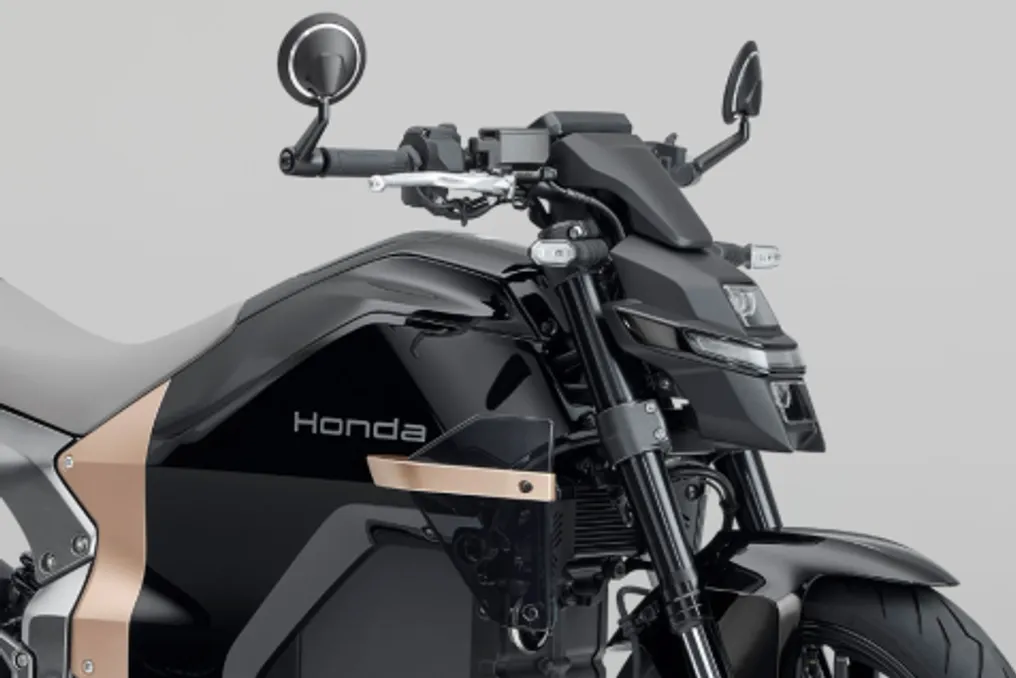
Electric motorcycles accounted for 1.28% of two-wheeled vehicle sales in Brazil during the first half of 2026. Although this is a modest share, it represents a significant increase compared to the 0.39% recorded in 2024, forcing the industry to make decisions about its production over the next decade.
A study prepared by Luiz Vicente F. de Mello, a motorcycle specialist at Bright Consulting, predicts that the point at which electric bikes will overtake combustion engine motorcycles could occur sooner than currently suggested, reaching around five years in the most accelerated scenario.
Projection Scenarios
This is the most optimistic scenario among the three analyzed. In the baseline scenario, electric motorcycles are expected to become the majority between 2035 and 2037. In the conservative trajectory, the share of electric motorcycles will remain below 50% until 2040.
The projection was calculated using real market data, is periodically updated, and compared with more established markets, such as China and India.
Key Factors for Electrification
For these forecasts to materialize, the study identifies two crucial elements for the mass electrification of motorcycles in Brazil: battery range and available infrastructure.
According to Bright, electrification does not solely depend on advances in cell chemistry; a rapid battery swapping network can commercially compensate for range limitations, especially in high-intensity operations.
Instead of waiting for a battery that simultaneously offers greater range, lower weight, lower cost, and fast charging, a swapping system eliminates recharge time from the operational calculation.
The company Vammo, which provides electric motorcycle rentals for delivery drivers, has been using battery swap points since 2023, but its network is still limited to Greater São Paulo.
Change Starts with Self-Propelled Vehicles
In Mello's personal analysis, the transition does not begin with motorcycles. He observes that self-propelled vehicles are already starting this change, indicating that the transformation is already underway, observable in the indicators of stores in this segment. He states that the change starts at the base.
Mello points to 2026 as a dividing line. Until 2025, the market experienced a wave of mopeds. Starting January 1st of this year, with Contran Resolution 996/2023 in effect, mopeds began requiring registration in Renavam, licensing, annual licensing, and a driver's license.
He explains that because the moped now requires mandatory licensing and driving authorization, ACC noticed a decrease in this segment, which spurred the opening of many self-propelled vehicle stores.
Mello clarifies that the focus of these stores is not exclusively on scooters, but rather on small motorcycles, characterizing what he calls micromobility.
Urban Challenges and Specific Niches
Despite the start of the battery movement, Mello highlights urban infrastructure as the biggest obstacle. For him, smaller models aimed at micromobility have specific legislation but require special attention for circulation, with exclusive lanes considered ideal and a vital point for safety.
The problem is that most large Brazilian cities do not support such a change, and the specialist considers an urban restructuring of this magnitude utopian.
In contrast to professional use, there is the premium, sports, and leisure segment. In this niche, characteristics such as engine sound, vibration, torque delivery, and gear shifting are integral parts of the product, and Mello considers it unlikely that this sector will migrate to electric motorcycles at the same speed, keeping the combustion engine relevant for a considerably longer period.