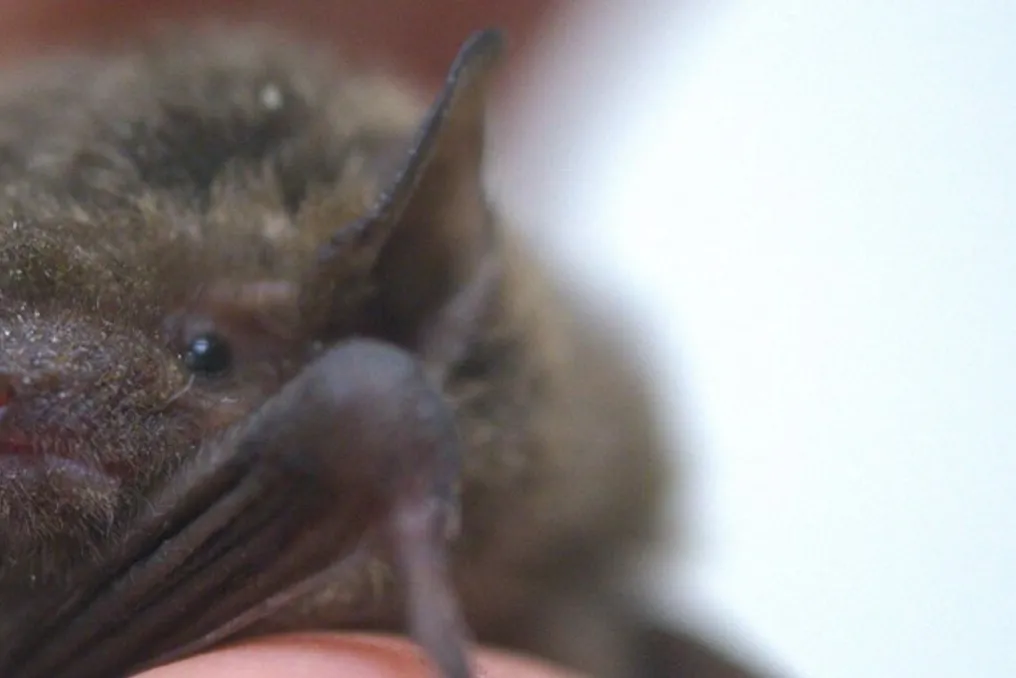
Scientists from Doshisa University, led by Tsutako Hiryu, established that female eastern pipistrelles (Pipistrellus abramus) exhibit an increased heart rate in response to sounds emitted by their own young.
During the study, researchers captured four pregnant females and placed them in laboratory conditions where they subsequently gave birth. Forty days after giving birth, scientists exposed the females to recordings of cries from both their own and unrelated male offspring, which were recorded on the second and thirtieth day after birth.
On the second day of life, the dependent young emitted isolation calls, whereas by the thirtieth day, their signals had acquired characteristics of echolocation signals similar to those of adult individuals.
It was observed that the heart rate of the females increased when reacting to the cries of their own offspring. Specifically, echolocation signals from 30-day-old young increased the frequency by up to 130 beats per minute above the baseline level of 200–300 beats, while isolation signals caused an increase of up to 70 beats.
However, no statistically significant changes in the pulse of the females were observed when reacting to the cries of unrelated young. As a control experiment, echolocation signals from an unknown male were used, to which the females also reacted with a noticeable increase in heart rate.