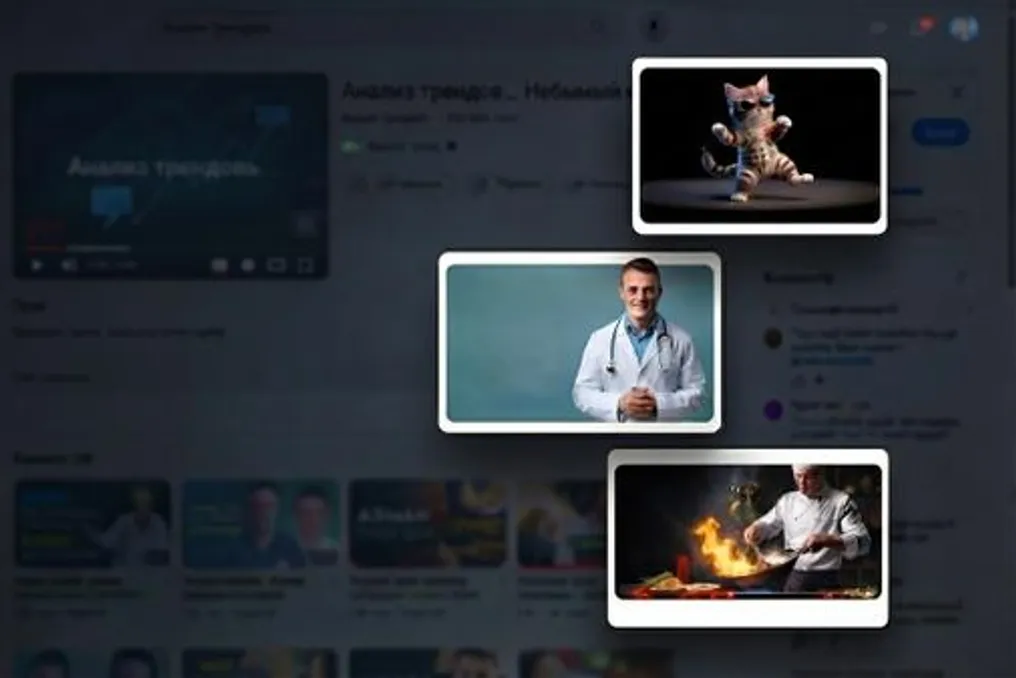
In a world where content is constantly multiplying, the main problem is not a lack of information, but a deficit of attention. At the same time, watching a video until the end, saving it, or sending it to friends is what motivates viewers.
During the SputnikPRO meeting held at the International University of Social Innovations (IUSI) in Tashkent, Polina Golubeva, Director of the Video Production Department of the media group 'Russia Today', spoke about the main methods of content promotion.
Polina Golubeva offered several recommendations to encourage people not to skip videos. She noted that viewing all the content available on YouTube in just one day would take 82 years, and trying to cover all posts on major platforms would take 30 thousand years.
Golubeva advises starting with a 'hook'. The first shots and introductory words must contain a reason to continue watching, whether it is an unexpected fact, a contradiction, a question, or a vivid visual action. If all answers are revealed immediately, interest fades; an open question, on the contrary, prompts the brain to search for a continuation.
According to the lecturer, when a person stops to watch something, they unconsciously ask themselves questions such as: 'Maybe this video is about me?', 'I wonder what happens next?', 'Can I benefit from this?', 'Who can I send this to?', 'Perhaps this is an amazing video that wants me to be careful?'. All these factors can combine.
It is also important to evoke emotions in the viewer—curiosity, surprise, anxiety, anger, or pleasure. Strong emotional reactions increase the likelihood that the content will be noticed and shared. However, Golubeva warned that building an entire strategy on negative emotions is dangerous: studies show that users can withstand such a load for only about three weeks, after which they become emotionally exhausted and simply archive all the content.
The best result is achieved when a person recognizes themselves in the video, feeling that 'this is about me'. People tend to save or forward such content to acquaintances who are in a similar situation.
Furthermore, it is necessary to provide the viewer with a benefit or make a promise. The viewer must understand what they will gain for their time: knowledge, advice, cost savings, earning potential, or a way to solve a problem.
The expert emphasized that everything cannot be disclosed at once. Good storytelling leaves the question 'What happens next?' open. This is why formats that intrigue, have an expected continuation, and carry multiple meanings work well.
To maintain attention, attracting interest through dynamic editing, scene changes, graphics, and visual accents helps. In the lecturer's opinion, such editing is necessary for regularly drawing the viewer's attention back to the video.
Finally, one should think about how people will share the video. Viral content must have social value, provoking the desire to tell a friend: 'Look what happened to you!', 'Did you see this?' or 'You do that too'. At this moment, passive viewing turns into content distribution.
Nevertheless, according to Polina Golubeva, there is no universal formula for mass success. Content creators must constantly experiment with different formats, keep up with trends and hot topics, and seek new ways to capture attention and create contradictions.