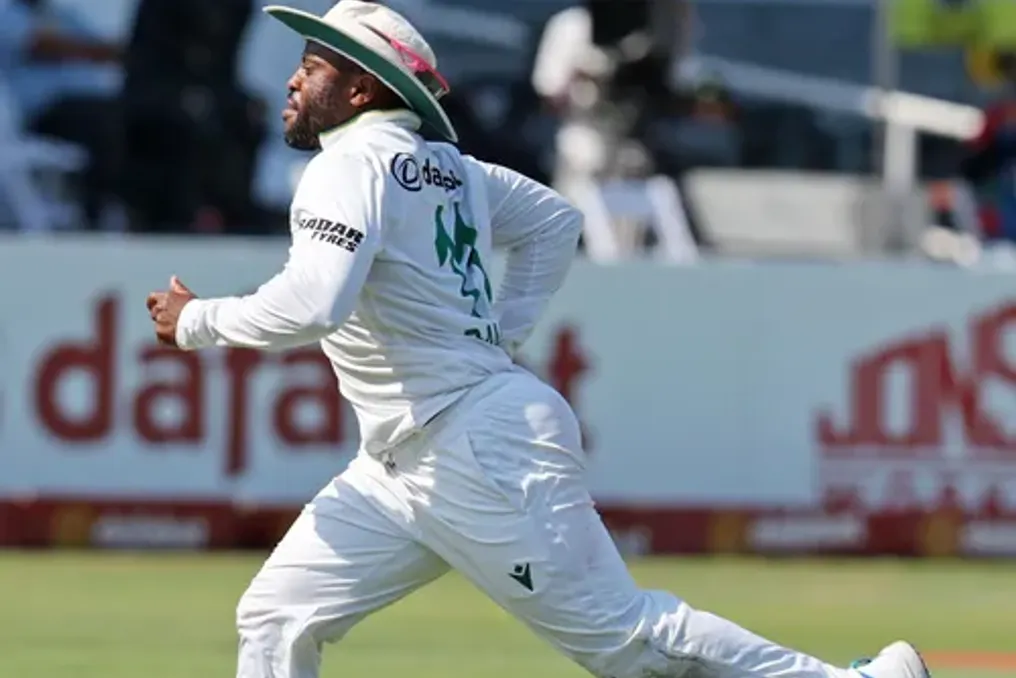
Temba Bavuma discusses his preparation and motivation as Proteas captain in George's Park
Read more
IOL
iol.co.za

Temba Bavuma discusses his preparation and motivation as Proteas captain in George's Park

In George's Park, Temba Bavuma shared the reasons behind his leadership of the Proteas team after the team lost the first match of the series, and attendance was extremely low, which was a disgrace to Cricket SA and the KwaZulu-Natal Cricket Union.

The Proteas captain faced difficulties in the first Test, failing to devise a plan to stop Australia's recovery from 124/6 to 390. Furthermore, Bavuma looked uncertain at the crease, being dismissed by part-timer Matt Renshaw while the team tried to salvage the match.

Following this incident, critics emerged who voiced their dissatisfaction dating back to the WTC Final last year. However, Bavuma, away from the cameras, understood the truth: a professional does not need external assessments of his game. He knew he needed to react quickly in the second Test in George's Park.

After receiving the player of the match award for his career-best score of 179, which helped Proteas level the series, Bavuma stated that when speaking to the media, he tries to remain composed. Nevertheless, in private, he engages in many conversations with himself.

Bavuma revealed that these internal discussions cover both deep technical analysis and mental preparation. He explained that he analyzes his playing episodes from a technical perspective, identifying any peculiarities. But, in his opinion, mentally, he prepares himself for the fight and the desire to play for the team if the opportunity arises.

He also utilized training sessions with bowling coach Ashwell Prince and performance analyst Bakier Abraham to hone skills before and during the match in George's Park. Bavuma noted that he experienced rhythm issues since the start of the season, throughout the ODI series, and even before the first Test. He suggested this was related to the long break in games, after which he had to face a strong attack. His work in the nets involved trying to restore this feeling, which he could not explain purely technically, but which allowed him to compete in the middle of the field.

The fact that the captain confronted Australian might will significantly influence the atmosphere in the Proteas dressing room before the match in Newlands. Bavuma added that the team sometimes forgets that they are under scrutiny, and everyone wants to criticize them as current world champions. He believes their performance in Durban reflected this pressure, as well as what it means to face a very strong opponent.

In his view, the ability to play such a game strengthened their confidence and pride. Although pressure and expectations will likely increase individually, as a team, they have decided to accept this pressure, moving towards it instead of letting it affect them negatively.
Similar stories

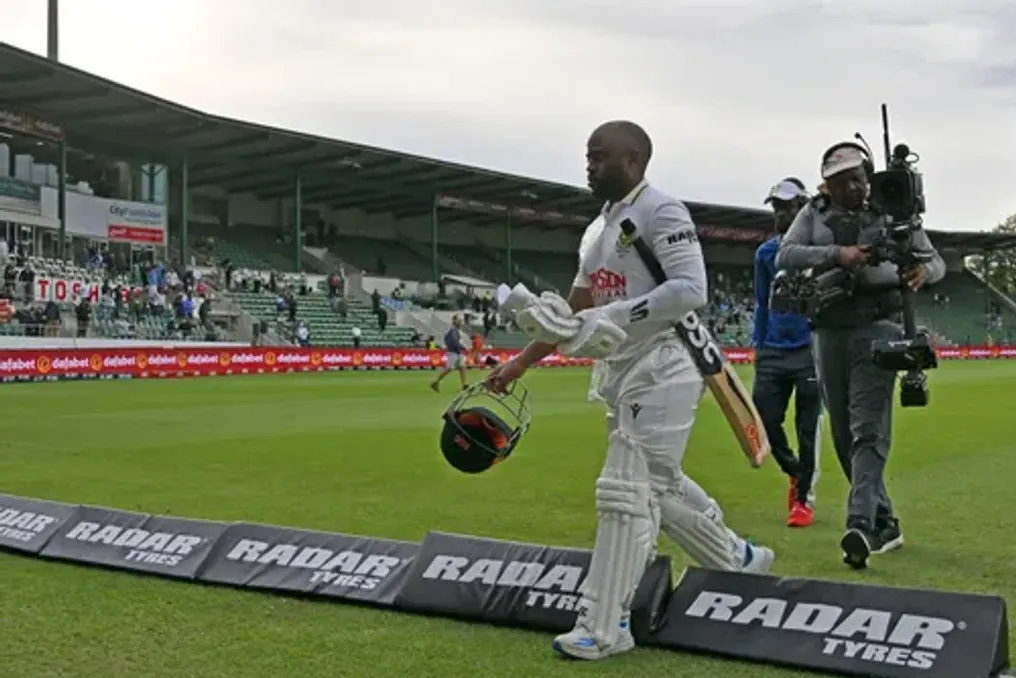
Temba Bavuma discusses his epic 179-run innings against Australia
Read more
iol.co.za

Temba Bavuma discusses his epic 179-run innings against Australia

Tuesday at St George's Park became an unforgettable event in South African cricket thanks to Temba Bavuma's performance, which may define not only this series but also his legacy.

The situation was similar to events eight years ago at the same venue when Australia won the first match in Durban, leaving South Africa in a difficult spot in the series. Back then, AB de Villiers helped the Proteas out of crisis with his brilliant century.

This time, Australia returned to Gqeberha with an advantage, and the South African batting was under strong pressure. As before, the responsibility for facing strong bowling fell on the senior player of the team.

This time, that moment fell to Bavuma. When he came out to bat at 12/2, while Scott Boland was bowling a hat-trick, South Africa was already struggling. By the time the score reached 40/4, the situation was extremely dangerous. At 110/6, it seemed Australia was completely controlling the game and moving towards erasing the humiliation of their previous visit to South Africa.

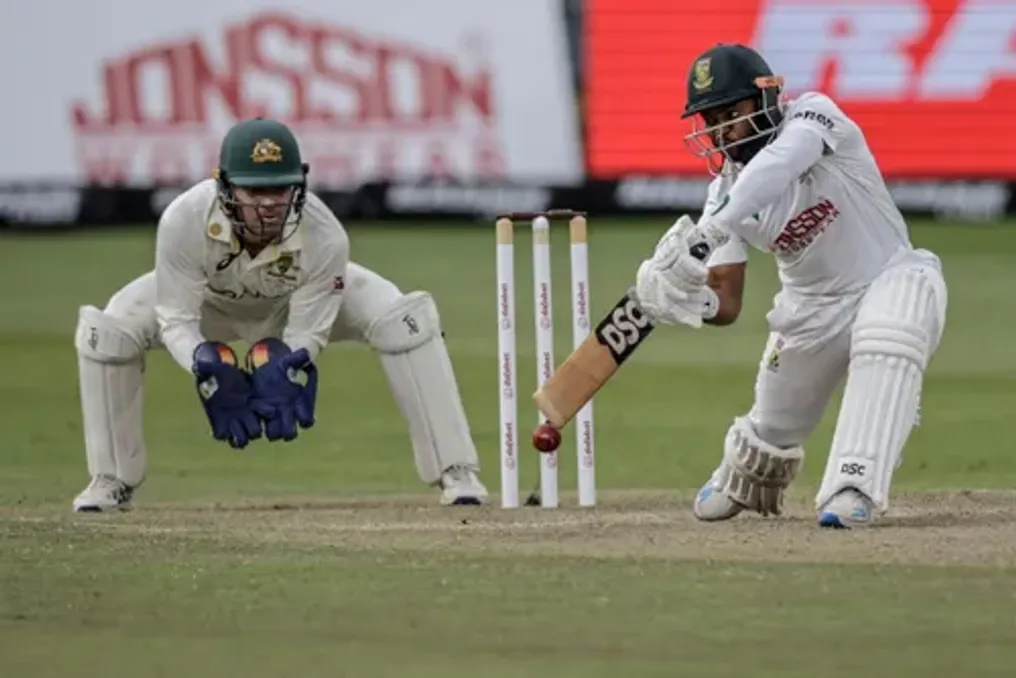
However, Bavuma demonstrated incredible resilience and the significance of his performance. He spent over nine hours at the crease, facing 334 deliveries and scoring a career-high of 179 runs. Following this, South Africa declared the innings at 425/9, aided by crucial partnerships: 132 with Marco Jansen (82 runs) and 183 with Simon Harmer (83 runs).

Bavuma's performance was more than just numbers; it embodied playing mastery. It lacked excessive flair or recklessness, combining technical discipline with immense psychological fortitude. He knew how to handle pressure when survival was the main objective and how to find opportunities for counter-attack when they arose.

Most importantly, he refused to give up. After the match, Bavuma told reporters: 'I obviously walked into a difficult situation. I think everything was in favour of the bowler. The conditions, the overheads, the ground itself.'

He continued: 'We just lost two early wickets. I think I usually find myself in such situations quite often. I think it brings out the best in me.' Speaking about his approach, he noted that 'honestly, the approach wasn't different from how I always play. I get involved in the process.' He added that he was proud to help the team secure a competitive position, and that personally, the ability to score a big score this time was very good for him.

Ten years ago, his debut century in Newlands was a landmark moment in South African cricket for reasons beyond the field. His decisive contributions in the Test World Cup final at Lord's and in the first match against India at Eden Gardens last year were also memorable.

Nevertheless, this epic performance likely stands as Bavuma's greatest personal achievement, given the circumstances and the scale of the work done. The Proteas captain was not quick to place him on such a high pedestal. Bavuma said: 'I am happy that I could score one against Australia. But look, I haven't had time to process it all yet.'

He added that the Newlands match would undoubtedly always hold a high place for many reasons, but as he mentioned, personally, the ability to score a big century had always been a stumbling block in his batting career, so it was pleasing to overcome that barrier mentally.

For years, Bavuma carried a burden that few South African players knew about. His critics were not always fair. Now, they should recall the glorious sunny day at St George's Park when the smallest man on the field proved to be the most resilient.

Progress against Australia: Temba Bavuma leads South Africa's counterattack in Gqeberha
Read more
iol.co.za

Progress against Australia: Temba Bavuma leads South Africa's counterattack in Gqeberha

The Proteas team delivered an outstanding day of Test cricket at St George's Park, managing to turn a precarious position early on the third day into complete dominance over Australia. Resuming play with a score of 97/5 after two rain-interrupted days, the South Africans launched a relentless counterattack led by captain Temba Bavuma, who played a monumental career-best innings.

Following this, the Proteas concluded a dominant session, achieving immediate success with the new ball before dusk. This allowed South Africa to enter the fourth day confidently, completely changing the course of the match.

One of the main highlights was the impressive counterattacking performance of Marco Jansen. After the early dismissal of Vian Mulder, Marco Jansen joined Temba Bavuma and drastically changed the dynamic at St George's Park. This tall all-rounder scored 85 runs, hitting a half-century off 43 balls, which included seven fours and two sixes.

Jansen's aggressive play in partnership with the composed captain brought the Proteas back into contention before he was caught by Scott Boland, who secured a well-deserved five-wicket haul.

Leading by example under immense pressure, Proteas captain Temba Bavuma played a masterful century in the fifth Test, becoming the bedrock of South Africa's recovery. Overcoming the fatigue of marathon exertion and weathering Australia's aggressive short spells, Bavuma neutralized Pat Cummins with great composure, reaching his important milestone.

His steadfast effort lasted over six hours, earning him a standing ovation as he spearheaded his team's counterattack from a difficult situation.

Spinner Simon Harmer provided invaluable support in the middle order, scoring his maiden Test half-century, which intensified the frustration of the Australian side. In a crucial partnership with Bavuma for 183 runs off 277 balls, Harmer displayed remarkable calm against the second new ball, guiding Bo Weibster past dismissals to reach 50 runs off 116 deliveries.

He was eventually dismissed in a tenacious innings of 82 runs when Marnus Labuschagne got him out, preventing him from achieving a magnificent century.

Bavuma achieved his career-best Test score of 179 runs, surpassing his previous record of 172 against West Indies. Playing with grit and elegance, the captain propelled South Africa past 400 runs before ultimately nudging Mitchell Starc behind him, concluding a monumental innings.

Shortly after his departure, South Africa declared the innings at an impressive 425/9, leaving themselves two days to take 20 wickets to level the series ahead of the third Test in Cape Town.

After missing the ODI series and the first Test, Proteas were led by Kagiso Rabada, who provided a brilliant start with the new ball after South Africa declared late on the third day. In his very first over, Rabada forced Nick Maddinson to attack from the back foot, resulting in a touch that went straight into Harmer's hands for a slap for zero.

Rabada's early breakthrough put Australia at 0/1, forcing night watchman Scott Boland onto the field to navigate a tense final spell against the spin of Harmer and Aiden Markram as the light began to fade.

Temba Bavuma supports Proteas in the fight against Australia in Gqeberha
Read more
iol.co.za

Temba Bavuma supports Proteas in the fight against Australia in Gqeberha

In Gqeberha, at the St George's Park stadium, the Proteas team is preparing for a match where they trail Australia by 0-1 after a tough loss in the first Test in Durban. The team returns to the historic arena, hoping that the energy of the fans and tactical discipline will help them change the course of the series in their favor.

The local flavor in Gqeberha is palpable: the famous St George's Park brass band plays in the stands, and the local fan base, which has experience winning in SA20 with Sunrisers Eastern Cape, creates a strong culture of victory and support for the home team.

However, the weather may affect the start of the match. Forecasts include unpredictable coastal winds and possible rain delays, which, according to Temba Bavuma and Pat Cummins, will play a central role in determining the pace of sessions and squad selection strategy.

Despite ongoing questions regarding the exact composition of the batting line-up, the Proteas relies on its proven temperament in crucial matches. This team previously defeated India on home soil and also beat Australia in the WTC final at Lord's last year, demonstrating an ability to fight even when at a disadvantage.

A critical factor is the return of Rabada to lead the fast bowling attack, immediately bringing authority and power into the dressing room. Beyond individual skill, Bavuma's players understand that the key to initiating a counter-attack lies in restoring their psychological state and extending the duration of their batting innings.

Reflecting on the team's mentality, Bavuma explained how they plan to approach this task. He stated: 'We would like to put in much more effort, just be more ruthless in execution, and more importantly, when the opportunity arises, do something big for the team.' He added that the team uses positive moments in batting, drawing confidence from Aiden [Markram]'s game, but the main task is precisely to extend their playing intervals.

Squad selection may depend on morning weather conditions. Kagiso Rabada is fit and ready to return to lead the fast bowling attack. One option is to retain both spinners, Keshav Maharaj and Simon Harmer, or include an extra fast bowler or batsman. Matthew Britzke is ready to come out of the dugout, and Marcus Ackermann is also being considered as a candidate for his Test debut.

Bavuma emphasized that mental resilience will determine the team's reaction. He noted: 'Defending against these mental lapses is key. When you are playing against a team that is ahead, you have to match that fight... I think we have the luxury of choosing any path, and we trust that whatever path we take, we can assemble a very, very competitive eleven.'

Popular