
Agda Conference: Land Parcels Are Insufficient for Farmers' Success
Read more
Food For Mzansi
foodformzansi.co.za

Agda Conference: Land Parcels Are Insufficient for Farmers' Success

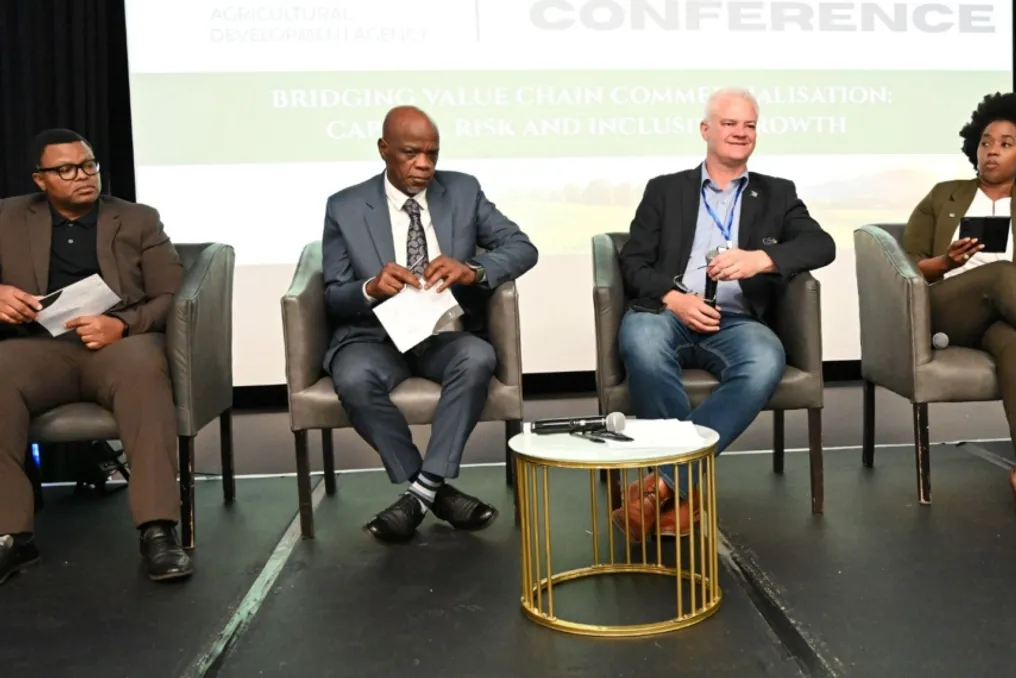
At the Agda congress held in Boxburg, Gauteng, industry participants called for comprehensive support for emerging farmers so they can establish sustainable commercial enterprises. This support must include infrastructure, timely financing, business development, and market access, as mere land distribution is insufficient to ensure agricultural success.

Discussions, moderated by Agda CEO Leona Archari, brought together government representatives, commercial farmers, and investors to explore ways to strengthen transformation and increase the participation of black farmers in commercial agriculture.

Nomtandazo Moyo, Deputy CEO for Land Reform and Rural Development, noted that the government recognizes the limitations of providing land without the necessary support for its productive use. She mentioned that farmers were often allocated land and left to decide what to do with it independently.

The Ministry is now adopting an integrated approach, linking land allocation with commodity planning and value chain development. Key requirements include access to water, energy, fencing, and soil preparation, as well as training, skills development, and enterprise support.

Moyo emphasized that agriculture, much like the hospitality industry, is a business, and beneficiaries need help running sustainable operations. Support should extend not only to those ready for commercial growth but also to smallholder farmers and subsistence farmers.

Dr. Dan Mosia, a commercial farmer, agreed that land ownership alone does not guarantee commercial success. He stated that farmers also require timely capital, sound business organization, production discipline, and effective partnerships.

Mosia warned that delays in securing financing can cause farmers to miss critical production opportunities. He urged farmers to plan the next production season in advance and build capacity for future operations funding. Furthermore, he noted that partnerships must facilitate the transition of emerging farmers into sustainable businesses with clear milestones and shared responsibility.

He also insisted on expanding participation beyond primary production to include packaging, export, and market access, allowing farmers to derive greater value from their produce.

Keneilwe Nailana-Mabona, representing the Public Investment Corporation (PIC), explained that the problem is not just a lack of capital, but also a shortage of investment-attractive projects that align with available funds. She clarified that PIC's direct investment approach targets expanding companies, with potential support through equity partnerships.

Investment decisions are made considering governance, corporate management, operational activities, and how the funds will be utilized. Nailana-Mabona expressed a desire to see more black agribusinesses operating at the agro-processing level, adding that infrastructure investment is also vital. She also stressed that partnerships must include clear exit strategies to help businesses become sustainable over time.

Kalli Shoeman, Chairman of Schoeman Group Holdings and General Manager of its North Cape division, demanded closer integration between farmers and other value chain stakeholders. He highlighted the pressure of production costs such as fertilizer, fuel, pesticides, herbicides, electricity, seeds, and financing.

According to him, farmers face significant production and market risks that are not necessarily shared by other supply chain participants. Shoeman called on enterprises across the chain to provide stronger support to farmers, including encouraging those facing financial pressure and uncertainty.

Muketsa Ramasodi, Director General of the Department of Agriculture, identified market access, skills development, and broader inclusion of women, youth, and people with disabilities as priorities for agricultural development. He called for more inclusive participation throughout the entire agricultural value chain so that transformation creates meaningful economic opportunities for historically excluded groups. Ramasodi stated that the main goal is to determine how to promote the advancement of women, youth, and people with disabilities up the career ladder in the country.

Similar stories

Experts at Agda Congress: Simply increasing production is not enough for agricultural success in South Africa
Read more
foodformzansi.co.za

Experts at Agda Congress: Simply increasing production is not enough for agricultural success in South Africa

At the annual Agricultural Development Agency (Agda) congress in Boksbuur, Gauteng, experts emphasized that opening commercial opportunities for emerging farmers in South Africa's agricultural sector requires more than just increasing production volumes. It was noted that access to markets, long-term capital, agro-processing, and strengthening partnerships are vital.

Speakers highlighted the need to support smallholder farmers in transitioning to commercial agriculture, enhancing their competitiveness in global markets, and building stronger links between producers, processors, financiers, and buyers.

Vuyiswa Ramokgopa, a member of the Gauteng Provincial Executive Committee for Agriculture and Rural Development, stated that the African Continental Free Trade Area (AfCFTA) opens up prospects for agricultural exports, value addition, and agro-processing. She stressed that South Africa is already a significant player on the continent with a good foundation for further development.

Ramokgopa cited an example from the Southern African Development Community (SADC), where bananas produced in Mozambique are transported to Johannesburg for ripening before being returned to Mozambique and other markets. This case demonstrates the potential for expanding agro-processing and strengthening regional agricultural trade.

Furthermore, Ramokgopa called for greater recognition of the informal market, which accounts for about 60% of fresh produce trade in the country. She insisted that discussions on market access must include not only large retail chains but also informal traders who require support and skills development to participate more effectively in the agricultural value chain.

Regarding agricultural financing, Ramokgopa noted that the issue is not so much a lack of funds as it is limited access by farmers to information about available opportunities and the requirements of various institutions. She emphasized that farmers need to understand the requirements of financiers and establish commercially viable enterprises supported by reliable income, collateral, and strong business relationships. She also advocated for an increase in long-term capital, warning that agriculture cannot always meet the demands of investors expecting returns within five years.

Meanwhile, Dr. Tobias Doer, CEO of Grain SA, stated that South African farmers need to compete internationally by improving productivity and more effectively utilizing value-added market opportunities. He compared this to participating in international competitions, arguing that farmers need support to win.

Doer stressed that economic growth is critical for job creation and strengthening domestic demand, while international markets offer additional chances for agricultural producers. He advised grain producers to consider options beyond exporting raw commodities, including transforming grain into high-value animal protein products such as poultry, pork, and beef. According to him, if you compete with grain, you always remain in the commodity market, but if you compete in the animal protein market, you compete and earn in the premium market.

The President of the African Farmers Association of South Africa (Afasa), A. J. Mthembu, noted the strategic importance of agriculture despite rapid technological changes, as food production remains essential. He also pointed to opportunities to expand South Africa's product basket by cultivating a wider range of goods for domestic and international consumption, calling for sustainability amid changing markets.

Sizwe Dludla, an investment partner at the National Empowerment Fund (NEF), suggested that deeper integration of existing agricultural enterprises could help farmers utilize available resources more effectively. He pointed to the possibility of connecting disparate farming operations with established markets and ancillary businesses, such as linking processing plants with poultry producers and connecting farmers with school feeding programs. Dludla noted: 'The market exists, but it needs a certain specific quality, quality consistency, and financiers are ready to fund farmers to produce the required quality.'

He urged farmers, buyers, and financiers to work together to form an agricultural ecosystem that supports stable production and meets market demands.

Joanne Kotze, CEO of AgriSA, cautioned that financial and production resources alone will not be enough to ensure the success of emerging farmers. She stated that South Africa needs better mechanisms to help people transition from small-scale farming to sustainable commercial operations. Kotze also emphasized the importance of social structures, skills, partnerships, and collective responsibility in building a successful farming business. She reminded: 'The fact that you are a farmer does not give you the right to come to me and say: 'I need to borrow money from you',' stressing the need for farmers and financial institutions to understand their mutual obligations. She warned that focusing only on land, water, and finance while ignoring the relationships and support systems underpinning agricultural business can make farmers vulnerable to failure.

Agda calls for the creation of commercialization pathways for emerging South African farmers
Read more
foodformzansi.co.za

Agda calls for the creation of commercialization pathways for emerging South African farmers

South Africa's agricultural sector requires strengthening partnerships between farmers, financial institutions, insurance companies, agribusiness, and the government to ensure sustainable growth and attract more black farmers to commercial production. This was the view of participants at the annual Stakeholder Engagement Conference held by the Agricultural Development Agency (Agda) in Boxburg, Gauteng.

The Chairman of Agda's Board of Directors, Dr. Matheus Fosa, noted that the sector achieved a record agricultural export volume of approximately US$15.1 billion in 2025; however, many emerging farmers still face difficulties in obtaining financing, insurance, and market access.

He emphasized that the best way to develop the sector is through collaboration, as no one can manage it alone. Fosa identified capital, risks, and market access as three interconnected obstacles to inclusive growth. He pointed out that standard lending requirements, such as title deeds, verified credit history, and audited financial statements, can exclude farmers operating on communal lands or under government lease agreements, as well as those in the early stages of their business development.

Dr. Fosa stated: 'Sometimes we hear that emerging farmers are not creditworthy. In our experience, many simply have not yet had the opportunity to access banking services.'

He called for partnerships that help farmers develop viable business plans, improve creditworthiness, and link production with buyers. Furthermore, Fosa highlighted the need for agricultural risk management, including diseases like foot-and-mouth disease, floods, and heat, through improved biosecurity and accessible insurance.

Agda CEO, Leona Archari, stated that the organization aims to connect established and emerging farmers with the necessary resources and networks for commercial growth. She described her role as a 'connector and partner, a trusted broker between established and new farmers.'

Archari reported that Agda's network covers over 1.2 million hectares and includes more than 45,000 farmers, over 50 agribusinesses, more than 26 financial institutions, seven commodity organizations, and six partnerships with traditional authorities. She also reported that Agda has attracted R32 million in corporate social investment and development, R6.4 million in consulting and strategic fees, and R33.6 million to assist in activating the financial mechanism involving the Land Bank, Small Enterprise Development Finance Agency (Sedfa), and Jobs Fund. The organization has also facilitated transactions worth R586 million.

Archari stressed that financing alone is insufficient to solve the problems of emerging farmers; partnerships must also address risks and market access, including mentorship, supply agreements, and joint opportunities between existing and new producers. She warned: 'By solving one problem while ignoring another, we are just shifting the problem down the chain.'

Vandile Sichlobo, Chief Economist at Agbiz and Presidential Envoy on Agriculture and Land Reform, predicted that South Africa's agricultural economy would grow by approximately 8–9% in 2026, although results vary by subsector, and challenges persist. Agricultural exports increased by 11% in the first half of 2026, which is a result of the sector's progress in expanding international markets.

Sichlobo noted that the sector has more than doubled, allowing South Africa to become the 32nd largest agricultural exporter globally and the only African country in the top 40. Nevertheless, rising fuel and fertilizer costs, infrastructure limitations, animal diseases, and geopolitical uncertainty continue to put pressure on producers. He indicated that fuel and fertilizers account for a significant portion of production costs, with prices having risen by approximately 20–30% compared to the previous year.

Sichlobo called for closer cooperation between the government and the private sector to improve infrastructure and expand trade opportunities, especially in Asian markets. He stated that South Africa must advance in concluding trade agreements to strengthen its competitiveness and long-term export prospects.

Climate conditions are also a concern. Dr. Fosa warned that El Niño-related heat is already affecting production in some areas, causing damage to macadamia flowers and potential crop losses. Sichlobo also highlighted the risk of drought and heat, which increases the strain on water resources and irrigation.

The conference focused on transforming agricultural growth into broader participation by strengthening links between finance, risk management, and markets. Participants noted that sustainable collaboration will be crucial to help more farmers establish viable commercial businesses while supporting the competitiveness of the entire sector.

Popular