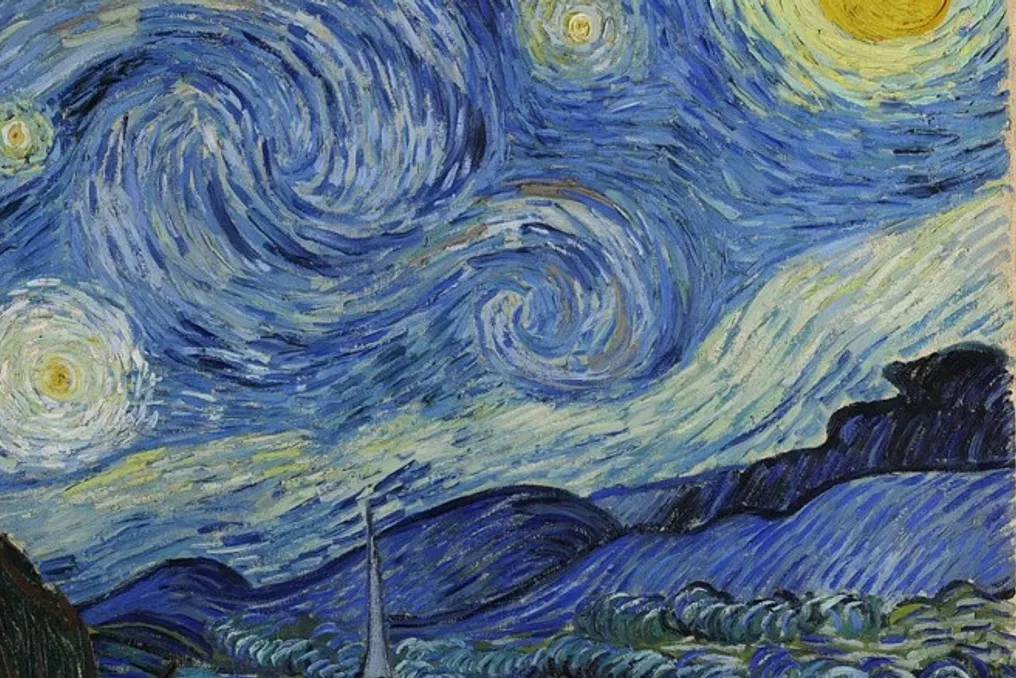
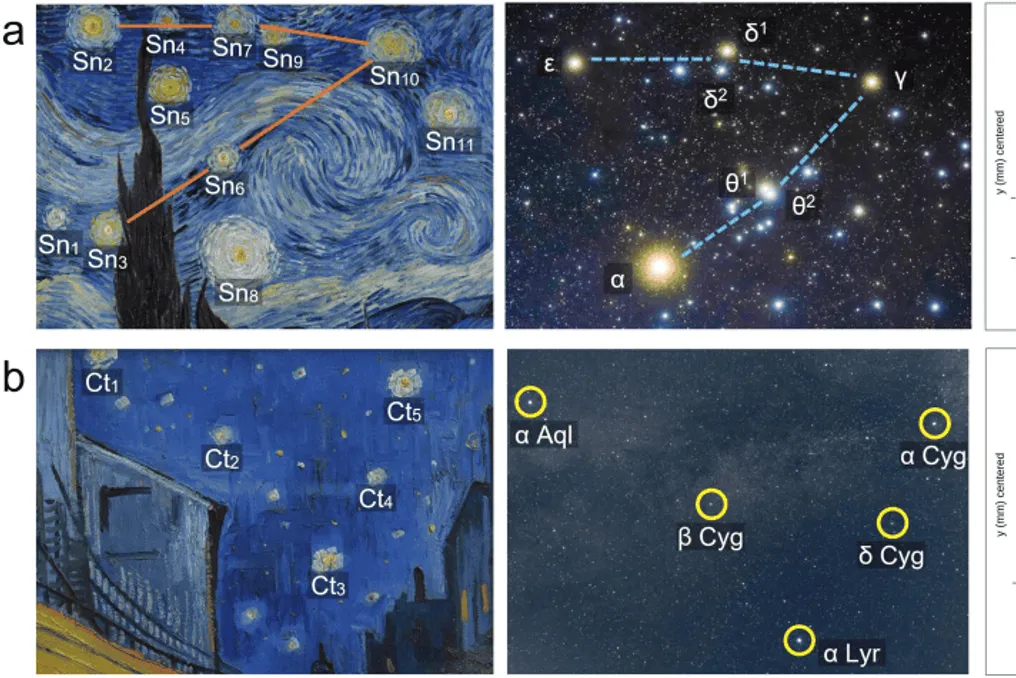
Vincent van Gogh's most famous work, 'The Starry Night,' may have been inspired by an actual observation of the sky. A study published on Thursday (22) in the journal Scientific Reports shows that the arrangement of the Moon, Venus, and a group of stars matches the sky observed before dawn on July 22, 1889, in Saint-Rémy-de-Provence, France.
At that time, the artist was living in this French town. According to the researchers, a thin waxing Moon, the planet Venus, and the Hyades—a star cluster in the Taurus constellation—were close to each other in the sky and fell within the field of view that Van Gogh could observe.
This discovery adds a new element to a discussion that has lasted for decades. Traditionally, 'The Starry Night' is associated with June 1889, but previous studies offered various interpretations of the stars depicted on the canvas and the degree of influence of real observations on the composition.
The authors emphasize that the possible astronomical coincidence does not mean that Van Gogh reproduced exactly one night. The researchers suggest that the artist might have compiled observations made at different times to create a unique composition.
The team found a similar approach in other nocturnal works by the artist. For example, in 'Starry Night over the Rhône,' calculations show that the depicted landscape and sky correspond to different directions and fields of view, suggesting their conscious combination on one canvas.
Researcher Kim believes that something similar might have happened in 'The Starry Night.' He stated: 'I think Vincent collected skies from different days before and after July 22 on one canvas.'
Nevertheless, the authors note that the analysis does not allow for a precise determination of the painting's completion date. Available meteorological records have gaps, and the method of comparing star groups has its limitations. Furthermore, Van Gogh could have worked on the piece over several days.
Thus, the study concludes that the sky depicted in 'The Starry Night' appears to be based on real observations and shows a particularly close match to the dawn of July 22, 1889, although the composition also reflects the artist's own artistic choices.