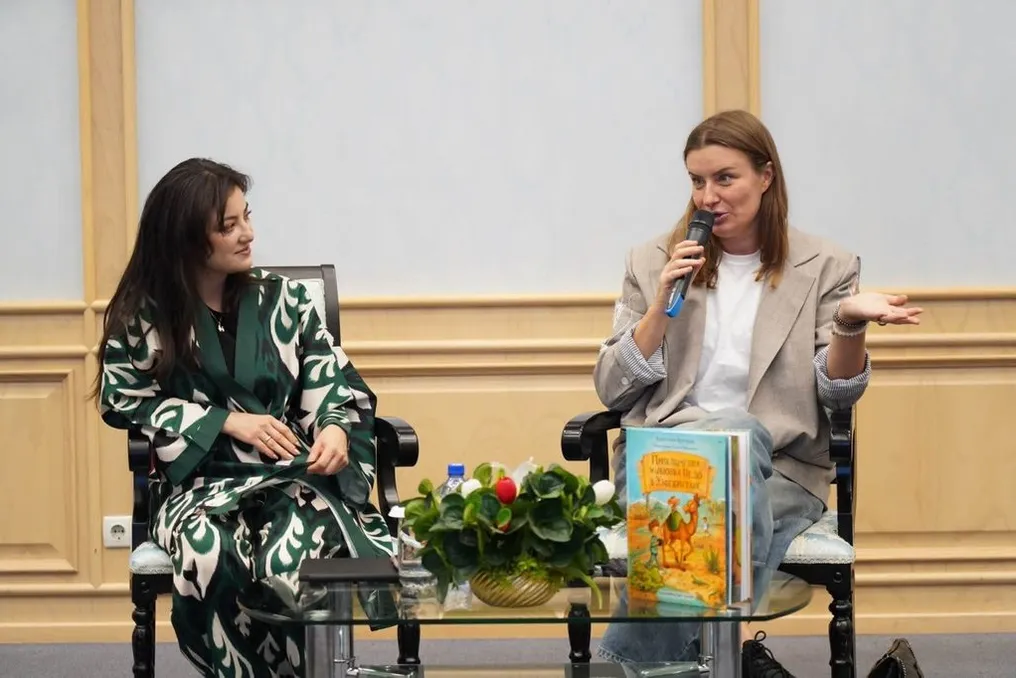
Writer Kristina Kretova presented a children's book about a trip to Uzbekistan
Read more
Nuz.uz
nuz.uz

Writer Kristina Kretova presented a children's book about a trip to Uzbekistan

A presentation of the children's book titled 'Ned's Mouse Adventures in Uzbekistan' took place in Tashkent. This edition is the result of a joint effort by St. Petersburg writer Kristina Kretova and Tashkent artist Zilola Khamidova.

The book's release was initiated by the Consulate General of Uzbekistan. Previously, this fairy tale was shown to Russian audiences, and now it has returned to the country that served as the source of inspiration for the authors due to its ancient cities and rich cultural heritage.

The central character of the story is Ned, a cute and curious mouse who lives in a library, loves books, and longs to see the world. When Ned ends up in Uzbekistan, he begins an exciting journey through important sites of the Great Silk Road, including Samarkand, Bukhara, and Khiva.

Thanks to this book, young readers will learn about national traditions, features of local cuisine, and the magnificent architecture of the region. An important theme in the narrative is environmental: the author addresses issues of nature protection and the preservation of the Aral Sea in an accessible manner, fostering in children a careful attitude towards the environment.

The book is presented in an engaging interactive format: it includes an illustrated map, game tasks, and educational questions, allowing young readers to become active participants in this journey. Zilola Khamidova's detailed and warm illustrations bring the visual elements to life, conveying the spirit of the eastern cities, their hospitality, and light.

Kristina Kretova, the author of the work, is a decorated Russian children's writer, recognized with awards such as the 'For the Good of the World' award in 2019 and the Grand Children's Festival in 2021. The book's publication is viewed not only as a literary event but also as a demonstration of cultural exchange between the two states. Through a simple and kind fairy tale, children learn to value friendship, discover the diversity of neighboring cultures, and understand the importance of caring for the world.
Similar stories

Mural showcasing the ornaments and traditions of Uzbekistan's pottery schools opened in Tashkent
Read more
podrobno.uz

Mural showcasing the ornaments and traditions of Uzbekistan's pottery schools opened in Tashkent

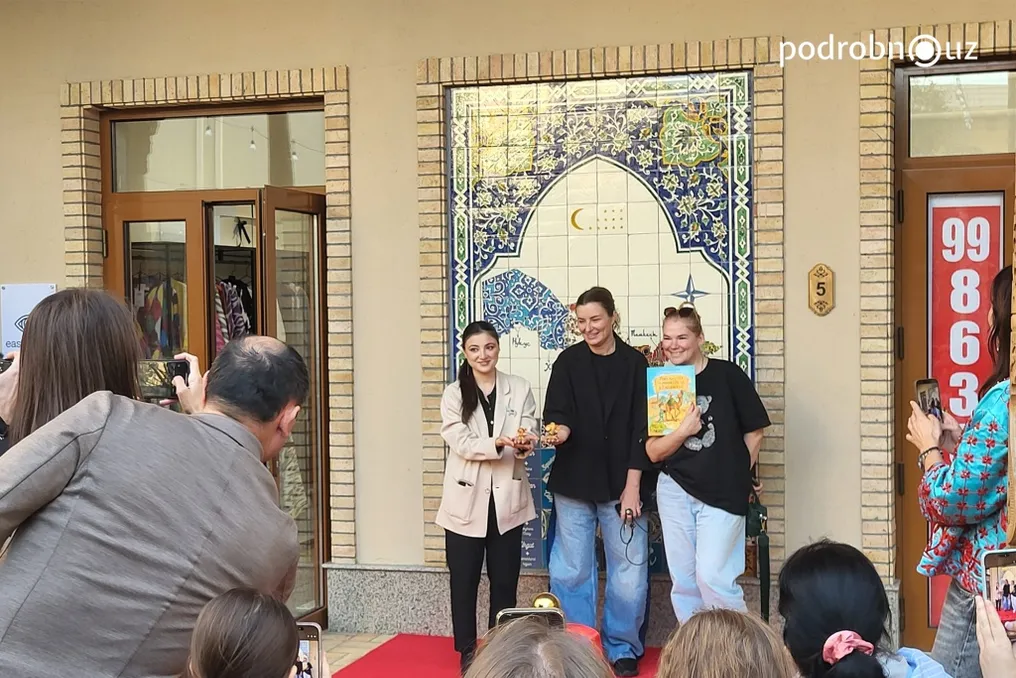
The mural titled 'Uzbekistan and the Symbols of the Silk Road and Pottery Schools' was unveiled in the city of Tashkent. This work combines various ornaments from different regions of the country, as well as images related to the history of national ceramics.

The painting was placed opposite the Center for Islamic Civilization. The author of this piece is master Diyor Nazirov, who gathered artistic motifs and ornaments characteristic of many local pottery schools in the mural.

The opening ceremony included a lecture-tour led by art historian Takhmina Mahmudova. She explained that in Uzbek applied arts, ornaments are not merely decorative but also carry deep meaning. For instance, pitchers and amphorae symbolize fertility, prosperity, and water as a vital resource, while the pomegranate is often associated with abundance, although in some interpretations it may signify temptation or trial. Almond is also a common element in national ornamentation.

The mural includes not only historical and artistic elements; it depicts characters from the story of the mouse Nedo and Etya Opy, taken from the works of Kristina Kretova and Zilola Khamidova.

Discussion on the preservation of regional pottery schools

A separate topic of the meeting concerned the history of regional pottery schools. Participants discussed how this craft managed to survive in places such as Shahrisabz, Gizhduvan, Rishtan, and Fergana, despite changes in lifestyle and production processes. One reason was the remote location of these centers relative to large urban settlements. During the era of industrialization, factory production increased competition for local artisans' products, but in less developed and remote settlements, traditional production proved less vulnerable to this pressure.

Historical factors, such as the region's position at the crossroads of the Great Silk Road, the settled lifestyle of the population, and the military campaigns of Amir Timur, also influenced the development of pottery schools. Diyor Nazirov managed to bring together symbols and ornaments belonging to different eras and local characteristics in his mural, thus turning the wall into a kind of visual chronicle of Uzbek ceramics.

It is worth noting that a mural dedicated to space was previously installed in Tashkent. According to information from the Uzcosmos agency, this painting reflects humanity's interest in the Universe and everything beyond Earth.

Popular