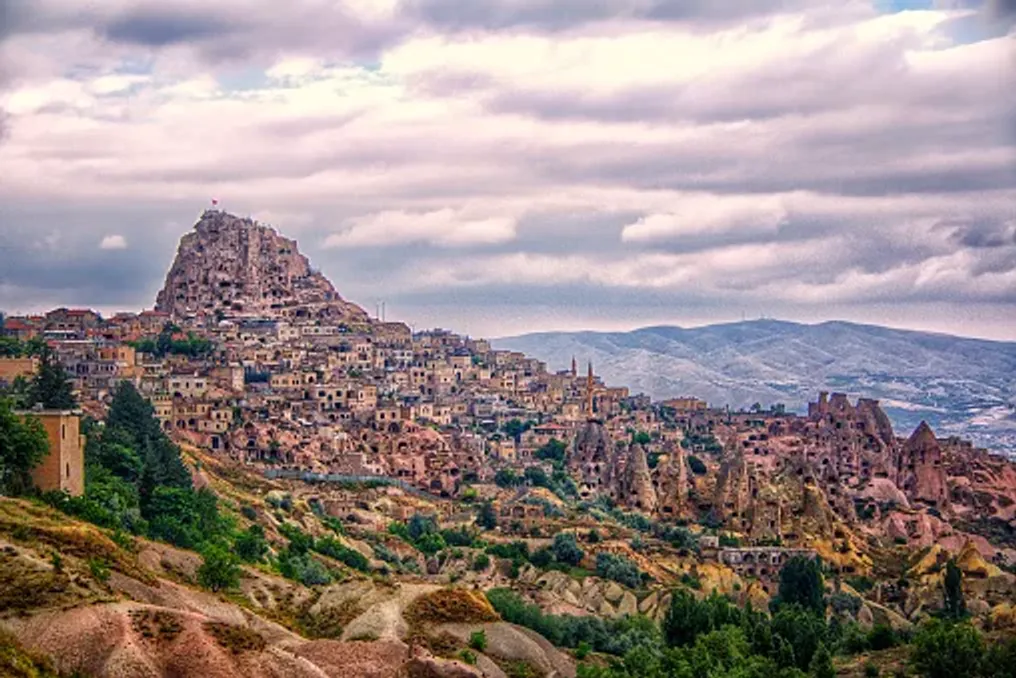
Derinkuyu Underground City in Cappadocia: A Hidden Settlement Beneath Volcanic Landscapes
Read more
Getaway
getaway.co.za

Derinkuyu Underground City in Cappadocia: A Hidden Settlement Beneath Volcanic Landscapes

Located amidst the characteristic volcanic landscapes of central Turkey is an outstanding settlement that elevates the concept of life on Earth to a new level. The underground city of Derinkuyu descends deep into the earth, revealing a network of narrow tunnels, rooms carved into the rock, storage areas, and ventilation shafts excavated from the region's soft volcanic rock.

The unusual topography of Cappadocia is largely due to ancient volcanic activity. Eruptions in the surrounding area covered the landscape with ash, which over time hardened into a relatively soft rock known as tuff. Over time, erosion formed the region's characteristic valleys, pillars, and fairy chimneys, and the rock itself provided accessible material for constructing homes, churches, and underground spaces.

For the communities settled here, this geology allowed them to build not only on the surface. Instead of constructing everything from stone or wood, people could excavate rooms directly into the rock, gradually creating interconnected spaces beneath their settlements.

Derinkuyu is among the largest and deepest underground complexes in Cappadocia. The Turkish Ministry of Culture and Tourism records a depth of about 85 meters, although only a portion of this vast complex is accessible to visitors today.

This underground city is part of a wider network of subterranean settlements throughout Cappadocia, where underground architecture became an important response to environmental conditions and periods of instability in the region. Derinkuyu was not merely a labyrinth of escape tunnels; its chambers demonstrate the practical needs of a community that required shelter underground for extended periods.

Functionality and Religious Significance

The excavated spaces include stables, cellars, food storage areas, kitchens, communal areas, and religious sites. Among the features identified by Turkish museum authorities is a missionary school, and the church, baptismal area, and other religious structures reflect the significance of Christianity in the settlement's history.

The location of these areas indicates that the underground city was designed to support daily activities as well as emergencies. Animals could be kept in designated areas, food and supplies stored, and communal areas allowed people to gather away from the open landscape above.

The construction also reflects a practical understanding of movement: stables and other functional rooms were located on upper levels, facilitating the descent of animals underground. Kitchens and storage areas were similarly organized to ensure the transport of food and other necessities.

Although popular accounts sometimes describe Derinkuyu as a city where thousands of people could live underground for months, the exact capacity and circumstances of its use remain difficult to establish. It is clear only that its scale and amenities made it significantly more complex than just a refuge.

Ventilation System and Safety

One of the most impressive elements of Derinkuyu is its ventilation system. The main shaft extends to the surface, helping to circulate air through the underground levels. This system was vital in the complex structure, where closed chambers and narrow passages could otherwise become uninhabitable for long stays.

The main ventilation shaft also served as a well. Access to water would have been critically important for anyone sheltering underground, especially when exiting the settlement was unsafe. Turkish museum information describes a shaft approximately 55 meters deep, connecting to the surface and serving this dual function.

The broader network includes numerous passages and shafts, although the exact location and number of ventilation openings vary in published sources. All these elements demonstrate how the settlement builders managed the challenges of living underground.

Safety was also a central concern. Large circular stone doors were installed at strategic points along some passages. These heavy barriers could be sealed from the inside, helping residents block access to sections of the settlement when a threat arose.

The tunnels themselves were often narrow, with some passages allowing only one person to pass at a time. While such planning may complicate navigation through the complex today, it also helped restrict movement within it. The combination of hidden entrances, winding corridors, and defensive barriers created a network where access could be controlled. Instead of relying on a single fortified wall, the underground city utilized its layout and surrounding rock for defense.

History and Discovery

The exact origin of Derinkuyu remains uncertain. Some accounts date the earliest phases of Cappadocia's underground settlements to antiquity, while later communities expanded and adapted them over many centuries. Therefore, it is more accurate to understand Derinkuyu as a place shaped by successive generations, rather than a city built in a single period.

Christian communities played an important role in the region's underground history. UNESCO notes that the rock-cut settlements and underground cities of Cappadocia, including Derinkuyu and nearby Kaymakli, served as a refuge during Arab invasions into Byzantine territory. These underground spaces provided protection from raids and other threats, allowing residents to hide with provisions and, if necessary, livestock. Their use was not necessarily continuous: people could enter the underground complex when circumstances demanded and return to surface settlements when it became safe.

The religious spaces of the settlement provide additional evidence about the communities that used and adapted them. However, the history is more complex than a single narrative of persecution or one group of builders. The development of Derinkuyu reflects the changing needs of people living in a region that experienced shifts in political, cultural, and religious views.

For centuries, parts of Cappadocia's underground world remained unnoticed. Derinkuyu came to the attention of modern times in 1963 when a local resident reportedly discovered a hidden room during home renovations. Subsequent investigation revealed that this chamber was connected to a much larger underground network. This discovery drew attention to the scale of the underground settlement and the volume of preserved architecture. The site was subsequently excavated and opened to visitors in the 1960s.

Today, only a portion of Derinkuyu is available to the public. According to Turkish museum authorities, about 10% of the underground city is open to visitors, giving an idea of a complex that extends far beyond the areas explored during a typical tour.

Its rediscovery also highlights how much of Cappadocia's history is preserved beneath the modern landscape. The region's archaeological heritage is not limited to structures visible from its valleys and roads; it is also within the rock itself.

Visiting Derinkuyu offers a completely different experience compared to exploring Cappadocia's open valleys and viewpoints. The route leads through dimly lit chambers, gentle passages, and stairs descending into the rock. Along the way, visitors can see evidence of the settlement's organization, including narrow corridors, storage rooms, and characteristic stone barriers.

The atmosphere is part of the experience. The temperature, limited light, and enclosed space create a sharp contrast with the bright, open landscapes above ground. Viewing a passage or descending into a shaft also provides insight into the labor involved in carving and maintaining such a vast network by hand.

This experience is not suitable for everyone. Some tunnels are narrow and steep, and visitors who are uncomfortable in confined spaces or have limited mobility may find certain parts of the route challenging. Those who visit should follow marked routes and any instructions from site personnel.

Derinkuyu is located in the Nevşehir province, approximately 30 kilometers from the town of Nevşehir. It can be combined with visits to other Cappadocia attractions, including rock-cut churches, cave dwellings, and characteristic volcanic landscapes.

Derinkuyu reminds us that some of the most remarkable architectural achievements were not created to dominate the landscape, but to merge with it. Its interconnected chambers, ventilation shafts, and defensive passages show how communities transformed soft volcanic rock into a place capable of providing shelter, storing supplies, and supporting daily life.

The underground city also serves as a reminder of the uncertainty surrounding much of the past. Its exact origins, full scope, and settlement patterns continue to be subjects of research, while the preserved spaces offer tangible proof of the ingenuity required for life beneath the surface.

For travelers exploring Cappadocia, Derinkuyu adds another dimension to the region celebrated for its extraordinary beauty. Beneath the fairy chimneys and cave hills lies a world shaped by geology, ingenuity, and the enduring human need for security.

Similar stories

Horoscope for October 24, 2026: Favorable Earning Opportunities for Eight Zodiac Signs
Read more
www.aajtak.in

Horoscope for October 24, 2026: Favorable Earning Opportunities for Eight Zodiac Signs

Predictions for October 24, 2026, indicate a special day for eight zodiac signs, bringing new chances for income.

Aries
It is necessary to focus on budget control. Enterprises related to foreign affairs will receive an impetus for development. People will become more proactive in relationships. Efforts in legal matters should be intensified, and contact with relatives should be maintained. Work matters will remain in limbo, so it is important to remain modest, pay attention to financial operations, and be patient in work tasks. There is a possibility of travel, and goals can be achieved by striving for harmony. Management will provide support, and work will proceed as usual; risk should be avoided, and arrogance should not be indulged. Moderate growth is expected in the career, and the financial situation will remain modest, but an increase in investments and increased interest in foreign projects are planned. It is important to be attentive to documentation and act with nobility. Favorable numbers: 6, 8, and 9. Favorable color: rust.

Daily advice: Perform worship of Hanuman and remember Shnidev. Increase donations of oil and oilseeds. Avoid initiative.

Taurus
Meetings and active dialogue with responsible persons are expected in the business sphere, which will add dynamism to professional tasks. Transactions will proceed positively, and initial hesitation in meetings will disappear. Influence in positions will improve, friends will be helpful, and the person will strengthen their influence in management by demonstrating effective work. Versatility will manifest, leading to an increase in status and prestige, and self-confidence will grow. Financial compatibility will improve, and supportive staff will help gain people's trust by utilizing emerging opportunities. Desired results will be achieved in the work area, indecision in deals will vanish, and diverse tasks will begin to develop. Attempts to expand the business will be successful, and profits will be maintained. Favorable numbers: 6 and 8. Favorable color: silver.

Daily advice: Perform worship of Hanuman and remember Shnidev. Increase donations of oil and oilseeds. Remain active.

Gemini
Attention must be paid to managing and organizing affairs. Various undertakings will accelerate, and support from elders will be received. The person will try to be in the center of attention, focusing on achieving goals and being active in work. Relations with state structures will improve, and attitudes towards colleagues will be based on mutual assistance. Financial matters will turn out favorably, and creative thinking will be maintained, ensuring success. Support from elders will remain, and the ability to lead will increase. Various tasks will receive support, and decisiveness must be maintained. Business in industry and trade will develop, and talent will manifest in various fields. Activity in communication will help, and financial opportunities will be supported by prudence. Favorable numbers: 5, 6, and 8. Favorable color: light blue.

Daily advice: Perform worship of Hanuman and remember Shnidev. Increase donations of oil and oilseeds and practice this. Maintain simple behavior.

Cancer
The profit percentage will improve, and the focus will be on exceeding possibilities. Luck can support, and good news will arrive in the work sphere. Prestige will increase, the number of profitable opportunities will grow, and various circumstances will be positive. Plans will move forward, the financial side will improve, and faith will increase. Joint advice will drive progress, and trust in personal relationships will strengthen. It is necessary to follow the rules and participate in public affairs by visiting religious places. Good work will be ensured in all areas, but health will require attention. It is advisable to take risks, maintain cooperation, and show foresight. The atmosphere will be positive, and mental acuity will increase. Favorable numbers: 2, 6, and 8. Favorable color: aquamarine.

Daily advice: Perform worship of Hanuman and remember Shnidev. Increase donations of oil and oilseeds. Increase good deeds.

Leo
In career and business, caution should be exercised while maintaining clarity in financial operations. It is necessary to avoid taking on excessive workload and pay attention to health. It is important to maintain prudence and cooperation, striving for harmony and maintaining understanding with loved ones. One should be vigilant in contracts, remain reserved in speech, and conduct important dialogues with wisdom and dignity. The success rate will remain the same, and relatives are ready to help. Carelessness should be avoided. Work will proceed according to plans, and work tasks will require meeting expectations. Modesty should be shown in various matters. Favorable numbers: 1 and 5. Favorable color: purple.

Daily advice: Perform worship of Hanuman and remember Shnidev. Increase donations of oil and oilseeds. Be vigilant.

Virgo
Work will be conducted with confidence, and teamwork will receive support. Plans will gain momentum, and contracts will advance. Partnership will remain positive, and professional activity will be effective. It is necessary to build harmonious relationships in collaboration, emphasizing the spirit of assistance and showing patience. Joys will be shared, and personal contacts will be full of enthusiasm. Trust from colleagues and friends will be maintained. Management tasks will advance, the profit percentage will be good, and business ties will be stable.

Chef Wade Pillay brings the tastes of Turkey to Durban
Read more
iol.co.za

Chef Wade Pillay brings the tastes of Turkey to Durban

For Chef Wade Pillay, food goes far beyond mere sustenance; it is a way to create memories, bring people together, and offer guests an unforgettable experience that lingers after the last bite.

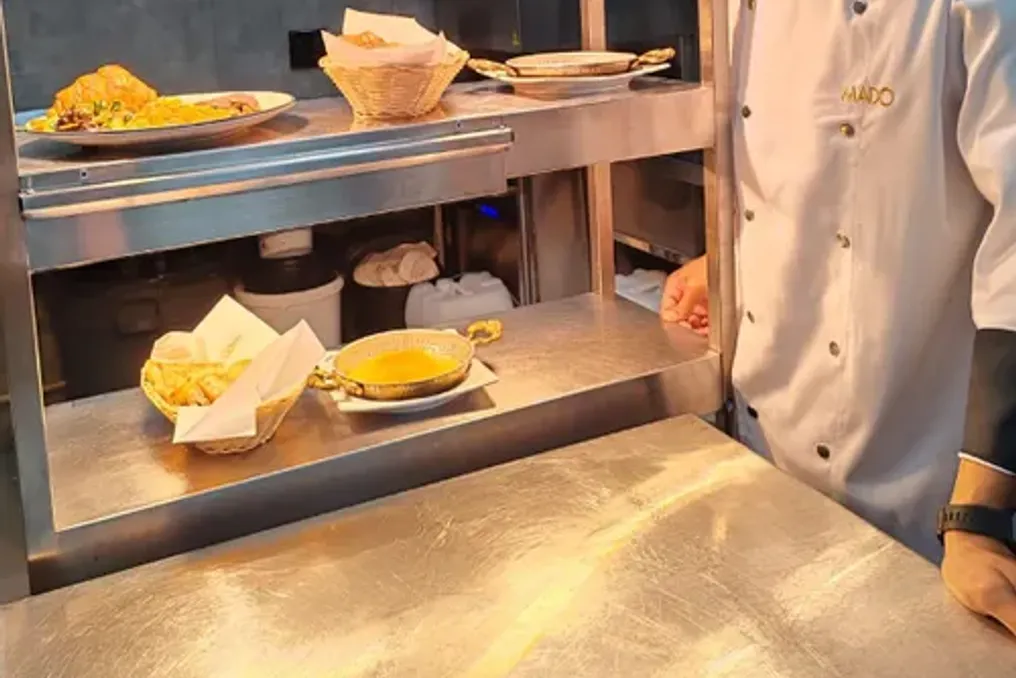
At the restaurant MADO in Durban, Pillay realizes this philosophy through a cuisine rich in history, tradition, and hospitality, introducing local visitors to the flavors of Turkey while respecting the culinary heritage of each dish.

MADO, which has gained international recognition for its traditional Turkish ice creams and desserts, built its reputation on quality and authentic flavors. However, the Durban restaurant offers a much wider range of gastronomic experiences, including breakfasts, seafood, specialty coffee, main courses, and sweets.

For Pillay, being part of a brand that celebrates Turkish cuisine is both an exciting opportunity and a serious responsibility.

He notes: 'My journey as a chef is driven by a genuine passion for food, a love for bringing people together, and deep gratitude for the stories behind every dish.' He continues: 'For me, cooking has always been more than just preparing food. It is about creating an experience, evoking emotions, and providing a sense of hospitality through food.'

This conviction lies at the heart of his approach to the kitchen. Initially, he was drawn to the ability to transform simple ingredients into something memorable, and the creativity, discipline, and attention to detail required by the profession helped shape his commitment to this craft.

Over time, this passion evolved into a deeper understanding of various cuisines, traditional methods, and the importance of continuous skill refinement.

At MADO, these values are combined with a culinary tradition that possesses a distinct identity.

Bringing Turkey to Durban

Presenting Turkish cuisine in Durban means more to Pillay than simply serving authentic dishes. It is an opportunity to establish a cultural connection between Turkey and South Africa through something universally understood—food.

Durban's diverse gastronomic culture creates an ideal environment for such an exchange, as locals value vibrant flavors, generous hospitality, and meals that bring families together.

He emphasizes: 'Presenting Turkish cuisine in Durban is an honor and a responsibility.' He adds: 'For me, presenting Turkish cuisine means staying true to its origins while making it accessible to the local audience. Every dish must reflect the authenticity, quality, and care that define this cuisine.'

His goal is for guests to leave MADO feeling they have experienced something more than just a restaurant meal. He wishes for them to take away a sense of Turkish culture, generosity, and culinary uniqueness, revealed through the tastes and traditions presented at the table.

Beyond Kebabs and Baklava

For many visitors unfamiliar with Turkish cuisine, kebabs and baklava may be the first dishes that come to mind. However, Pillay believes there is a much broader culinary world worth exploring.

Turkish cuisine has evolved over centuries, possessing diverse regional characteristics, ingredients, and preparation methods.

One of his tips for newcomers is traditional Turkish meze: small dishes intended for sharing, allowing guests to sample various flavors and textures.

He also encourages guests to discover the traditions of the Turkish breakfast, fresh salads, vegetable dishes, slow-cooked meats, seafood, freshly baked bread, and the variety of Turkish ice cream flavors.

The traditional Turkish breakfast, in particular, serves as an introduction to the diversity of this cuisine and its culture of shared time.

It is also worth trying gözleme, another popular Turkish specialty, for those looking to go beyond the familiar.

For Pillay, discovering this cuisine is not just about tasting individual dishes, but about understanding a culture. He asserts: 'Food is not just something consumed; it is an important part of social and family life,' highlighting the role of meals in communication, connection, and spending time with loved ones.

The Secret to Authentic Turkish Flavors

In Pillay's view, authenticity begins with balance. Turkish cuisine can be very aromatic yet not overwhelming, allowing the ingredients themselves to take center stage.

Fresh seasonal produce, quality meat, yogurt, olive oil, herbs, and carefully selected spices contribute to its character.

Instead of relying on unnecessary complexity, the cuisine develops flavor through thoughtful preparation, high-quality ingredients, and traditional techniques.

However, there is one ingredient that cannot be measured in a recipe: hospitality. Food is prepared with the intention of welcoming others, sharing generously, and bringing people together. This spirit, according to Pillay, is as important as the flavors on the plate.

Maintaining this spirit requires meticulousness, especially when presenting cuisine outside its country of origin. For Pillay, traditional recipes and consistency in the restaurant must go hand in hand. This implies understanding the fundamentals of each dish, including its ingredients, preparation methods, culinary techniques, and cultural significance.

Standardized recipes, precise measurements, and clearly defined cooking procedures help ensure that every member of the kitchen team understands not only what to do but also why each step matters.

Quality control is equally vital—from the freshness of ingredients and cooking temperatures to portion size, presentation, and final taste.

If local ingredient substitutions are necessary, they must be considered very carefully to preserve the core character of the dish. He concludes: 'Ultimately, my intention is to respect traditions, protect the integrity of the flavors, and ensure consistent quality with every service.'

Chef's Favorite Dishes

For first-time visitors, Pillay suggests starting with a traditional Turkish breakfast to experience the diversity of flavors and the culture of shared dining. Another specialty he recommends trying is gözleme.

The breadth of the menu also reflects the opportunity to introduce visitors to a cuisine they might only know through a few familiar dishes. At its core, Pillay's approach remains committed to a simple idea: food should create an experience, not just fill a plate.

Pillay hopes to bring Durban visitors closer to the culinary traditions of Turkey, dish by dish, while offering a hospitable space where different cultures can meet at the table.

Popular