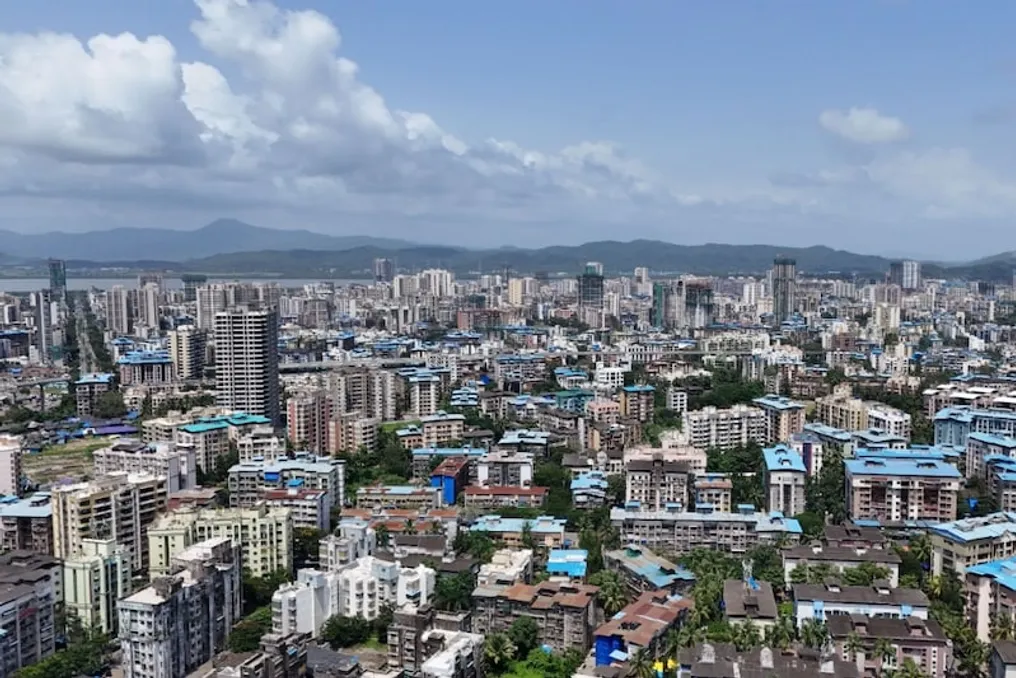
Real Estate Registration in Mumbai Drops During Navratri: 25% Decline and Reduced Government Revenue
Read more
Aaj Tak
www.aajtak.in

Real Estate Registration in Mumbai Drops During Navratri: 25% Decline and Reduced Government Revenue

The pace of real estate purchases in Mumbai slowed down during the Navratri period this year. Over the nine days of Navratri 2026, 4,680 property transactions were registered, compared to 6,238 properties registered in the same period last year, indicating an annual decline in registration of 25%.

The decrease in registrations also led to a reduction in government budget receipts. According to a report by the real estate consulting firm Knight Frank India, revenue from property registration during Navratri this year amounted to 499 crore rupees, which is 15% less than the 587 crore rupees recorded last year.

Data from the Maharashtra government's Department of Registration and Stamps shows that 4,680 properties were registered in Mumbai during Navratri this year. This figure is 25% lower than last year's figure of 6,238 properties. However, for a complete understanding of this slump, it is important to note that Navratri lasted fewer days for registration this year. In 2026, Navratri lasted 9 days, but due to two Sundays, registration only took place over 7 days.

In contrast, Navratri lasted 10 days in 2025, providing 9 days for registration. Thus, despite the overall 25% decrease, the average daily number of registrations only decreased by 4%. This year, an average of 669 properties were registered per day, compared to 693 properties per day last year. It should be noted that last year, there was a 20% increase in registrations during Navratri, marking the highest figure in many years included in the report.

Consequently, state revenues from real estate registrations also fell. In Navratri 2026, 499 crore rupees were collected, whereas last year this income was 587 crore rupees, reflecting an annual revenue drop of 15%. The average daily income also decreased. In Navratri 2025, an average of 59 crore rupees was received daily, which dropped to 55 crore rupees this year, demonstrating approximately a 6% fall in average daily income.

Shishir Bajal, Chairman and Managing Director of Knight Frank India, noted that compared to the strong figures of last year, there is a slowdown in real estate registration rates during Navratri this year. Nevertheless, the daily registration figures provide a more balanced picture of market activity. According to him, in 2026, the level of daily registrations remained higher than in 2024, and the revenue decline was less pronounced compared to the total number of registrations.

This suggests that despite returning to a normal level of activity during the festive period, buyer participation in the Mumbai housing market persists. Future market results will depend on the demand for housing across various price segments and how well the housing supply meets buyer preferences.

The situation in the Mumbai real estate market during Shraddha differed from the Navratri period. It is generally believed that Shraddha is not an auspicious time for major purchases, and a stagnation in property purchases is expected. However, according to Knight Frank India data, there was a slight increase in registrations during Shraddha this year. From September 26 to October 10, 2026, 3,419 properties were registered in Mumbai, compared to 3,368 registrations in the same period last year, representing an increase of approximately 2%. Average daily registrations also rose from 306 to 311. Nevertheless, revenue from property registration during this period decreased from 265 crore rupees in 2025 to 255 crore rupees in 2026, which is a year-on-year drop of approximately 4%. Average daily income also fell from 24 crore rupees to 23 crore rupees.


Similar stories

TATA Motors sold 10 thousand cars in one day during Navratri, achieving record sales
Read more
www.aajtak.in

TATA Motors sold 10 thousand cars in one day during Navratri, achieving record sales

TATA Motors demonstrated impressive passenger vehicle sales results during the Navratri 2026 period. Overall, the company delivered over 50 thousand vehicles during this festive season. Dashera Day deserves special attention, when 10 thousand units were sold in just one day.

Currently, there is high demand for the company's cars and SUVs. Analysis of data from recent months shows that TATA Motors ranks second among companies selling the most vehicles in the Indian market.

Amit Kamath, Chief Commercial Officer of TATA Motors Passenger Vehicles Limited, noted that improved consumer sentiment is prompting people to visit showrooms, where they are not only inquiring about cars but also placing bookings and receiving deliveries.

He emphasized that there is increased enthusiasm during the holidays, which stimulates demand for the portfolio of cars and SUVs with various powertrains. Due to the improvement in buyer sentiment, the number of showroom visitors, inquiries, bookings, and deliveries has increased.

Kamath also reported that public reaction was particularly positive during Navratri, during which over 50 thousand vehicles were delivered, including more than 10 thousand units just on Dashera Day.

According to reports, active booking of TATA Motors vehicles continues ahead of Diwali, although the company has not officially disclosed exact booking figures. There are expectations that the current sales pace will be maintained throughout the entire festive period.

According to the Federation of Automobile Dealers Association (FADA), 182,728 vehicles were sold during the Navratri period, representing a growth of 10.39% compared to Navratri 2024, when companies sold 165,534 vehicles. However, compared to Navratri 2025, sales decreased by 21.91%. FADA clarified that last year Navratri lasted 11 days, whereas this year it lasted 10 days.

Indian stock market sharply declines: Sensex index loses over 1000 points
Read more
www.aajtak.in

Indian stock market sharply declines: Sensex index loses over 1000 points

The Indian stock market experienced a sudden and significant decline on Monday. The Sensex index lost about a thousand points, while the Nifty also fell by approximately 300 points.

By 1:30 PM, the Sensex had dropped by 930.80 points or 1.25%, reaching 73,798.47, while the Nifty closed at 22,867.75, showing a fall of 278.40 points or 1.20%.

Out of 30 stocks listed on the BSE, only 4 showed a slight increase, while the remaining 26 experienced a substantial drop. HDFC Bank contributed the most to the decline, with its shares falling by approximately 3%. This was followed by Axis Bank, which fell by about 4%, Infosys by 3%, as well as stocks like Trent, HDFC Bank, Hindustan Unilever, and Bajaj Finance, which decreased by more than 2%.

Investor losses amounted to 400 billion rupees

This sharp downturn led to a significant reduction in investor earnings. The market capitalization of BSE companies decreased from 472 billion rupees to approximately 468 billion rupees, corresponding to a loss of about 400 billion rupees.

Four reasons for the decline

1. Significant drop in banking stocks: Following the release of second-quarter results for the fiscal year 2027 by private banks, including HDFC Bank, bank stocks fell by 2%, and this bank entered the list of stocks with the largest losses in the Nifty 50. Furthermore, Axis Bank shares also fell by more than 4%; there was also a decline in the shares of Kotak Mahindra Bank and ICICI Bank.

2. Weak sentiment: The MSCI, the broadest index of the Asian stock market, declined by 0.5%. While the KOSPI of South Korea recovered from an initial fall and reached a gain of 0.2%, the Nikkei 225 futures of Japan dropped by 1.3%, the Hang Seng futures of Hong Kong fell by 0.2%, and the Shanghai Composite also dropped by 0.2%.

Additionally, the US market recorded a sharp decline on Friday as sales of AI-related IT stocks resumed, and crude oil prices continued to rise, which was also a blow to the Indian market.

3. High crude oil prices: Brent Crude fell by 1.5% to $108.27 per barrel, and WTI fell by 0.6% to $100.83 per barrel. Despite the drop on Monday, crude oil prices remained high, and the impact of geopolitical tensions persisted on market sentiment.

4. Rise in VIX in India: The fear index, or volatility index, rose by almost 4%, reaching 14.52, indicating increased uncertainty among investors.

Popular