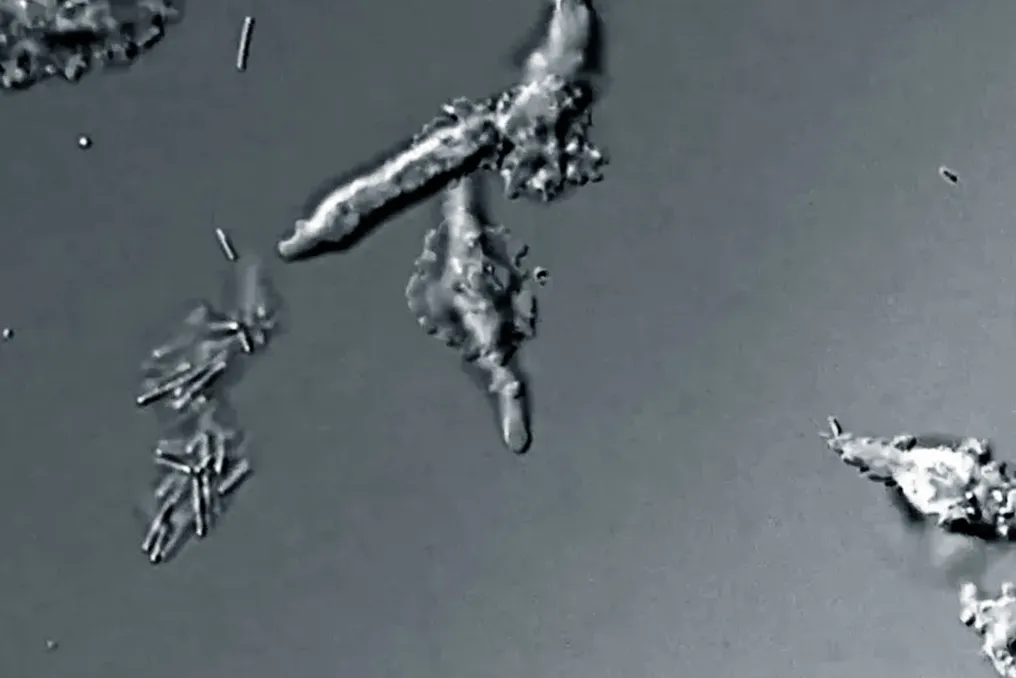
Researchers from the University of Syracuse in the USA have discovered a species of amoeba capable of reproducing at a temperature of 63 ºC and remaining alive and mobile up to 64 ºC, thereby surpassing all previous records.
This species, named Incendiamoeba cascadensis and nicknamed the 'fire amoeba,' was found in the thermal waters of Lassen Volcanic National Park in California (USA). The research findings were published in the scientific journal Cell.
Previously, in 1972, scientists hypothesized that complex life forms could not survive or reproduce at temperatures above 60 ºC, and this rule remained generally accepted for over five decades.
Although some simple organisms, such as bacteria and archaea, can withstand extremely high temperatures exceeding 100 ºC (the boiling point of water), they are prokaryotes, meaning they consist of primitive cells without a clearly defined nucleus to protect genetic material.
In contrast, eukaryotic organisms, including animals and amoebas, possess more complex cells with a nucleus. Despite being single-celled and microscopic, amoebas are more complex than bacteria.
The new amoeba has refuted the notion that no eukaryote can exist above 60 ºC. In addition to its ability to reproduce at 63 ºC and move up to 64 ºC, it can also briefly withstand temperatures up to 70 ºC by entering a dormant state known as a cyst.
Scientists sequenced and studied the genome of this fire amoeba to understand the mechanism of its survival in volcanic conditions. One hypothesis based on this analysis suggests that it possesses mechanisms to maintain the stability of proteins and membranes, as well as tools to repair damaged proteins. Furthermore, the amoeba appears capable of altering its behavior and speed of movement at excessively high temperatures.