For some families in the United Arab Emirates (UAE), an overseas school trip is seen as an investment in a child's future, while for others, it is an additional expensive expense amidst rising education costs, which can cause feelings of exclusion among children whose parents cannot participate.
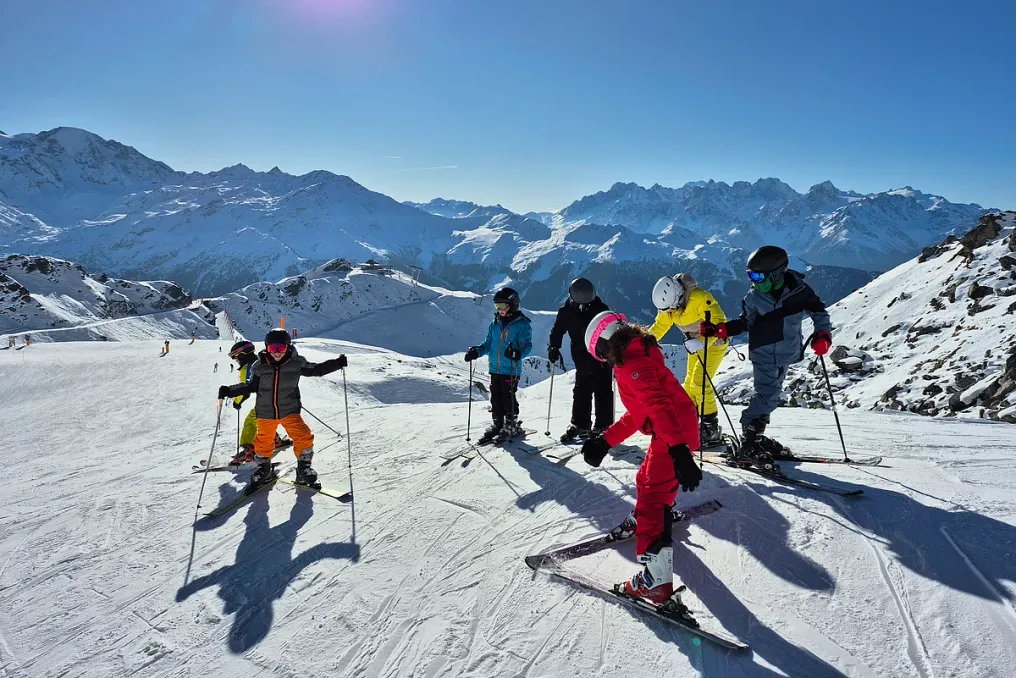
Part of the educational experience offered by private schools in the UAE now includes diverse activities—from international tours, costing over 15,000 dirhams and potentially including skiing, cultural immersion, science projects, or volunteering, to residential camps.
Regional trips to destinations such as Fujairah, Ras Al Khaimah, and Al Ain typically cost around 2,000–2,500 dirhams per student for a standard three-day, two-night stay, often including active recreation like hiking, camping, or diving.
Schools argue that such experiences help develop children's independence, resilience, and teamwork skills in ways that cannot always be replicated in classroom lessons. However, parents disagree on whether the benefits justify such expenses, especially considering existing tuition fees and other associated school costs.
Natalie Miranda, an American expat living in Dubai, is one who questions the necessity of such expensive trips. She told Khaleej Times that international school trips are rare for children under 16 in the US. According to her, since tuition, extracurricular activities, local outings, and themed days already increase family spending, overseas trips can create additional financial pressure on families.
Miranda is also concerned about the social pressure children may feel when classmates discuss their travel plans, forcing parents to explain why they cannot or do not want to pay for the same activities. She noted that trips involving skiing in Switzerland or projects in Sri Lanka can be unaffordable for some families, especially those with two or three children. Instead, she would prefer to take her child somewhere else and support local initiatives.
Furthermore, Miranda believes schools could involve children more in fundraising for trips. In the US, in her opinion, 'students can organize fairs or car washes to cover costs, whereas parents in the UAE are often expected to cover the entire cost.' For her, this is a missed opportunity to teach children budgeting, financial responsibility, and the value of money.
Similarly, Arijit Nandi, whose 10-year-old son, says peer pressure can make it difficult for parents to refuse when children want to join trips simply because their friends are going. He notes that in such situations, parents feel obligated to agree, but he does not see specific knowledge gained during a two-night stay in Ras Al Khaimah or Al Ain. Moreover, these trips can be expensive, with a total cost of about 2,500 dirhams.
Elena Popescu, an expat from Moldova and mother of one child, views this experience differently. Her daughter Inga took a school trip to Japan last year, which cost the family 15,000 dirhams—an amount she considers wasted money. According to her, 'she returned more independent, confident, and curious. She and her friend were even able to go to the grocery store on their own. They learned more in a week than they could in a semester.'
For her, the value was not just in visiting another country, but in watching how her daughter coped with unfamiliar circumstances and took on greater responsibility. She added that 'my daughter is in middle school, and she came back with a completely different perspective. As parents, we were proud of how she handled things independently, from time management to controlling her budget.'
Schools claim that these are the changes they hope to achieve through residential camps and educational travels, although these experiences do not necessarily have to include international destinations.
Adam Drake, Assistant Head of KS4 at Repton Dubai, asserts that residential trips are designed to help children grow in confidence and independence while creating unforgettable memories. He emphasized that for younger students, spending several nights away from home is an important milestone requiring them to manage their belongings, make decisions, and care for each other in an unfamiliar setting.
'We view residential trips as more than just an opportunity to travel. It is an important part of helping children develop confidence and independence, as well as providing them with experiences and memories they will cherish for years to come,' said Drake. Repton Dubai offers various types of activities for different ages, from a four-day tour of culture and nature in Oman to international programs focused on sports, science, sustainability, art, and volunteering.
International options include football training and cultural events in Madrid, skiing in Austria, STEM events in Singapore, as well as art and architecture tours in Rome and Florence. Similar to Repton Dubai, other schools also organize camps where students can participate in sustainability projects in countries like Kenya, Sri Lanka, Indonesia (Bali), or Thailand, working alongside local community villages. Depending on the project, students might help build a classroom or teach local children.
Drake noted that the goal is to provide a wide range of opportunities and price points, recognizing that families have different expectations and financial capabilities. He added: 'The breadth of these opportunities is what we are particularly proud of. Not every student wants the same experience, and not every family desires the same level of financial commitment.' His school strives to provide diverse experiences for all students, regardless of age or financial means, so that everyone has a chance to learn, develop, and create memories with friends.
For schools, the task is not just organizing a pleasant trip, but ensuring that students return with skills they can apply in daily life. Céline Dwyer, Deputy Head of Academy at Gems Wellington Academy – Silicon Oasis (WSO), said that 'these outcomes will look different for every child. For one student, the first time away from home can be a significant achievement. For another, taking on a leadership role or learning to trust others in a team can be a challenge. Therefore, understanding each student's starting point is crucial when measuring growth.'
Assessment is based on a combination of staff observations, student self-reflection, and behavioral feedback upon returning to school. Dwyer explained that 'during residential events, staff observe how students react to difficulties, support their peers, and manage their own responsibilities. After the trip, students analyze their experience and identify moments when they demonstrated resilience, teamwork, or leadership.' Teachers may subsequently notice increased confidence, a greater willingness to participate in class, or improved ability to collaborate with different classmates. Parental feedback also helps schools understand if these changes continue at home.
At WSO, over 200 students registered for the Duke of Edinburgh’s Award program this year, which allows high school students to develop self-sufficiency through expeditions, hiking, camping, and other activities at Bronze, Silver, and Gold levels.
Nicholas Radborn, Deputy Head of Royal Grammar School Guildford Dubai, noted that field trips also help students apply classroom knowledge in practice. He stated that 'trips that complement physical education and geography courses allow students to apply and demonstrate their knowledge both inside and outside the classroom.'
The school's program includes residential trips within the UAE, skiing trips for younger and older students to Switzerland and Austria, as well as trips to places like Bali, Italy, France, and Greece. Students can also participate in the Duke of Edinburgh’s Award program. Radborn added that 'we assess the impact of these activities through student participation, their ability to apply knowledge and skills in practical situations, and an analysis of their experience after returning to school.' The goal, he said, is to ensure the continuation of learning after the trip and contribute to the academic and personal development of students.
At Swiss International Scientific School Dubai, residential activities range from Kalba and Sir Bani Yas islands to Oman and Longbeach, with activities adapted for different age groups. Alisha Clements, Middle School Assistant Head (student experience) at this school, said that these activities encourage children to manage their belongings, prepare on time, and make decisions without always relying on teachers. She emphasized: 'One of the biggest advantages of residential trips is observing how much students grow in just a few days. We want our students to become more independent, whether it's managing their belongings, being responsible for timely preparation, or making decisions without constant reliance on school staff.'
Team activities also give students the opportunity to work with different classmates, communicate more effectively, and solve problems together. After trips, teachers look for changes such as increased confidence, new friendships, and a greater willingness to take on leadership roles. For some students, the most valuable learning happens away from textbooks and routine classroom procedures.
Michelle Thomas, Director and CEO of GEMS Al Barsha National School, stated that camps give children the opportunity to apply practical skills in real-life situations. She said: 'A camp also gives children a safe way to apply their skills in real situations. Reading a map, solving a group problem, or making a decision with real consequences means much more on a mountain slope than on a worksheet.'
Thomas plans to hold a residential event at the beginning of the school year to help foster early friendship and trust. She noted that 'the trust and sense of teamwork built in camp lasts throughout the year, including resilience during exams.'